
Cybervelo 1000W Peak E-Bike: Models Compared by Fit

The Cybervelo 1000W peak electric bike that suits most riders is Cybervelo 26-Inch 1000W Peak E-Bike if a 26-inch wheel and a claimed top speed of 20 mph fit your commute.
Electric bikes combine pedal input with motor assistance, but speed, range and local rules vary by model and riding conditions.
We earn a commission if you buy through links on this page. As an Amazon Associate I earn from qualifying purchases. Products are compared on manufacturer specifications, not hands-on testing.
- Best overall: Cybervelo 26-Inch 1000W Peak E-Bike – Its 26-inch wheel and claimed 20 mph top speed suit riders seeking a conventional commuter-style e-bike.
- Best for long rides: Cybervelo 20-Inch Folding Fat-Tire E-Bike – It combines a removable 48V 40Ah battery with a claimed range of up to 100 miles.
- Best for step-through access: Cybervelo Step-Through 20-Inch Fat-Tire E-Bike – Its step-through frame and 20-by-3-inch tires suit riders who want easier mounting and a broad tire.
| Product | Best for | Wheel size | Battery | Claimed top speed | Shop |
|---|---|---|---|---|---|
| Cybervelo 26-Inch 1000W Peak E-Bike | Everyday commuting | 26 in | — | 20 mph | Check Price on Amazon |
| Cybervelo 20-Inch Folding Fat-Tire E-Bike | Long-range folding | 20 in | 48V 40Ah | 35 mph | Check Price on Amazon |
| Cybervelo Step-Through 20-Inch Fat-Tire E-Bike | Easy mounting | 20 in | 48V 20.8Ah | 30+ mph | Check Price on Amazon |
Cybervelo 1000W Peak Electric Bikes Compared
Match wheel size, frame style and battery capacity to your route and how you plan to store or charge the bike.
Cybervelo 26-Inch 1000W Peak E-Bike
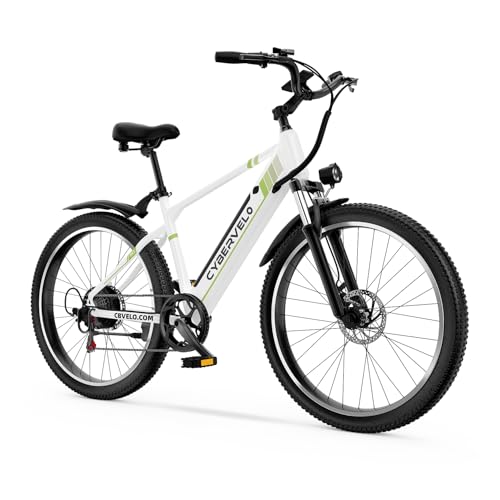
Cybervelo 26-Inch 1000W Peak E-Bike is the conventional 26-inch, 7-speed option in this group, with a claimed top speed of 20 mph. Its removable battery is paired with a range of up to 85 miles; actual distance varies with rider weight, terrain, assist level, temperature and stops. The white, medium-size version may suit a rider who prefers a larger wheel for paved routes and mixed everyday riding. The maker does not give battery capacity, so range alone cannot tell you how long charging will take or how the battery compares by watt-hours.
Bottom line: Choose this if you want a 26-inch, 7-speed bike and a claimed 20 mph ceiling.
Cybervelo 20-Inch Folding Fat-Tire E-Bike
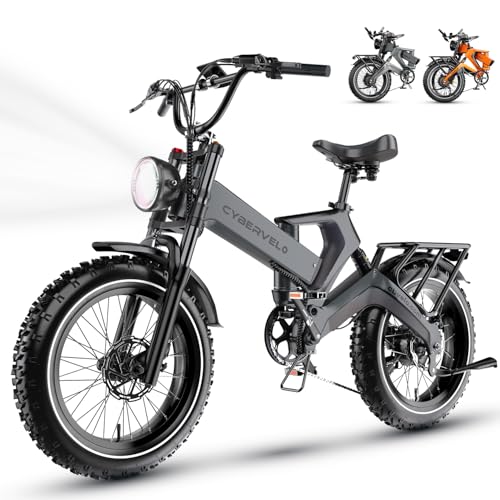
Cybervelo 20-Inch Folding Fat-Tire E-Bike stands apart with a folding frame, 20-by-4-inch fat tires and an unusually large 48V 40Ah removable battery. The wide tires are intended for grip on sand, snow and gravel, but they add rolling resistance on pavement compared with narrower tires. Check local e-bike rules before riding, since legal classifications often depend on motor output and assisted speed.
Bottom line: Pick this for a folding frame and 4-inch-wide tires, after checking local speed rules.
Cybervelo Step-Through 20-Inch Fat-Tire E-Bike
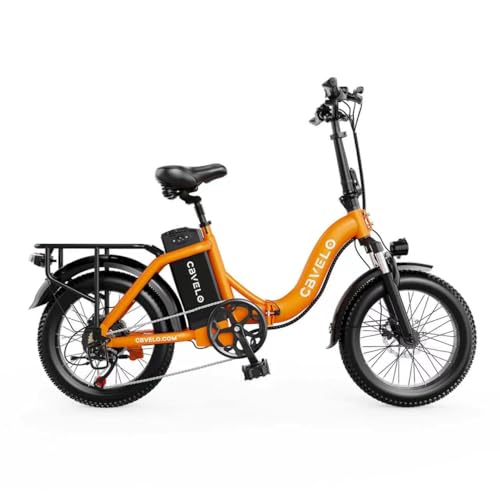
Cybervelo Step-Through 20-Inch Fat-Tire E-Bike is the step-through choice, and its 20-by-3-inch tires are narrower than the 4-inch tires on Cybervelo 20-Inch Folding Fat-Tire E-Bike. The removable 48V 20.8Ah battery has an IP54 rating, and the maker claims a maximum range of 80 miles and speed above 30 mph. Full suspension and dual disc brakes are also identified in its features, making this a fit for riders who value step-through access and a more cushioned setup. Its maximum speed exceeds common limits for ordinary e-bikes in many jurisdictions, so verify the class and permitted riding areas before use.
Bottom line: Choose this for a step-through frame and 3-inch tires, while checking speed regulations.
How to choose a Cybervelo 1000W peak e-bike
Choose by frame layout, tire width and legal speed class before comparing claimed range. A 20-inch wheel folding bike is easier to store than a conventional 26-inch wheel bike, but its small wheel responds more sharply to road bumps. Tires around 3 to 4 inches wide are useful on loose surfaces such as sand or snow, while narrower tires generally roll more easily on pavement. Battery capacity in watt-hours is calculated by multiplying volts by amp-hours; for example, 48V × 20.8Ah is about 998Wh. With daily rides over 20 miles, prioritize battery watt-hours and a realistic reserve rather than the maximum range claim alone.
What the speed claims mean for electric-bike rules
Speed claims above 20 mph can change where an e-bike is allowed, so verify the bike’s class and your state’s rules before riding. A common U.S. three-class framework sets assisted-speed ceilings of 20 mph for Classes 1 and 2 and 28 mph for Class 3, though state definitions and access rules vary. A throttle, motor rating and whether assistance cuts off at the speed can all affect classification. Wear a properly fitted bicycle helmet, use lights in low visibility and avoid assuming that a bicycle path permits every motorized model. The two Cybervelo models claiming speeds over 30 mph especially warrant a rules check.
Fat-tire sizes and riding surfaces
Fat tires provide a larger contact patch, but tire width alone does not guarantee traction or puncture protection. The 3-inch tire setup is narrower than a 4-inch setup, which can reduce bulk and rolling drag while retaining extra flotation versus a standard-width commuter tire. Lower pressure can improve grip on soft ground, but pressure must stay within the tire maker’s marked limits and suit rider load; too little pressure risks rim strikes or tire damage. On pavement, keep tires inflated appropriately and expect wider tires to feel slower to accelerate. Confirm tire clearance and replacement tube or tire size before committing to regular off-road use.
Battery range, charging and safe handling
Range claims are maximums, not reliable daily planning figures: hills, cold weather, heavy loads, high assist and frequent stops all shorten a charge. Lithium-ion e-bike batteries should be charged with the compatible charger, kept away from heat and combustible clutter, and not used if cracked, swollen or unusually hot. Store a battery dry and near room temperature when practical, and avoid leaving it fully discharged for long periods. A 48V 20.8Ah pack contains about 998Wh nominally, while a 48V 40Ah pack is about 1,920Wh; those capacities are not direct range guarantees because motor demand and riding conditions differ.
Frequently Asked Questions
How far can a 1000W peak e-bike really go?
A claimed range of 80 to 100 miles is a maximum rather than a dependable trip distance. Hills, rider and cargo weight, cold weather, tire pressure and high assist can reduce range substantially, so leave a reserve instead of planning to arrive with an empty battery.
Do 1000W peak electric bikes need a license?
Licensing depends on state and local classification, not the peak number alone. Many jurisdictions distinguish e-bikes by assisted speed, throttle and motor rating, so check the rules for the specific bike and where you plan to ride.
Are 20-inch fat tires good for daily commuting?
They can work for commuting, particularly when a compact folding bike or loose-surface grip matters. Compared with narrower tires, 3- to 4-inch tires are bulkier and typically need more effort on smooth pavement; maintain pressure within the tire’s marked range.
Can I ride a 35 mph electric bike on a bike path?
Do not assume a bike path allows a model claiming 35 mph. Many U.S. e-bike rules cap assisted speed below that, and path access can be more restrictive than road access; verify both the bike’s classification and local access regulations.
How should I store a removable e-bike battery?
Store the battery in a dry, moderate-temperature location away from direct heat and combustible materials. Use the compatible charger, avoid storing it empty for extended periods, and stop using a battery that is swollen, cracked or unusually hot.