
Liquid Embroidery Paint Kits: 3 Color Sets Compared

For most crafters, Aunt Martha’s Ballpoint Embroidery Paint, Primary is the straightforward choice because its eight 1-ounce tubes cover primary colors plus black and white. Choose Aunt Martha’s 888 Embroidery Paint, Pastel for pastel shades or Aunt Martha’s ATM666 Craft Paint, Country for a country palette; these are fabric paints applied with a fine ballpoint-style tip, rather than thread embroidery kits.
We earn a commission if you buy through links on this page. As an Amazon Associate I earn from qualifying purchases. Products are compared on manufacturer specifications, not hands-on testing.
- Best overall: Aunt Martha’s Ballpoint Embroidery Paint, Primary – The primary palette includes black, white, and six other colors in eight 1-ounce tubes.
- Best for pastels: Aunt Martha’s 888 Embroidery Paint, Pastel – Its eight 1-ounce tubes include soft shades such as pink, lilac, aqua, and lavender.
- Best for country colors: Aunt Martha’s ATM666 Craft Paint, Country – The palette includes brick red, forest green, prairie blue, rust, and other country shades.
| Product | Best for | Palette | Shop |
|---|---|---|---|
| Aunt Martha’s Ballpoint Embroidery Paint, Primary | Primary colors | Primary | Check Price on Amazon |
| Aunt Martha’s 888 Embroidery Paint, Pastel | Pastel designs | Pastel | Check Price on Amazon |
| Aunt Martha’s ATM666 Craft Paint, Country | Country palette | Country | Check Price on Amazon |
Liquid Embroidery Paint Kits
These sets share an eight-tube, 1-ounce format; choose by the colors you want to use.
Aunt Martha’s Ballpoint Embroidery Paint, Primary

Aunt Martha’s Ballpoint Embroidery Paint, Primary is the primary-color set, with black, red, brown, green, blue, white, yellow, and orange in eight 1-ounce tubes. The spread suits projects that need a basic range of colors, including dark and light options, without buying separate tubes. Aunt Martha’s says the paint is lead free, nontoxic, and machine washable. Pick another palette if your project calls specifically for muted pastels or country shades; the primary set is centered on brighter basics. Compare your planned design colors before choosing, since the palette determines what is ready to use.
Bottom line: Choose this set for a broad primary palette that includes black and white.
Aunt Martha’s 888 Embroidery Paint, Pastel

Aunt Martha’s 888 Embroidery Paint, Pastel stands apart with a soft palette: light green, light blue, lilac, pink, aqua, caucasian, banana cream, and lavender. Its eight 1-ounce tubes suit floral accents, gentle color transitions, and designs where saturated primary shades would be too strong. Aunt Martha’s says the paint is lead free, nontoxic, and machine washable. The palette has fewer obvious dark anchors than a set that includes black, so choose it for pastel-led designs rather than artwork that depends on strong outlines or deep contrast.
Bottom line: Pick this set when the design calls for light, pastel shades.
Aunt Martha’s ATM666 Craft Paint, Country
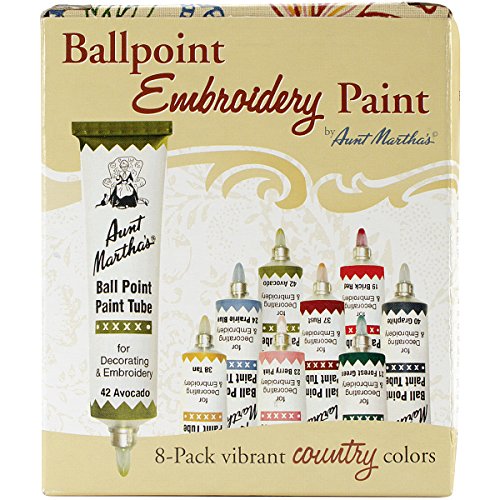
Aunt Martha’s ATM666 Craft Paint, Country offers a country palette rather than the primary or pastel range: brick red, forest green, berry pink, prairie blue, rust, tan, graphite, and avocado. The eight 1-ounce tubes are a fit for folk-style motifs and projects planned around earthy or muted colors. Aunt Martha’s says the paint is lead free, nontoxic, and machine washable.
Bottom line: Choose it for designs built around country and earthy shades.
How to choose liquid embroidery paint colors
Choose a palette by matching the design’s dominant colors, not by tube count: each of these three sets contains eight 1-ounce tubes. The primary set includes black and white alongside six other colors, while the pastel set names eight light shades and the country set centers on earthy colors. A 1-ounce tube holds 6 teaspoons, so even a single tube can cover multiple small accents, though the amount used depends on line width and design area. For a simple decision rule, pick the set only if at least six of its eight named colors suit the project; otherwise, compare palettes before starting. If you need a color absent from the chosen set, plan for a separate paint rather than assuming the colors will mix predictably.
| Project palette | Choose |
|---|---|
| Basic bright colors, black and white | Aunt Martha’s Ballpoint Embroidery Paint, Primary |
| Light, soft shades | Aunt Martha’s 888 Embroidery Paint, Pastel |
| Earthy and country shades | Aunt Martha’s ATM666 Craft Paint, Country |
How liquid fabric paint differs from thread embroidery
Liquid embroidery paint decorates fabric with paint rather than sewn thread, so it creates a colored surface design without a needle-and-thread stitch. That makes it useful for drawing outlines or filling small motifs, while traditional embroidery adds texture through stitches and thread. A ballpoint-style paint applicator is meant to make controlled lines, but the line width still depends on how quickly and firmly the tube is guided. Try a short line on a fabric scrap before committing to a garment, and place a barrier between fabric layers if paint could transfer through to the back. Paint application cannot reproduce the raised texture or structural stitching of thread embroidery.
Preparing fabric for liquid embroidery paint
Prepare the fabric before decorating by smoothing it flat and testing the paint on a hidden area or matching scrap. Fabric texture and absorbency affect how a line looks: a rough weave can make edges less even, while thin fabric can allow paint to travel through to another layer. A piece of cardboard inside a shirt or bag helps separate front and back panels during application. Keep the work area level and avoid dragging a hand across wet paint. Leave the design undisturbed until fully dry, then use the care directions for the paint and garment; machine-washable paint does not mean a fresh design can be washed immediately.
Washing and caring for painted fabric
Wait until the painted design is fully dry before handling or laundering the fabric, and use the garment’s care label to guide washing temperature and cycle. These sets are identified as machine washable by Aunt Martha’s, but that claim does not specify a wash temperature or drying method. For a finished garment, wash it inside out when practical and avoid abrasion directly across painted lines; friction can wear surface decoration faster than a protected area. A small test swatch is especially useful when combining paint with delicate fabric or another finish, because the garment’s care needs may be stricter than the paint’s. Confirm the paint’s full curing and wash directions before laundering a finished project.
Frequently Asked Questions
How much paint is in each embroidery paint set?
Each set contains eight 1-ounce tubes, for 8 ounces total. One fluid ounce equals 6 teaspoons, although coverage varies with the width and length of each painted line.
Can I use liquid embroidery paint on clothes?
These paints are intended for fabric decorating, and all three sets are identified as machine washable by Aunt Martha’s. Test first on a hidden section or scrap, especially on thin or textured fabric, and allow the paint to dry fully before handling.
How do I keep paint from reaching the back of a shirt?
Put a barrier such as cardboard between the garment layers before applying paint. This is particularly important on thin fabric, where paint can pass through to the opposite panel.
Should I wash fabric before painting an embroidery design?
Prewashing is a useful precaution for garments that may shrink or have surface finishes, but follow the fabric’s care label. Let the fabric dry completely and smooth it flat before testing the paint on a scrap or hidden area.
How long should embroidery paint dry before washing?
Let the design dry completely before laundering, and check the paint’s curing directions for any additional wait time.