
Steps for a High Bed: 3 Options Compared

For most people, Two-Step Wooden Stool, 11.8-Inch is a practical choice for a high bed because its two-step design reaches 11.8 inches and has a 500-pound capacity. Choose a model with a handle or rail instead if you need support while climbing; a single platform is better suited to a small rise than a tall mattress.
We earn a commission if you buy through links on this page. As an Amazon Associate I earn from qualifying purchases. Products are compared on manufacturer specifications, not hands-on testing.
- Best overall: Two-Step Wooden Stool, 11.8-Inch – Two steps, an 11.8-inch height and adjustable rubber feet suit a range of bedside setups.
- Best for a handhold: Two-Step Stool with Adjustable Handle – The adjustable handle provides balance support while climbing the two steps.
| Product | Best for | Rated capacity | Shop |
|---|---|---|---|
| Two-Step Wooden Stool, 11.8-Inch | Everyday bed access | 500 lb | Check Price on Amazon |
| Two-Step Stool with Adjustable Handle | Handle-assisted climbing | — | Check Price on Amazon |
| LIANTRAL Two-Step Stool | Uneven floor stability | 500 lb | Check Price on Amazon |
Steps for a High Bed
Compare the step height and support style with your bed before choosing.
Two-Step Wooden Stool, 11.8-Inch

For a two-step wooden option with a clearly given height, Two-Step Wooden Stool, 11.8-Inch measures 11.8 inches tall and has a 15.7-by-15.4-inch footprint. Its 1-inch solid-wood steps sit on powder-coated steel tubing, and the maker rates the stool for 500 pounds. Adjustable rubber feet are intended to help level it on uneven ground, while rounded corners reduce sharp edges around a bedside. This suits shoppers who want a broad, fixed two-step stool rather than a rail-equipped aid. Its 11.8-inch total height may not bridge a large gap to a very high mattress, so compare the rise with your bed first.
Bottom line: Choose this if you want a two-step wood-and-steel stool with leveling feet.
Two-Step Stool with Adjustable Handle

Unlike a simple stool, Two-Step Stool with Adjustable Handle adds an adjustable handle for users who want a handhold while stepping into bed. The two-step frame combines thickened metal tubes with a solid-wood step, a full non-slip platform surface and non-slip foot pads. The maker positions the design for high beds as well as tubs and RVs, making it a possible multi-room aid. The handle may be especially useful when balance support matters more than a compact footprint. However, the measurements do not establish how high the steps reach or the load rating, so confirm those dimensions and capacity before choosing it for a particular bed or user.
Bottom line: Choose this if an adjustable handhold is a priority and its dimensions suit your bed.
LIANTRAL Two-Step Stool
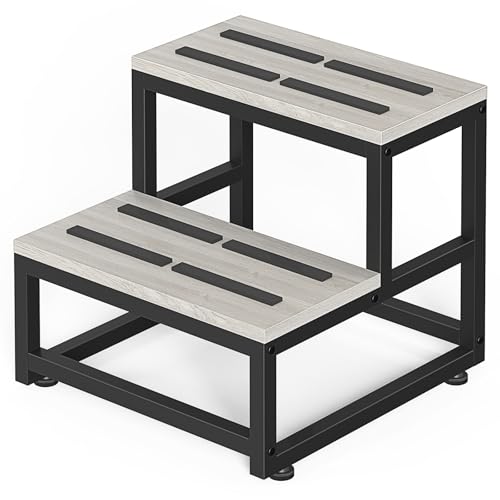
For floors that are not perfectly level, LIANTRAL Two-Step Stool stands out for its height-adjustable feet, which are designed to reduce wobble on uneven surfaces. The two-step design uses a reinforced metal frame and 0.6-inch-thick wooden steps, with adhesive anti-slip strips for added traction. Its maker rates it for 500 pounds, and the 15-by-14-inch footprint is useful to consider when space beside the bed is tight. This is a fit for buyers seeking a straightforward two-step stool with leveling adjustment.
Bottom line: Choose this for adjustable leveling feet, provided the step height matches your bed.
How to choose steps for a high bed
Start by measuring the vertical rise from the floor to the mattress top, then compare it with the stool’s top step or platform height. A two-step design divides the climb into smaller rises, while a single platform adds only its height. For example, a platform that tops out at 5.9 inches cannot bridge a much larger gap on its own. Also check the footprint: a 15.7-by-15.4-inch stool needs clear floor space, while a 12-by-32-inch pedal needs a long approach area. Include the user’s balance and need for a handhold in the choice; an adjustable handle or bed rail serves a different purpose from a wider step surface.
Use the maker’s capacity as a ceiling for the combined user and anything carried up the steps, not as a target load. Make sure the stool sits fully on a firm, level surface before stepping onto it.
Match the step height to the mattress
A good bedside step reduces the height of each climb without creating a narrow or awkward landing. Measure from the floor to the mattress top, not to the bed frame, and consider whether bedding compresses under the user. Then compare that rise with the total stool height and the spacing between steps; product height alone does not tell you each individual riser height. A low platform can help with a modest rise, but a mattress far above it still leaves a large final step. If you cannot determine whether the stool reaches the bed comfortably, confirm the step dimensions before ordering.
Keep the stool close enough to the bed for a natural transfer, but do not wedge it where it can rock or interfere with another support rail. For a user who needs a handhold, pick a purpose-built handle or rail rather than treating a stool edge as a grab bar.
Step stools, platforms and bed rails compared
Two-step stools, single platforms and rail-equipped bed steps solve different access problems. This comparison shows what each type contributes and the condition that makes it a better fit.
| Type | Useful when | Trade-off |
|---|---|---|
| Two-step stool | The bed needs a higher approach and two footholds help break up the climb | Needs floor space and stable placement |
| Single platform | The mattress is only modestly above the user’s comfortable step height | Limited added height |
| Rail-equipped bed step | A user needs a handhold alongside a pedal | Bulkier setup; check compatibility with bed and mattress |
Choose by function first: extra height is not the same as balance support. A step can make the climb shorter, while a rail gives a handhold only if it is secured and positioned for the bed and user.
Use bedside steps safely
Place bedside steps on a firm, level floor and check that every foot contacts the surface before use; adjustable feet can help address uneven flooring when the model has them. Keep the approach clear of rugs, cords and bedding that can shift underfoot. Step up facing the stool, place a full foot on each tread, and avoid carrying bulky objects that block the view of the next step. A weight rating applies to the whole load, so include a carried item in the calculation.
For nighttime use, room lighting still matters even when a model includes a motion light or glow feature. A visible platform is not a substitute for a stable foothold. Stop using a stool if a foot loosens, a tread shifts or the frame wobbles; tightening or replacing a damaged component is safer than continuing to climb on it.
Frequently Asked Questions
How high should a step stool be for a high bed?
Choose a stool whose top step reduces the mattress rise to a comfortable final step without forcing an awkward reach. Measure floor to mattress top first; a platform adjustable only to 5.9 inches suits a modest rise, not every high bed.
Are two-step stools safer than one-step platforms?
A two-step stool divides a larger climb into more footholds, while a single platform adds only its own height. The safer choice depends on the rise, stable placement and the user’s ability to balance.
Can bedside steps be used on carpet?
They can be used only when the stool remains stable and all feet sit securely on the surface. Deep or plush carpet can allow feet to sink or shift, so test for rocking before climbing and prefer a firmer placement.
Should I choose a bed step with a handle?
A handle can provide a handhold while standing or transferring, which matters for users who need balance support. Check that the handle adjusts to a usable height and that the frame fits the bed; do not use a stool without a handle as a grab bar.
How much weight capacity should bedside steps have?
Select a rated capacity above the user’s weight plus anything carried up the steps. A 500-pound rating does not mean the stool should be loaded to that limit if the user is carrying items.