
Brazing Rod for Steel: 3 Options Compared by Fit

For general steel repairs, Bernzomatic Bronze Brazing Rods is the clearest fit because its bronze rods are specified for steel and come flux-coated. Choose All Metal Flux-Core Brazing Rods if you want flux-core rods intended for a handheld propane torch; choose Cadhena Brass Brazing Rods when brass filler suits your job. Brazing joins metals with a filler that melts below the base metal, unlike welding, which melts the base metal.
These options differ in filler and rod dimensions, so match the alloy and torch setup to the steel joint before starting.
We earn a commission if you buy through links on this page. As an Amazon Associate I earn from qualifying purchases. Products are compared on manufacturer specifications, not hands-on testing.
- Best overall: Bernzomatic Bronze Brazing Rods – Bronze filler, flux coating, and specified steel use make it the most direct match.
- Best for propane torch use: All Metal Flux-Core Brazing Rods – The maker says its flux-core rods are designed for a standard handheld propane torch.
- Best for brass filler: Cadhena Brass Brazing Rods – The brass rods are specified for carbon and alloy steel applications.
| Product | Best for | Length | Diameter | Count | Shop |
|---|---|---|---|---|---|
| Bernzomatic Bronze Brazing Rods | General steel repairs | 12 in | — | 4 rods | Check Price on Amazon |
| All Metal Flux-Core Brazing Rods | Propane torch jobs | 13 in | 1/16 in | 20 rods | Check Price on Amazon |
| Cadhena Brass Brazing Rods | Brass filler needs | 9.84 in | 1/16 in | 25 rods | Check Price on Amazon |
Brazing Rods for Steel
Compare filler material and rod dimensions to find an option suited to your steel joint and heat source.
Bernzomatic Bronze Brazing Rods

Bronze filler and a flux coating distinguish these rods from the flux-core and brass options. The pack contains four 12-inch rods, and the maker gives a 1,595–1,630°F working-temperature range and names steel, cast iron, and copper among the intended metals. That makes this a direct choice for a steel repair where bronze filler is appropriate. The limitation is the four-rod count; a larger job may need more filler. Confirm that the specified working range and bronze alloy suit the steel and joint design before heating.
Bottom line: Choose these for a steel repair that calls for flux-coated bronze filler.
All Metal Flux-Core Brazing Rods

The flux-core construction and stated handheld-torch use set these apart from the bronze and brass rods. The pack has twenty rods measuring 13 inches by 1/16 inch; the maker says they can be used with a standard propane torch and lists steel among the compatible metals. This format suits small repairs where a handheld torch is the intended heat source.
Bottom line: Choose these when flux-core and handheld propane-torch compatibility matter most.
Cadhena Brass Brazing Rods
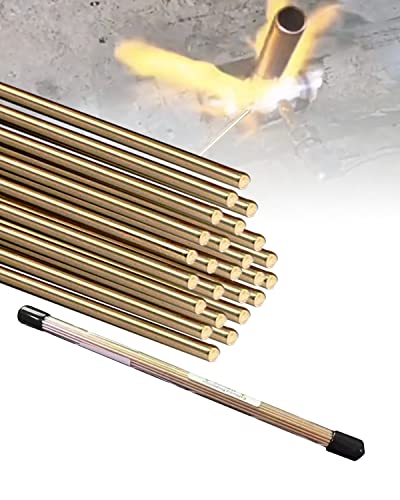
Brass filler is the defining difference here: these 25 rods are 1/16 inch thick and 9.84 inches long, and the maker names carbon and alloy steel among their uses. This is a reasonable option when the joint specifically calls for brass filler rather than bronze. The shorter rod length may suit smaller repairs, though it provides less reach than the 12- and 13-inch alternatives. The maker cautions that zinc gas can be produced during welding; work outdoors or in an open area and wear a protective mask as directed.
Bottom line: Choose these when brass filler is appropriate and you can work with strong ventilation.
How to Choose a Brazing Rod for Steel
Choose by filler alloy, joint fit, and heat source—not by the word “steel” alone. Brazing filler melts above 840°F while the steel base metal remains solid; welding melts the base metal, so a welding rod is not automatically a brazing substitute. Flux helps remove or limit oxides, while a flux-core rod carries flux within the rod. A close, even joint gap helps molten filler flow by capillary action; for many brazed joints, a clearance around 0.001–0.005 inch is a useful general target, but alloy and joint geometry change the fit. Match the filler to the steel grade and service conditions, and do not assume every broadly labeled metal rod is suitable for every steel joint.
Rod Size and Joint Fit
Rod diameter affects how quickly filler is supplied, while rod length affects reach and handling. A 1/16-inch rod is suited to controlled filler placement on smaller joints; larger joints may need more filler and a rod size appropriate to the joint, not simply a longer rod. Clean the steel to bright metal before brazing: oil, paint, rust, and scale interfere with wetting. Keep the joint gap consistent, because a gap that is too wide can weaken capillary flow and one that is too tight can prevent filler from entering. Make a test joint on matching scrap when fit or technique is uncertain, then check that filler has flowed along the seam rather than merely forming a surface bead.
| Need | What to prioritize |
|---|---|
| Steel repair with bronze filler | Bronze alloy and flux coating |
| Handheld torch setup | Rod compatible with the torch and heat source |
| Brass filler joint | Brass alloy and strong ventilation |
Steel Brazing Versus Steel Welding
Brazing joins steel by melting a filler alloy into a prepared joint while keeping the steel below its melting point. Welding instead fuses the base metal, and its filler rods are made for that process; the oxy-acetylene carbon-steel rod in this group is a welding rod, not a brazing rod. The distinction matters because a welding consumable and a brazing filler have different operating methods and joint expectations. For brazing, heat the joint so the filler flows into the gap rather than melting the rod directly with the torch flame. Use the product’s process and compatible filler, and avoid treating tensile-strength figures for a welding deposit as a measure of a brazed joint.
Ventilation and Brazing Safety
Use strong ventilation whenever heating metal, and take particular care with brass filler: zinc-containing alloys can produce hazardous fumes when heated. The brass-rod maker specifically advises working outdoors or in an open place and wearing a protective mask. Keep flammable materials away from the work area, secure the steel so it cannot shift, and wear eye protection and heat-resistant gloves; hot steel can look unchanged while remaining dangerous to touch. A handheld propane torch still produces an open flame and can ignite nearby materials. Let the joint cool before handling, and do not use a water quench unless the steel and process call for it.
Frequently Asked Questions
What temperature does steel brazing require?
Steel brazing uses filler that melts above 840°F while the steel base metal stays solid. The needed heat depends on the filler alloy, joint size, and torch, so a product’s working range is more useful than a single universal setting.
Can a propane torch braze steel?
A propane torch can braze steel when the filler alloy and joint size are compatible with the heat available. The maker of All Metal Flux-Core Brazing Rods says its flux-core rods are designed for a standard handheld propane torch; larger joints can require more heat than a handheld torch supplies.
How clean should steel be before brazing?
Steel should be clean and bright at the joint, with oil, paint, rust, and scale removed. A uniform close-fitting gap—often around 0.001–0.005 inch for many brazed joints—helps filler flow, though the alloy and joint design affect the proper clearance.
Is a steel welding rod the same as a brazing rod?
No. Brazing filler melts above 840°F while the steel remains solid, whereas welding fuses the base metal. Use a consumable made for the intended joining process rather than substituting a welding rod for brazing filler.
Do brass brazing rods need ventilation?
Yes. Heating zinc-bearing brass can produce hazardous fumes, so work outdoors or with strong ventilation and follow the rod maker’s protective-mask advice. Keep your face out of the fume plume and use eye and hand protection around the torch and hot steel.