
DuPont Teflon Snow and Ice Repellant: 5 Options Compared

For a standalone DuPont Teflon Snow and Ice Repellant, choose DuPont Teflon Snow and Ice Repellant, 10 oz: its 10-ounce aerosol is intended for snow shovels, snow blowers, door gaskets, and other outdoor uses. Choose a bundle or another snowblower spray instead if you want an added lubricant or a different snowblower-specific formula.
Snow and ice repellants are surface coatings meant to reduce buildup; they are not substitutes for safe snowblower operation or mechanical maintenance.
We earn a commission if you buy through links on this page. As an Amazon Associate I earn from qualifying purchases. Products are compared on manufacturer specifications, not hands-on testing.
- Best overall: DuPont Teflon Snow and Ice Repellant, 10 oz – The standalone 10-ounce aerosol is specified for snow shovels, snow blowers, door gaskets, and more.
- Best for snowblower-specific spray: DuPont Snow Repellant + Stens 752-102 Spray – The bundle pairs DuPont’s 10-ounce aerosol with an 11-ounce spray formulated for snowblowers.
- Best for dry-film lubricant: DuPont Snow Repellant + Dry-Film Lubricant – The bundle adds a 10-ounce dry-film Teflon lubricant for metal-on-metal applications.
| Product | Best for | Format | Included volume | Additional product | Shop |
|---|---|---|---|---|---|
| DuPont Teflon Snow and Ice Repellant, 10 oz | Standalone snow coating | Aerosol | 10 oz | — | Check Price on Amazon |
| DuPont Snow Repellant + Dry-Film Lubricant | Dry-film lubricant bundle | Two aerosols | 10 oz + 10 oz | Dry-film Teflon lubricant | Check Price on Amazon |
| DuPont Snow Repellant + Stens 752-102 Spray | Snowblower bundle | Two aerosols | 10 oz + 11 fl oz | Stens snowblower spray | Check Price on Amazon |
| Rotary 9983 Sno-Jet Spray | Alternative snow spray | Aerosol can | 11 oz | — | Check Price on Amazon |
| DuPont Snow Repellant + Silicone Lubricant | Silicone lubricant bundle | Two aerosols | 10 oz + 14 oz | Silicone surface-safe lubricant | Check Price on Amazon |
DuPont Teflon snow and ice repellant options
Compare the standalone aerosol, multi-product bundles, and snowblower-focused alternatives by what each package includes.
DuPont Teflon Snow and Ice Repellant, 10 oz

DuPont Teflon Snow and Ice Repellant, 10 oz is the standalone choice, unlike the bundles that add a second spray. The 10-ounce aerosol contains a clear non-stick coating formulated with Teflon fluoropolymer and silicone. DuPont says it helps prevent snow and ice buildup, frozen doors, and clogged augers and chutes; the product is intended for snow blowers, door gaskets, snow shovels, snowmobiles, snow plows, and gutters.
Choose it if you want the snow-and-ice coating without another product in the package. Its uses do not establish compatibility with every surface, so check the product label before applying it to an unlisted material.
Bottom line: Pick this for the standalone 10-ounce snow-and-ice coating.
DuPont Snow Repellant + Dry-Film Lubricant

DuPont Snow Repellant + Dry-Film Lubricant pairs the 10-ounce DuPont snow-and-ice aerosol with a separate 10-ounce dry-film Teflon lubricant, making it the bundle for buyers who also need a lubricant. The snow coating has the same uses as the standalone can, including snow shovels, snow blowers, and door gaskets. The added lubricant is described as a micro-thin, dirt-resistant coating for tight-tolerance, metal-on-metal applications, with an operating range of -100°F to +500°F.
Choose this package when both products suit the intended jobs. The lubricant is a separate product, not an extra quantity of snow repellant.
Bottom line: Pick this if a separate dry-film lubricant is also useful.
DuPont Snow Repellant + Stens 752-102 Spray

DuPont Snow Repellant + Stens 752-102 Spray combines the DuPont 10-ounce snow-and-ice aerosol with an 11-fluid-ounce Stens 752-102 spray formulated specifically for snowblowers. Stens says its non-stick polymer treatment is intended to prevent snow buildup in the auger housing and chute, while DuPont’s aerosol covers a broader set of listed uses such as shovels, door gaskets, and gutters.
This pairing suits buyers who want a snowblower-focused second spray alongside the general-purpose DuPont coating. The two sprays have different formulations and intended uses, so select between them by the surface and purpose rather than treating them as interchangeable.
Bottom line: Pick this for an additional snowblower-formulated spray.
Rotary 9983 Sno-Jet Spray
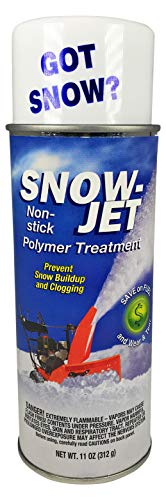
Rotary 9983 Sno-Jet Spray is an alternative snow spray rather than a DuPont product. Its maker identifies an 11-ounce can, but do not establish a specific surface or application; that makes it less useful to buyers who want the use range of the DuPont aerosol or the snowblower-specific purpose of the Stens spray.
Consider it only if you are comparing another snow-product option and can confirm its intended application on the can before use. The package size alone does not show whether it is suitable for an auger, chute, shovel, gasket, or other surface.
Bottom line: Pick this only after confirming its intended application on the can.
DuPont Snow Repellant + Silicone Lubricant

DuPont Snow Repellant + Silicone Lubricant pairs the DuPont 10-ounce snow-and-ice aerosol with a 14-ounce DuPont Silicone Surface Safe Lubricant. The second aerosol is intended to reduce friction, sticking, and squeaks, and its surface compatibility includes non-metal materials that conventional lubricants can damage. That makes this bundle distinct from the dry-film lubricant pairing.
Choose it when the silicone lubricant has a separate job in addition to snow control. The silicone can is not described as an additional snow repellant, so the snow-coating quantity remains the same as in the standalone option.
Bottom line: Pick this when you also need a silicone lubricant for varied surfaces.
How to choose a snow and ice repellant
Choose by intended surface and formula first, then compare package contents. A snowblower auger and chute need a product whose label supports that use; a door gasket, shovel, or gutter may call for a broader surface-use range. Aerosol sprays are convenient for coating surfaces, but they are not de-icers that remove an existing layer of ice.
Before applying any coating, turn off the snowblower, remove the key, and disconnect the spark-plug wire; never clear an auger by hand. Use the machine’s clean-out tool, then coat only the surfaces specified on the spray label. Keep aerosol away from heat, sparks, and open flames, and follow the can’s ventilation and storage warnings. Do not assume similar-looking sprays share the same application or temperature limits.
Where snow repellant is used on equipment
Snow repellant is typically applied to exposed surfaces where wet snow can cling, such as a snowblower’s auger housing and discharge chute. A smooth coating can reduce sticking, but it does not prevent clogs in every snow condition or replace clearing a blocked machine safely. Snow texture, temperature, and the condition of the surface all affect buildup.
Surface compatibility matters beyond snowblowers. The DuPont product’s applications include shovels, door gaskets, snowmobiles, snow plows, and gutters; that range does not mean every coating belongs on every component. Avoid spraying belts, controls, walking surfaces, or any area the label excludes. Apply only to a stationary, cooled machine, and keep spray off hands and clothing; aerosol propellants can be flammable.
Snow spray types and bundle differences
Snow-and-ice coatings, dry-film lubricants, silicone lubricants, and snowblower-formulated sprays serve different roles. Use the table to match the added product in each package to a separate task; a bundle is useful only when both included sprays fit your needs.
| Type | Typical role | Choose when |
|---|---|---|
| Snow-and-ice coating | Reduce snow and ice buildup on listed surfaces | You need a general snow-season coating |
| Dry-film lubricant | Lubricate compatible moving or metal-on-metal parts | You have a separate lubrication task |
| Silicone lubricant | Reduce friction, sticking, or squeaks on compatible surfaces | You need a lubricant for non-metal materials |
| Snowblower-formulated spray | Treat auger housing and chute areas | You want a snowblower-specific formula |
How to apply and store aerosol snow sprays
Apply aerosol coatings outdoors or in a well-ventilated area, away from flames, pilot lights, and hot surfaces. Aerosol cans are pressurized: do not puncture or burn a can, and do not leave one in a hot vehicle or near a heater. Follow the label for shaking, distance, drying time, and surface preparation, since these instructions differ by formula.
For snowblower work, shut down and cool the machine before applying spray, remove the ignition key, and disconnect the spark-plug wire. Never reach into an auger or chute, even when the engine is off; use the machine’s clean-out tool. Keep coating off belts and friction surfaces unless the manufacturer specifically allows it, because lubricant residue can affect traction or drive components.
Frequently Asked Questions
Does snow repellant melt existing ice?
No, a non-stick coating is intended to reduce buildup rather than melt ice already on a surface. Remove accumulated ice mechanically using the equipment maker’s safe procedure before applying a surface coating.
Can I spray a snowblower while it is running?
No, shut the machine off and let hot parts cool before application. Remove the key and disconnect the spark-plug wire before working near the auger or chute, and never put a hand inside either area.
Where should snowblower spray be applied?
Apply only to the auger housing, chute, or other surfaces that the specific product label permits. Keep spray off belts, controls, and walking surfaces unless the equipment and spray instructions expressly allow it.
Are dry-film and silicone lubricants snow repellants?
Not necessarily; dry-film and silicone lubricants have separate lubrication purposes, while snow repellant is intended to reduce snow or ice buildup on designated surfaces. A bundle containing both does not mean the lubricant can replace the snow coating.
How should aerosol snow sprays be stored?
Store aerosol cans away from heat, sparks, and open flames, and do not leave them in a hot vehicle. Pressurized cans must not be punctured or burned; use the storage temperature and disposal instructions on the label.