
Protein Based Ant Bait: 5 Options Compared

For a protein based ant bait, TERRO Ultra Complete Kill Ant Baits is the clearest match because its bait combines liquid sugar and protein paste in six ready-to-use stations. Choose Combat Max 2in1 Ant Bait Station if you want four stations with a dual formula for sugar- and protein-loving ants; the gel options are alternatives if you prefer applying bait yourself.
We earn a commission if you buy through links on this page. As an Amazon Associate I earn from qualifying purchases. Products are compared on manufacturer specifications, not hands-on testing.
- Best overall: TERRO Ultra Complete Kill Ant Baits – Its liquid sugar and protein paste bait is packaged in six ready-to-use stations.
- Best for dual-formula stations: Combat Max 2in1 Ant Bait Station – The four stations are designed to attract both sugar- and protein-loving ants.
- Best for syringe application: Atticus Savitri Ant Gel Bait – The prefilled syringe dispenses gel in spots or a thin line near trails or nest sites.
| Product | Best for | Bait format | Package | Use | Shop |
|---|---|---|---|---|---|
| TERRO Ultra Complete Kill Ant Baits | Protein paste stations | Liquid sugar + protein paste | 6 stations | Indoor | Check Price on Amazon |
| Combat Max 2in1 Ant Bait Station | Sugar and protein ants | Solid + gel bait | 4 stations | Indoor + outdoor | Check Price on Amazon |
| Atticus Savitri Ant Gel Bait | Prefilled syringe gel | Gel | 4 × 30 g | Indoor + outdoor | Check Price on Amazon |
| Syngenta Advion Singular Ant Gel | Single gel tube | Gel | 30 g tube | — | Check Price on Amazon |
| Syngenta Advion Ant Gel, 4 Tubes | Multiple gel applications | Gel | 4 × 30 g tubes | Indoor + outdoor | Check Price on Amazon |
Protein Based Ant Bait Options
Compare the bait format and application style to find an option that fits your ant activity and placement needs.
TERRO Ultra Complete Kill Ant Baits

TERRO Ultra Complete Kill Ant Baits is the most explicit match for protein-feeding ants: its dual formula pairs liquid sugar bait with protein paste in ready-to-use stations. TERRO says worker ants carry bait back to the colony and that visible activity can decline within days. The six-station package suits someone who wants contained placements rather than dispensing gel directly. The product targets several common household ant types, but the maker excludes harvester, carpenter and pharaoh ants from its named species list, so check whether that limitation matters for your infestation.
Bottom line: Choose this if you want ready-to-use stations with a clearly identified protein paste component.
Combat Max 2in1 Ant Bait Station

Combat Max 2in1 Ant Bait Station stands out for its dual formula, which is designed for both sugar- and protein-loving ants in four transparent stations. The maker says it contains fipronil and that foraging ants carry bait toward the nest; it also names exclusions for harvester, carpenter and pharaoh ants. This option suits buyers who want station placement and an easy view of the bait. Unlike TERRO Ultra Complete Kill Ant Baits, the product facts do not identify a protein paste, so choose TERRO Ultra Complete Kill Ant Baits when an explicitly named protein component is the priority.
Bottom line: Choose this for a dual-formula station when transparent monitoring is useful.
Atticus Savitri Ant Gel Bait
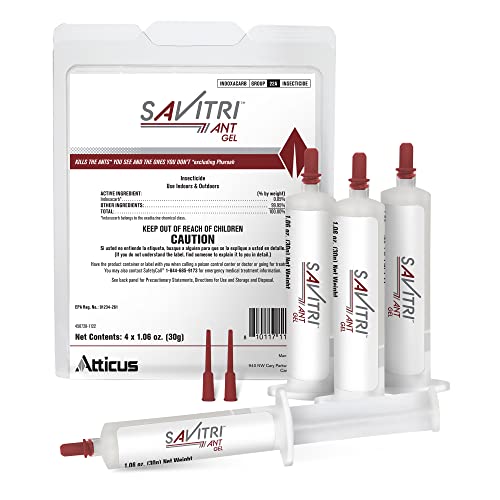
Atticus Savitri Ant Gel Bait replaces enclosed stations with a prefilled syringe, allowing gel to be dispensed as spots or a thin line near an ant trail or nest site. The maker identifies 0.05% indoxacarb and names several ant species, including pavement, carpenter and odorous house ants. It is a related option for someone who prefers targeted gel placement, rather than a bait specifically identified as protein-based. Its four 30-gram syringes provide more application control, but require careful placement and cleanup according to the product label.
Bottom line: Choose this if targeted syringe placement matters more than a named protein bait.
Syngenta Advion Singular Ant Gel

Syngenta Advion Singular Ant Gel comes as a single 30-gram gel tube with a translucent, odorless, non-staining formulation. The maker says it targets most pest ant species, including key sweet feeders, and that ants continue consuming the gel over an extended period. Check the product label for suitable placement and application directions before choosing it for a particular room or surface.
Bottom line: Choose this for a single gel tube when a station format is not preferred.
Syngenta Advion Ant Gel, 4 Tubes
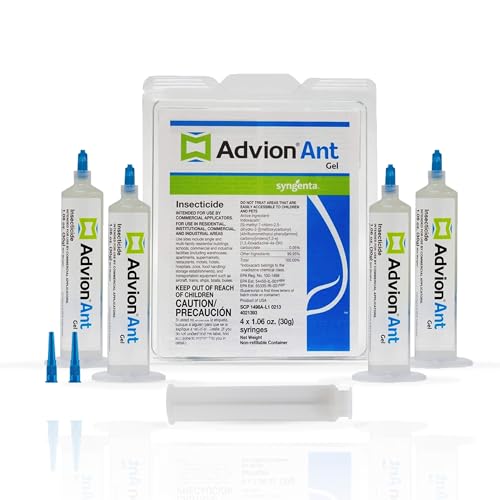
Syngenta Advion Ant Gel, 4 Tubes differs from a single-tube gel by packaging four 30-gram tubes, making it the multi-tube choice among these applied gels. The maker identifies 0.05% indoxacarb and describes the formula as odorless; it also says the gel targets major ant species. Choose it when several gel placements are more useful than enclosed stations, and follow the label for where and how much gel to apply.
Bottom line: Choose this when you want several tubes for targeted gel placements.
How to Choose Protein Based Ant Bait
Choose bait by matching the format to the ants’ feeding interest and the placement you can maintain safely. Ants may shift between carbohydrate-rich and protein-rich foods as colony needs change, so a dual-food bait can be useful when the preferred food is unclear. Stations keep bait contained, while gels let you place small deposits close to trails or nest entrances. If ants are actively feeding on protein-rich foods, favor a product that explicitly identifies protein bait rather than assuming every ant gel has it. Avoid spraying insecticide or cleaning chemicals directly over bait placements; those can disrupt the trail or deter feeding. Keep all bait inaccessible to children and pets, and use placements and quantities allowed by the label.
Bait Stations Compared With Ant Gel
Stations and gels differ mainly in containment and placement control. A station is ready to place and keeps bait within a housing, while gel requires applying a line or spots where ants travel. Both approaches depend on ants finding and feeding on the bait, so trail location matters more than spreading bait across a room. Use this quick comparison to match format to the job.
| Need | Format to consider | Tradeoff |
|---|---|---|
| Contained placement | Station | Fixed placement point |
| Small targeted deposits | Gel | Requires careful application |
| Unclear food preference | Dual-food bait | Check whether protein is explicitly included |
Do not place bait where food is prepared or stored, and do not leave accessible bait where children or pets can reach it.
Where to Place Ant Bait
Place bait close to active ant trails, where foragers can find it without crossing a busy or frequently cleaned surface. Ant trails often run along edges, corners, and openings; observe the route first rather than placing bait at random. For gel, small deposits near a trail or nest site are easier to target than a long, unnecessary line. For stations, choose a stable, protected spot that ants can reach and people can avoid disturbing. Keep bait away from food-contact areas and moisture that could wash it away. If ants ignore one food type, remove competing crumbs and consider a bait whose formula better matches what the ants are seeking.
Safe Use and Common Baiting Mistakes
Keep ant bait out of children’s and pets’ reach, even when a station is child-resistant or a gel is applied in a small amount. Child-resistant packaging is not childproof, and pets may investigate bait left on floors or counters. Follow the product label for placement and handling, and wash hands after applying gel. A common mistake is spraying repellent insecticide over a bait trail; that can scatter ants or prevent them from feeding and carrying bait. Another is removing bait as soon as activity increases: feeding ants may be expected around an active bait placement. If activity persists, reassess trail location and food preference, then follow the label’s replacement or reapplication directions.
Frequently Asked Questions
How long should ant bait stay in place?
Leave bait available while ants are feeding, and replace or reapply it according to the label. Some colony baits take several days to reduce visible activity, so removing bait after a short burst of ant traffic can interrupt feeding.
Should I use protein bait or sugar bait?
Match the bait to what ants are feeding on, since preferences can shift with colony needs. If you cannot tell, a dual-food bait that explicitly includes protein and sugar offers both food types.
Can I spray insecticide near ant bait?
Avoid spraying directly on or around bait placements because repellent sprays can deter ants from feeding. Let bait remain accessible along the trail, and use other products only as their labels allow.
Where should I put ant gel bait?
Apply gel in small spots or a thin line near an active trail or nest site when the product label permits that placement. Keep it off food-contact surfaces and out of reach of children and pets.
Are ant bait stations safe around pets?
A station or small gel placement still needs to be inaccessible to pets, which may chew, paw at, or lick bait. Use only placements allowed by the label and promptly address any accidental exposure according to the label’s emergency directions.