
Sled Dog Pulling Harnesses: 4 Models Compared

For a Nordic-breed dog near 45–50 pounds, Dog Pulling Harness X-Back, Size L is the closest match because its X-back build is sized for that range and has padded neck and ribs. Choose Reflective X-Back Harness, XL instead for a dog matching its larger XL measurements and a reflective design; PET ARTIST Dog Sled Harness, Size L is aimed at large work dogs, while GentleBliss X-Back Pulling Harness, Size L has a shorter neck-size range.
We earn a commission if you buy through links on this page. As an Amazon Associate I earn from qualifying purchases. Products are compared on manufacturer specifications, not hands-on testing.
- Best overall: Dog Pulling Harness X-Back, Size L – Its X-back design, padding and stated 45–50-pound target suit mushing with an average-sized dog.
- Best for low-light visibility: Reflective X-Back Harness, XL – Reflective strips distinguish it, with XL measurements for necks 18–21 inches and chests 29.5–37.5 inches.
- Best for shorter necks: GentleBliss X-Back Pulling Harness, Size L – Its size L is specified for necks 16–18 inches and back lengths 18–20 inches.
| Product | Best for | Neck fit | Chest fit | Design | Shop |
|---|---|---|---|---|---|
| Dog Pulling Harness X-Back, Size L | Average Nordic dogs | 15–19 in | 25.5–33.5 in | X-back; padded neck and ribs | Check Price on Amazon |
| Reflective X-Back Harness, XL | Reflective XL fit | 18–21 in | 29.5–37.5 in | X-back; reflective strips | Check Price on Amazon |
| GentleBliss X-Back Pulling Harness, Size L | Shorter neck fit | 16–18 in | — | X-back; polyester and cotton | Check Price on Amazon |
| PET ARTIST Dog Sled Harness, Size L | Large work dogs | — | — | 50 mm nylon webbing; padded neck and chest | Check Price on Amazon |
Sled Dog Pulling Harnesses
Compare the harnesses by fit measurements and construction before choosing one for a pulling sport.
Dog Pulling Harness X-Back, Size L

For an average-sized dog around 45–50 pounds, this X-back mushing harness gives the clearest weight target among these choices. Size L fits a 15–19-inch neck, 25.5–33.5-inch chest and 19.5–25-inch back. Nylon construction and padding at the neck and ribcage are intended for pulling activities such as sledding, skijoring, bikejoring and canicross. The maker says it is tailored to Nordic breeds including Siberian Huskies and Alaskan Malamutes. Its fit range is narrower than the XL option, so measure the dog rather than choosing by breed alone.
Bottom line: Choose this for a Nordic-type dog whose measurements and weight fall within its size range.
Reflective X-Back Harness, XL

For a larger dog that fits its XL dimensions, this reflective X-back harness combines pulling-sport use with visibility details. The ranges are 18–21 inches at the neck, 29.5–37.5 inches at the chest and 21.5–26 inches for the back; the maker recommends dogs around 55–77 pounds. The harness is nylon and intended for sledding, canicross, bikejoring, skijoring and scootering. Reflective strips may help make the dog more visible in low light, but they do not replace a light or other visibility measures. Its XL fit is too large for dogs outside those measurements.
Bottom line: Choose this for a dog that matches the XL measurements and needs reflective details.
GentleBliss X-Back Pulling Harness, Size L
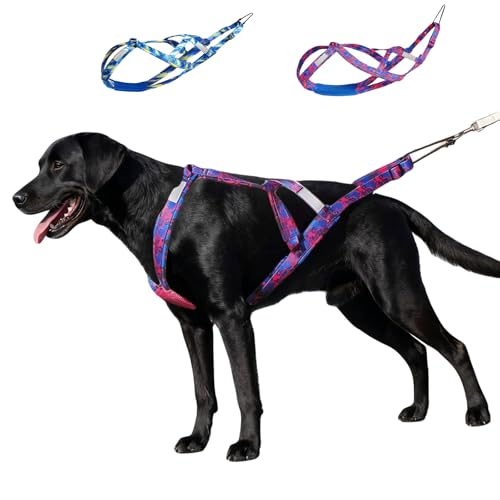
For a dog with a shorter neck measurement, this size L X-back pulling harness specifies a 16–18-inch neck and an 18–20-inch back. Its uses include weight pulling, sledding, running, canicross, hiking and skijoring; the traction end has adjustable double-layer webbing. The maker describes the polyester fabric as filled with cotton for a soft feel. Unlike the other size L mushing option here, this one gives a notably shorter neck and back range, while no chest measurement is provided. That makes careful neck and back measurement especially important before selecting it.
Bottom line: Choose this when its shorter neck and back measurements fit your dog.
PET ARTIST Dog Sled Harness, Size L

For large work dogs and training focused on pulling, this harness uses 50 mm nylon webbing with reinforced stitching and padding at the neck and chest. The maker says the webbing resists up to 1,200 pounds; that figure is not a safe working-load rating for a dog or a recommended load to pull. Listed uses include weight-pulling training, canicross and ski-joring as well as sledding. The size is L, but no body measurements accompany it here, so fit cannot be compared precisely with the measured options. Prioritize a correctly fitted harness and a gradual training plan over webbing strength.
Bottom line: Choose this for large-work-dog pulling training when its fit can be confirmed.
How to choose a sled dog pulling harness
Choose a pulling harness by measuring the dog and matching the intended activity, not by breed label alone. An X-back harness is shaped to carry a pulling line from the dog’s torso; a walking vest with leash clips is built around leash control and is not interchangeable just because it is sturdy. Measure neck, chest and back with a flexible tape, keeping it snug without compressing the coat or skin. Compare all required dimensions to the size range: if any measurement falls outside it, select a different size or design rather than sizing up by weight alone. The products here vary in which measurements they provide, so prioritize a fit range you can verify.
How an X-back harness fits during pulling
An X-back harness should sit with its neck opening clear of the throat and its body straps lying along the ribcage, without restricting the shoulders. A pulling line attaches at the rear connection point, so the harness can transfer tension through the dog’s torso instead of concentrating it at the neck. Before attaching a load, check that the harness stays centered when the dog walks and turns; twisted webbing or rubbing at the armpits signals a poor fit. Start with light, controlled pulling practice and stop if the dog shows discomfort or altered movement. No webbing strength claim establishes a safe load for a particular dog.
Choosing between harness styles for pulling sports
For sustained sledding, skijoring or bikejoring, a purpose-built pulling harness is generally a better match than an everyday walking vest. The X-back shape is intended for a line pulling from behind, while a vest’s front or back leash clips primarily offer walking and handling positions. Weight-pulling training is a separate use: the dog’s conditioning, surface and gradual load progression matter as much as construction. This table gives a basic starting point; the dog’s body measurements and activity decide the final fit.
| Need | Harness style | Fit check |
|---|---|---|
| Pulling sports | X-back pulling harness | Neck, chest and back range |
| Walking and leash handling | Adjustable vest harness | Secure fit without shoulder restriction |
| Weight-pulling practice | Purpose-built pulling harness | Fit plus gradual, controlled conditioning |
Frequently Asked Questions
How tight should a sled dog harness fit?
A pulling harness should stay centered without pressing on the throat or limiting shoulder movement. Check the fit while the dog walks and turns, and stop if straps twist or rub.
Which measurements matter for an X-back harness?
Neck, chest and back measurements are the useful starting points, since size ranges can differ in all three. Use a flexible tape and compare each measurement to the maker’s range rather than relying on weight alone.
Can a walking harness be used for sled pulling?
A walking vest with leash clips is designed for leash control, while an X-back harness is shaped for a pulling line attached behind the dog. For sustained pulling sports, choose a harness designed for that load direction and fit.
Can a dog pull the harness maximum strength?
No webbing resistance figure establishes a safe load for a dog. Match the harness to the dog’s fit and conditioning, start with controlled practice, and increase pulling demands gradually.
Can dogs wear pulling harnesses in low light?
Reflective strips can help visibility when light hits them, but they do not emit light themselves. Add an active light or other visible gear when exercising near traffic or in very dark conditions.