
Best Hot Knife for Cutting Plastic: 3 Tools Compared

Afantti Adjustable Hot Knife suits most people cutting plastic because its adjustable 200–500°C range includes settings intended for plastic sheets. Choose 30W Pen-Style Hot Knife instead for thin-plastic craft work; its maker says it is not for thick plastic sheets.
A hot knife uses a heated blade to melt through material, so ventilation and knowing the plastic type matter as much as blade choice.
We earn a commission if you buy through links on this page. As an Amazon Associate I earn from qualifying purchases. Products are compared on manufacturer specifications, not hands-on testing.
- Best overall: Afantti Adjustable Hot Knife – Its adjustable 200–500°C range is specifically described for plastic sheets.
- Best for more blade options: Adjustable Hot Knife, 12 Blades – It includes 12 blades and a round tip, with adjustable heat from 200–500°C.
- Best for thin plastic crafts: 30W Pen-Style Hot Knife – Its pen-style tool is intended for thin plastic, with a clear warning against thick sheets.
| Product | Best for | Temperature range | Blade count | Intended plastic use | Shop |
|---|---|---|---|---|---|
| Afantti Adjustable Hot Knife | Adjustable heat | 200–500°C | 10 blades + round tip | Plastic sheets | Check Price on Amazon |
| Adjustable Hot Knife, 12 Blades | Blade variety | 200–500°C | 12 blades + round tip | Plastic sheets | Check Price on Amazon |
| 30W Pen-Style Hot Knife | Thin plastic crafts | — | 10 blades | Thin plastic | Check Price on Amazon |
Hot knives for cutting plastic
Compare heat range, blade choices and the thickness limits that matter for your material.
Afantti Adjustable Hot Knife

Afantti Adjustable Hot Knife pairs a 200–500°C adjustment range with 10 blades and a round tip, giving plastic-sheet users more heat control than a fixed-temperature craft tool. Its switch and indicator light make its powered state visible, and the kit also names rope, ribbon, fabric and foam as intended materials. The maker says lower temperatures suit plastic sheets. This is a corded heated blade, so use it with ventilation and keep hands clear of the hot blade. Choose another tool if you need a thickness limit or a foam-specific cutting kit.
Bottom line: Pick this for adjustable heat on plastic sheets and varied blade shapes.
Adjustable Hot Knife, 12 Blades
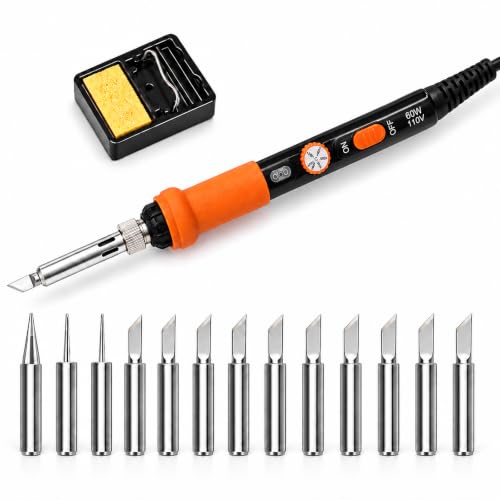
Adjustable Hot Knife, 12 Blades includes 12 interchangeable blades plus a round tip, the largest blade count among the plastic-focused options here. Its 200–500°C range matches the temperature span of Afantti Adjustable Hot Knife, and the maker identifies lower settings for plastic sheets and higher ones for fabric, ribbon and synthetic rope. An on/off switch and indicator light provide a visible operating cue. The broad material list makes it suitable for mixed craft work, but the maker does not establish a maximum plastic thickness. If your project involves rigid or thick sheet, verify its suitability before starting and use a tool intended for that material.
Bottom line: Choose this when blade selection matters for mixed craft materials.
30W Pen-Style Hot Knife
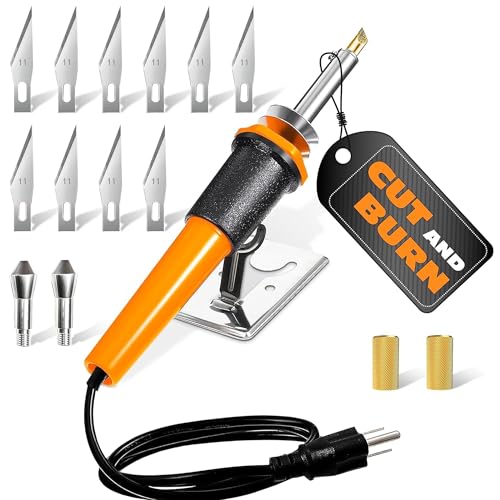
30W Pen-Style Hot Knife is the clearest fit for small craft cuts in thin plastic: its 30W pen-style grip and 55-inch cable are specified alongside foam, mesh and light craft wood. The maker explicitly excludes cardboard and thick plastic sheets, an important boundary that separates it from the adjustable-temperature options. Its kit includes 10 carbon-steel blades, two blade holders and a stand. The tool heats when plugged in and has no button, so unplug it when finished and allow it to cool on a heat-safe surface. Skip this model for thicker or larger plastic pieces.
Bottom line: Pick this for thin plastic craft cuts, not thick sheet.
How to choose a hot knife for plastic
Match the tool to the plastic thickness and cut shape before comparing heat settings. A temperature range that starts at 200°C gives a user adjustment, but a wattage or maximum temperature alone does not prove a tool can cut a particular thickness cleanly. For craft sheet under about 1/8 inch, a small heated blade may be manageable; for thicker sheet, confirm the tool is intended for that thickness rather than forcing it through. A pointed blade helps with short curves and openings, while a broader blade is better suited to straight trimming. Keep the work clamped or supported, and move the blade steadily; lingering in one spot can melt a wider groove than intended.
Plastic type, fumes and safe cutting
Identify the plastic before heating it, because different polymers soften and decompose at different temperatures. Avoid hot-cutting PVC or vinyl unless a tool and controlled process are explicitly designed for it: overheating PVC can release hydrogen chloride fumes. Work outdoors or with effective local exhaust, and never rely on odor as a safety test. Keep the blade away from skin and flammable surfaces; unplug it before changing blades and let it cool fully. A temperature dial is not a substitute for ventilation or material identification. If the plastic is unknown, painted, coated or laminated, do not assume a clean melt is safe; choose a cold-cutting method instead.
Hot knife types and their limits
A craft hot knife with interchangeable blades is suited to small shaping and trimming, while a foam cutter is built around larger foam panels rather than plastic-sheet versatility. Pen-style cutters are easy to guide for fine work but may lack heat controls and are often restricted to thin material. A dedicated industrial fabric cutter prioritizes fused fabric or rope edges and is not automatically suitable for plastic. Use this comparison to match the tool category to the work, not just the highest temperature.
| Tool type | Best match | Key limit |
|---|---|---|
| Adjustable craft hot knife | Small sheet cuts and shaping | Check material and thickness capacity |
| Pen-style craft cutter | Fine cuts in thin plastic | May lack heat controls |
| Foam hot knife | Foam panels and boards | Not a general plastic-sheet cutter |
Blade setup and cutting technique
Secure the blade fully in its holder before heating, and check that fasteners remain tight as the metal expands. Start with a scrap piece and the lowest workable heat setting; raise the temperature gradually only if the blade stalls. Support thin sheet close to the cut line to limit flexing, but keep fingers outside the blade path. For a straight edge, guide the tool against a suitable heat-resistant straightedge without dragging the hot blade into it. Do not force a stalled blade: excessive pressure can bend the blade or send the tool off line. Let the blade cool before storage, and remove residue only when the tool is unplugged and cool.
Frequently Asked Questions
Can a hot knife cut thick plastic sheets?
Some hot knives are intended only for thin plastic, and forcing them through thick sheet can overheat the material or blade. Confirm the tool’s thickness capability before cutting; the 30W pen-style option here excludes thick sheets.
What temperature should I use for plastic?
Start at the lowest workable setting and test on scrap, because plastic types soften at different temperatures. The adjustable tools here offer 200–500°C, but that range is not a universal setting recommendation.
Is it safe to hot cut PVC plastic?
Avoid heating PVC or vinyl unless you have a process designed to control its fumes. Overheated PVC can release hydrogen chloride, so use a cold-cutting method for unknown or poorly ventilated work.
How do I keep plastic from melting unevenly?
Use a steady, unforced pass and support thin plastic close to the cut line. Test on scrap first; slowing down or lingering can widen the melted edge.
Do hot knife blades need tightening?
Check blade seating before use and again after heating if the holder loosens, since metal expands as it warms. Unplug the tool and let it cool before adjusting or replacing the blade.