
Best Shoes for Metal Roof Work: 3 Options Compared

For most people working on metal roofs, Spikeless Rubber Roofing Shoe Covers is the most targeted choice because it is a spikeless rubber traction cover made for roofing surfaces. Choose Steel-Toe Roofing Ankle Boots or Leather Steel-Toe Roofing Shoe Covers instead when built-in steel-toe protection matters more than an overshoe format.
Metal roof panels can be slick, especially when wet; footwear alone cannot make roof access safe. Use fall protection and follow the roof and jobsite safety rules.
We earn a commission if you buy through links on this page. As an Amazon Associate I earn from qualifying purchases. Products are compared on manufacturer specifications, not hands-on testing.
- Best overall: Spikeless Rubber Roofing Shoe Covers – A spikeless rubber-lug cover designed for metal and other roofing surfaces.
- Best for steel-toe coverage: Steel-Toe Roofing Ankle Boots – Built-in steel-toe protection and a deep-lug outsole for roofing and construction.
- Best for leather construction: Leather Steel-Toe Roofing Shoe Covers – Leather upper, steel-toe, steel shank, and an adjustable strap.
| Product | Best for | Footwear type | Toe protection | Size | Shop |
|---|---|---|---|---|---|
| Spikeless Rubber Roofing Shoe Covers | Spikeless roof grip | Overshoe traction aid | None specified | Small-medium | Check Price on Amazon |
| Steel-Toe Roofing Ankle Boots | Impact protection | Ankle boot | Steel toe | 10.5 | Check Price on Amazon |
| Leather Steel-Toe Roofing Shoe Covers | Leather upper | Strap shoe cover | Steel toe | 5 | Check Price on Amazon |
Metal Roof Shoes and Traction Covers
Compare the footwear format and protective features against the demands of the roof and jobsite.
Spikeless Rubber Roofing Shoe Covers

Spikeless Rubber Roofing Shoe Covers is a removable traction cover rather than a complete work shoe, making it the most direct match for adding roof-oriented tread over footwear you already own. Its spikeless rubber lug sole is designed for metal, wood, felt, slate, and shingle roofs, as well as wet floors and other slippery surfaces. The cover format may suit workers who need to transition between roof and finished flooring without scratch-making spikes. It does not provide the integrated steel-toe offered by the other options, so it is a weaker fit where impact protection is required; confirm the cover fits your work shoes before use.
Bottom line: Choose this if you want spikeless traction covers and already have suitable work footwear.
Steel-Toe Roofing Ankle Boots
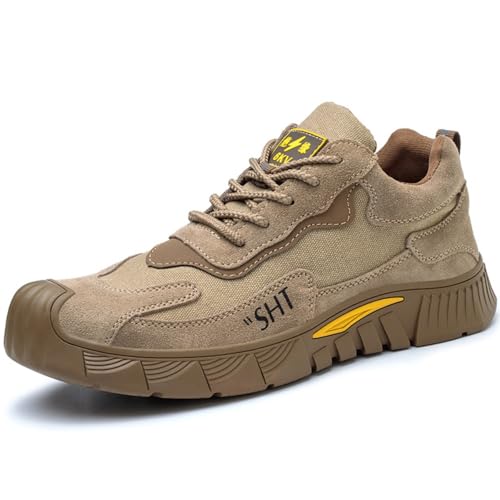
Steel-Toe Roofing Ankle Boots differs from the overshoe options by being a complete ankle boot with steel-toe protection. Its maker says the toe meets ASTM safety standards for impact and compression, and the boot also has a deep-lug rubber outsole, mesh upper, moisture-wicking lining, and electrical-hazard insulation. That combination suits construction work where toe protection and a built-in boot matter alongside roof traction.
Bottom line: Choose this when a complete steel-toe boot is required for construction work.
Leather Steel-Toe Roofing Shoe Covers

Leather Steel-Toe Roofing Shoe Covers pairs an adjustable-strap cover format with a leather upper, steel-toe, and steel shank, unlike the spikeless rubber-only cover. Its sole is described as a high-friction compound intended for metal roofing and sheet metal, while the steel reinforcement addresses impact and compression hazards. This option may suit someone seeking a cover-style design with toe protection and a more structured build.
Bottom line: Choose this for a strap-on cover format with leather and steel reinforcement.
How to choose shoes for a metal roof
Start with the roof condition and the job’s protective requirements, not the word “roofing” on a shoe. Metal panels can become slick from dew, rain, dust, or overspray, and a steep pitch increases the consequence of a slip. For dry, clean work, compare outsole contact and fit; for wet or contaminated panels, postpone access until conditions are safe rather than treating tread as a substitute for fall protection. If the job requires impact protection, choose a shoe or cover with a verified toe rating; if it requires electrical hazard protection, verify the specific rating and task compatibility. Wear a properly fitted harness and use an approved anchorage system when required by the work and applicable safety rules.
Traction covers versus roofing boots
Traction covers add an outsole layer over your own footwear, while boots integrate the tread and protective components into one shoe. Covers can simplify switching between roof and ground tasks, but their grip depends on a secure fit over the shoe and unobstructed tread. A boot avoids a separate cover interface and can include built-in toe protection, but the fit and outsole must suit the wearer and job. This table summarizes which format matches common priorities.
| Priority | Format to consider | Check before use |
|---|---|---|
| Spikeless roof tread over existing footwear | Rubber traction cover | Secure fit and clean tread |
| Integrated impact protection | Steel-toe boot | Required safety standard |
| Cover format with toe reinforcement | Strap-on reinforced cover | Shoe compatibility and secure strap |
Metal roof grip and fall protection
Roofing footwear does not eliminate fall risk: smooth metal, water, and loose debris can defeat traction, and a pitch makes recovery harder. OSHA construction rules generally require fall protection at unprotected sides or edges 6 feet or more above a lower level; applicable requirements can differ by task and work setting. A shoe tread is only one control, alongside access planning, a secured ladder, fall-protection equipment, and keeping the work surface clear. Avoid walking on wet, icy, or contaminated metal unless the work plan and controls specifically address those conditions. Check soles for packed debris and damage before each roof task, since clogged lugs reduce contact.
Steel-toe and electrical protection checks
Steel toes protect against impact and compression only when the footwear meets the specification required for the job. ASTM F2413 is a common US standard for protective footwear; electrical-hazard performance is a separate marking, not a blanket guarantee against shock. Read the footwear marking and job hazard assessment for the actual required designation, and do not assume that a generic claim covers every electrical task. Steel components also do not replace careful handling of materials, tool tethering, or safe lifting. For roof work near electrical lines, keep required clearances and use qualified procedures rather than relying on insulated footwear as the primary safeguard.
Frequently Asked Questions
Are spikeless covers suitable for metal roofs?
Spikeless rubber-lug covers can be used as a traction aid on metal roofing, but no tread makes a wet or steep roof inherently safe. Use them only when they fit securely and the roof conditions and fall controls permit access.
Do roofing shoes need steel toes?
Steel toes are useful where the job exposes feet to falling or compressive loads, but they are not automatically required for every roof task. Check the job hazard assessment and the applicable protective-footwear specification before choosing.
Can roofing footwear prevent falls on wet panels?
No footwear can guarantee a fall-free surface; water, oil, dust, and roof pitch all affect grip. A 6-foot fall-protection threshold applies in many OSHA construction situations, with task-specific exceptions and requirements.
What should I check before using shoe covers?
Confirm the cover fits snugly over the underlying shoe and that straps or edges cannot shift during movement. Clear mud and debris from tread before use, because blocked lugs reduce surface contact.
Does an electrical hazard shoe make roof work safe near wires?
No; an electrical-hazard claim is not permission to work close to energized conductors. Verify the required footwear marking and maintain the clearances and procedures set for the electrical hazard.