
Foam Swords for Fighting: 3 Sets Compared by Fit

For coordinated practice with two differently colored swords, Superdo Foam Practice Swords, 2-Pack suits most buyers because its pair measures 35.5 inches and includes a carry bag. Choose Giant Foam Swords, 6-Pack instead when a larger group needs six swords for team play, or Red Padded Sparring Bokken, 2-Pack when a red pair with an ABS plastic core matters more.
Foam swords are padded play or practice weapons, not protective equipment; keep play supervised and agree on limits before swinging.
We earn a commission if you buy through links on this page. As an Amazon Associate I earn from qualifying purchases. Products are compared on manufacturer specifications, not hands-on testing.
- Best overall: Superdo Foam Practice Swords, 2-Pack – The red-and-blue pair measures 35.5 inches and comes with a storage bag.
- Best for group play: Giant Foam Swords, 6-Pack – Six swords split into three red and three blue for team battles.
- Best for red pair practice: Red Padded Sparring Bokken, 2-Pack – The two red swords have an ABS plastic core and 35.25-inch overall length.
| Product | Best for | Length | Set size | Handle or core | Shop |
|---|---|---|---|---|---|
| Superdo Foam Practice Swords, 2-Pack | Pair practice | 35.5 in | 2 swords | Plastic handles | Check Price on Amazon |
| Giant Foam Swords, 6-Pack | Team play | About 30 in | 6 swords | — | Check Price on Amazon |
| Red Padded Sparring Bokken, 2-Pack | Red pair practice | 35.25 in | 2 swords | ABS plastic core | Check Price on Amazon |
Foam Swords for Fighting
Compare the pair sizes, construction and intended play style before choosing a set.
Superdo Foam Practice Swords, 2-Pack
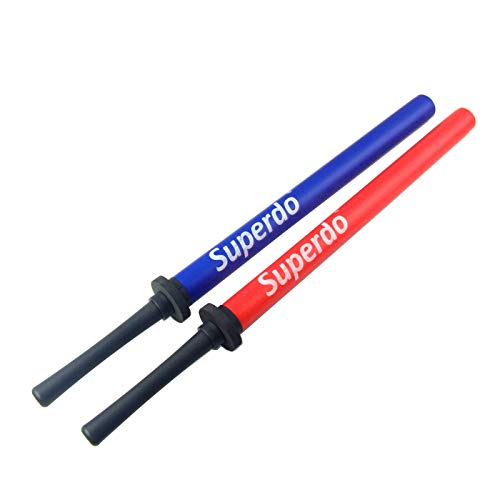
The red-and-blue color pairing distinguishes this practice set from the all-red pair and six-sword team pack. Each foam sword measures 35.5 inches overall, and the package includes two swords plus a storage bag. The black handles are plastic. The maker presents the set for sparring training and coordination, reaction and motor-skill practice. This option suits two people who want visibly different sides and a full-length pair. Its two-sword count limits group play unless participants take turns.
Bottom line: Choose this set for two-person practice where color-coded sides and a storage bag are useful.
Giant Foam Swords, 6-Pack

The six-sword count makes this the group-play option, with three red swords and three blue swords for opposing teams. Each sword measures about 30 inches, shorter than the 35.5-inch pair in Superdo Foam Practice Swords, 2-Pack and the 35.25-inch pair in Red Padded Sparring Bokken, 2-Pack. The maker describes them for pretend battles at home or outdoors and recommends simple rules such as no hits to the head, with adult supervision. This set suits siblings or a party group. Its shorter length may not suit adults seeking a longer practice sword.
Bottom line: Pick this pack when six players need color-coded swords for supervised pretend battles.
Red Padded Sparring Bokken, 2-Pack
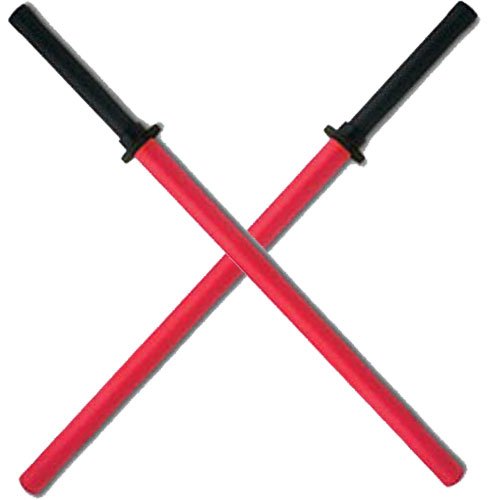
The ABS plastic core is the clearest construction distinction in this red two-sword set. Each sword measures 35.25 inches overall, close to the 35.5-inch length of Superdo Foam Practice Swords, 2-Pack, and the set includes two padded practice blades. The foam grip measures 26 inches. The red color makes the pair less useful than a red-and-blue set for quickly distinguishing sides, but it fits buyers who specifically want matching practice swords. The maker does not identify a carry bag, so this set is less suited to buyers who want one included.
Bottom line: Choose this pair if matching red swords and an ABS plastic core fit your practice setup.
How to choose foam swords for fighting
Start with the number of players, then compare length and construction. Two-sword sets work for a pair, while a six-sword pack can divide into teams of three. Length affects reach and handling: the products here run from about 30 inches to 35.5 inches, so a shorter option can be easier to manage in a tight play area. Do not treat foam padding as protective equipment; foam swords do not replace eye protection or remove impact risk. Set a boundary before play, prohibit head and neck strikes, and stop if a sword is damaged or its core is exposed.
| Need | Choice cue |
|---|---|
| Two players, separate sides | Look for a red-and-blue pair |
| Six players in teams | Choose a six-sword pack |
| Matching pair | Choose a two-sword set in one color |
For a confined play space, favor the shorter option and keep swings controlled.
Set safe rules before sparring
Safe foam-sword play depends on boundaries and supervision, not padding alone. Agree that strikes stay below the shoulders and forbid thrusts toward the face, throat, or torso; an exposed core or forceful thrust can still cause injury. Keep spectators outside the play area, clear furniture and hard obstacles, and stop play when someone loses control or a sword breaks. Adults should supervise children, especially during group games where players may swing without seeing nearby people. Eye protection adds a barrier against accidental contact, but no equipment makes full-force blows safe. For practice, use light, controlled movements and pause between exchanges.
Length and handling for foam swords
Foam swords in this comparison measure about 30 to 35.5 inches overall, a 5.5-inch span that can change reach and maneuverability. A useful choice rule is to use the 30-inch option when players have limited room or are younger, and consider a 35-inch-class option when a longer practice sword is preferred. Measure the available play area before choosing: leave several feet of clear space between active players and away from walls or furniture. Overall length does not tell you the grip length or balance, so hold the sword with a relaxed grip and use controlled swings rather than trying to maximize reach.
Inspect and store foam practice swords
Check foam swords before each session for splits, loose handles, sharp edges, or a visible core; retire a damaged sword rather than wrapping over a failure and continuing. Foam can compress or tear with repeated impacts, and moisture or heat can affect some materials, so let a wet sword air-dry and store it away from direct heat. Keep swords out of walkways when play ends, particularly when a set includes multiple pieces. For transport, a bag can keep a pair together, but do not assume every set includes one. Recheck the play area after breaks because furniture, bags, or spectators may have moved into the swing zone.
Frequently Asked Questions
Are foam swords safe for children to fight with?
Foam swords still cause injury if swung hard or aimed at the face, throat, or head. Use adult supervision, ban those targets, and stop play if a sword is damaged.
What length foam sword should I choose?
The options here range from about 30 to 35.5 inches. For a cramped play area or younger players, favor the shorter end and keep several feet clear around every swing.
How many foam swords do I need for a group?
A two-sword set supports a pair, while a six-sword set can split into two teams of three. For larger groups, plan turns rather than allowing more players to crowd into one play space.
Can foam swords be used for martial arts practice?
A padded sword can support controlled coordination drills, but it is not a substitute for purpose-designed protective gear or qualified instruction. Avoid full-force contact and do not thrust toward another person.
How should I check a foam sword before play?
Inspect the blade and handle for tears, loose parts, sharp edges, or exposed core before each session. Remove damaged swords from play, since padding does not make a broken core safe.