
Bird Netting to Keep Chickens Safe: 3 Options Compared

For a chicken run, ORIVOGAS 19.5-ft, 0.8-in HDPE Netting is the closest match because its 0.8-inch mesh and reinforced edges are suited to covering a coop. Choose Vocray 25 × 50-ft, 1-in Chicken Netting if you need larger coverage at 25 by 50 feet and 1-inch mesh; garden netting without a chicken-specific design is a less direct fit.
Bird netting is a flexible mesh barrier, but it is not a substitute for a secure enclosure: predators can reach birds through loose or damaged netting, and openings must be closed at the edges.
We earn a commission if you buy through links on this page. As an Amazon Associate I earn from qualifying purchases. Products are compared on manufacturer specifications, not hands-on testing.
- Best overall: ORIVOGAS 19.5-ft, 0.8-in HDPE Netting – Its 0.8-inch square mesh, reinforced edges and 19.5-by-19.5-foot dimensions fit a chicken-run cover.
- Best for larger runs: Vocray 25 × 50-ft, 1-in Chicken Netting – The 25-by-50-foot panel offers the largest area among the chicken-specific options with mesh under 2 inches.
- Best for broad coverage: 50 × 50-ft, 2.4-in Nylon Poultry Netting – Its 50-by-50-foot panel covers the largest area, though the 2.4-inch openings are much wider.
| Product | Best for | Mesh opening | Dimensions | Material | Shop |
|---|---|---|---|---|---|
| ORIVOGAS 19.5-ft, 0.8-in HDPE Netting | Closer mesh fit | 0.8 in square | 19.5 × 19.5 ft | HDPE | Check Price on Amazon |
| Vocray 25 × 50-ft, 1-in Chicken Netting | Medium-large runs | 1 in | 25 × 50 ft | — | Check Price on Amazon |
| 50 × 50-ft, 2.4-in Nylon Poultry Netting | Largest roof span | 2.4 in square | 50 × 50 ft | Nylon | Check Price on Amazon |
Bird netting to keep chickens safe
Match the mesh opening and panel dimensions to the run, and secure every edge against gaps.
ORIVOGAS 19.5-ft, 0.8-in HDPE Netting

For a chicken-run roof where smaller openings matter, this netting combines 0.8-inch square mesh with reinforced edges and integrated ropes. The 19.5-by-19.5-foot panel is made of 45-gsm HDPE, and the maker says the material has UV protection and tear resistance. Its smaller mesh than the other chicken-specific panels here is useful when you want fewer wide openings overhead. The limitation is coverage: measure the roof first, because one square panel may not span a long run or cover its sides.
Bottom line: Choose this when 0.8-inch mesh and a square panel close to 20 feet fit your run.
Vocray 25 × 50-ft, 1-in Chicken Netting
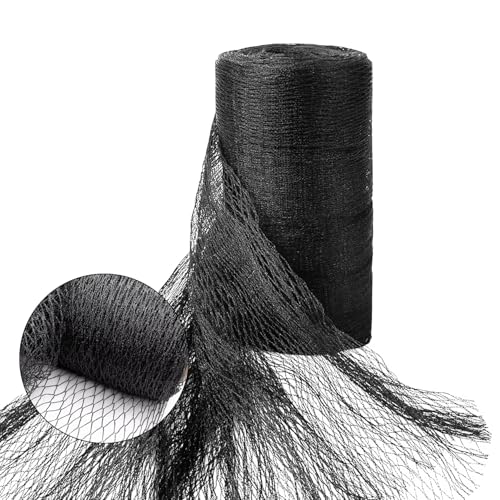
This chicken-run panel gives more coverage than a roughly 20-foot square while keeping mesh to 1 inch. The 25-by-50-foot woven netting is intended as a roof cover for a chicken run or pen; its maker says it helps block hawks and other predators and keep chickens from wandering out. The larger footprint can suit a long rectangular enclosure. The material is not identified in the specifications, so buyers who need a particular fiber should confirm it before ordering. Measure both roof dimensions and plan how the edges will be secured.
Bottom line: Pick this for a longer run that needs 1-inch mesh across a 25-by-50-foot span.
50 × 50-ft, 2.4-in Nylon Poultry Netting

Among these chicken-specific choices, this nylon panel covers the broadest area: 50 by 50 feet. It uses 2.4-inch square mesh, and the maker reports 5.26 kg tensile strength while describing the netting as a roof cover for chicken runs. That span may help with a very large enclosure, but the openings are wider than those in the 0.8- and 1-inch options. Check the run for gaps that small birds or animals could pass through, and do not rely on the net alone as protection from predators that can reach through mesh.
Bottom line: Choose it for a large roof when its wide 2.4-inch openings suit the enclosure.
How to choose mesh for a chicken run
For overhead protection, compare the mesh opening with the smallest animal or bird you need to keep out, then make sure the net has enough dimensions to cover the run. These choices range from ⅝ inch to 2.4 inches; a larger opening leaves a wider path through the mesh. Netting is not a rigid predator barrier, so taut installation and secure edges matter as much as the opening size. Use a solid, predator-resistant structure for the enclosure sides and close the roof-to-wall seam without gaps. A useful decision rule is to favor mesh no wider than 1 inch when exclusion is the priority; choose a wider mesh only when its coverage and intended use fit your setup. Do not leave loose netting where birds can become caught.
Measure the run before buying netting
Measure the roof length and width, then add enough material for the planned attachment points and any overhang. A 19.5-foot square panel cannot cover a roof wider than 19.5 feet in either direction without a seam or additional panel. Rectangular panels such as 25 by 50 feet or 13 by 40 feet need to be oriented to the run’s shape. The following comparison helps match mesh and panel size to the job; it does not replace checking the actual roof measurements.
| Need | Useful option | Trade-off |
|---|---|---|
| Smaller openings | ⅝–1 in mesh | Less open span between strands |
| Large, broad roof | 50 × 50 ft panel | 2.4 in openings |
| Long narrow boundary | 7 × 100 ft panel | Only 7 ft wide |
Install netting without creating hazards
Stretch netting evenly and fasten it along the entire perimeter so wind cannot lift an edge or create a slack pocket. A sagging roof can trap birds, and an unsecured seam can become an entry point; check corners, overlaps and the point where roof netting meets solid walls. Keep mesh clear of sharp wire ends, branches and hardware that can snag it. For a large span, support the netting so it does not collect debris or hang within reach of the flock. Stakes or ties can help with attachment where appropriate, but they do not make a net predator-proof. Inspect the cover after strong wind and replace damaged sections rather than patching a gap with loose material.
What netting can and cannot protect against
Netting is most useful as a barrier across an open run roof, especially against aerial access, but mesh alone does not stop every predator. A raccoon or similar animal can reach through openings, pull at weak attachments or enter through a gap at ground level. Use secure side fencing and a closed, sturdy coop for nighttime housing; do not treat a roof panel as a complete enclosure. Wider 2.4-inch mesh gives more open area than 0.8- or 1-inch mesh, so account for that difference when selecting the barrier. Keep poultry away from loose netting, and inspect for wear, broken strands and openings at every connection.
Frequently Asked Questions
What mesh size keeps chickens inside a run?
Mesh of 1 inch or smaller gives a narrower opening than 2.4-inch netting and is the more suitable direction when containment is important. Secure the perimeter too, since even small mesh will not help if birds can pass through an open edge.
Can bird netting stop hawks from reaching chickens?
A taut net roof can block direct access from above, but netting alone is not a complete predator-proof enclosure. Secure the edges and keep the flock in a sturdy coop at night, since predators may exploit loose seams or reach through openings.
How much netting should cover a chicken run?
Measure the roof’s length and width and compare each dimension with the panel, allowing for attachment at the edges. A 19.5-by-19.5-foot panel cannot cover a roof with either dimension over 19.5 feet without a seam or another panel.
Is garden netting safe to use around chickens?
It can serve as a barrier if it is firmly secured, taut and outside the birds’ reach. Avoid loose loops or sagging pockets that can entangle birds, and check that edges and fasteners do not expose sharp points.
How often should chicken-run netting be checked?
Inspect netting after strong wind and whenever you see sagging, a broken strand or a gap at an edge. A quick visual check during routine coop care helps catch a hazard before birds can reach loose mesh.