
Best Door Stoppers for Mice: 5 Door Gap Seals

For a door stopper aimed at blocking mice, choose the aluminum-and-rubber sweep in Gisafai Aluminum Mouse Door Sweep, 2-Pack because its rigid metal face is designed to cover the under-door gap. Mice can squeeze through openings around 1/4 inch, so a loose draft blocker may not close the entry point.
Choose a different style if you need a removable, no-screw barrier or a flexible seal for an uneven floor; those options prioritize convenience and draft control over a rigid metal barrier.
We earn a commission if you buy through links on this page. As an Amazon Associate I earn from qualifying purchases. Products are compared on manufacturer specifications, not hands-on testing.
- Best overall: Gisafai Aluminum Mouse Door Sweep, 2-Pack – Its aluminum sweep and two-layer rubber seal are designed to cover gaps up to about 1.5 inches.
- Best removable fit: Comfyanno Foam-Tube Draft Stopper, 30–36 in – The foam-tube stopper slides under doors 30 to 36 inches wide and installs without adhesive or screws.
- Best flexible seal: Grotheory Silicone Sweep, 39 in, 2-Pack – The 39-inch silicone sweep has a triple design and self-adhesive mounting.
| Product | Best for | Material | Fits door width | Mounting | Shop |
|---|---|---|---|---|---|
| Gisafai Aluminum Mouse Door Sweep, 2-Pack | Rigid rodent barrier | Aluminum, rubber | 36 in | Screws | Check Price on Amazon |
| Comfyanno Foam-Tube Draft Stopper, 30–36 in | Removable draft block | Foam, fabric | 30–36 in | Slide-under | Check Price on Amazon |
| Grotheory Silicone Sweep, 39 in, 2-Pack | Flexible adhesive seal | Silicone | 39 in | Self-adhesive | Check Price on Amazon |
| Ormein Silicone Door Sweep, 39 in | Uneven floor seal | Silicone | 39 in | Self-adhesive | Check Price on Amazon |
| Holikme Adjustable Door Draft Stopper, 37 in | Moving door fit | — | 37 in | Hook-and-loop | Check Price on Amazon |
Door Stoppers for Mice
Compare each option by how it mounts, what it is made from and whether its width suits your door.
Gisafai Aluminum Mouse Door Sweep, 2-Pack

Unlike the soft draft blockers, this two-piece sweep has an aluminum face and a two-layer rubber seal intended to cover the gap beneath a door. Each piece measures about 36 inches long and 2 inches high, and the maker says the sweep covers gaps up to about 1.5 inches. Screws secure it to the door, making it a better fit for someone seeking a fixed barrier than a removable insert. Its length may need trimming or a fit check for narrower doors; a sweep that leaves an open end or fails to meet the floor can leave a mouse-sized route.
Bottom line: Choose this fixed metal sweep when the door gap and width fit its coverage.
Comfyanno Foam-Tube Draft Stopper, 30–36 in
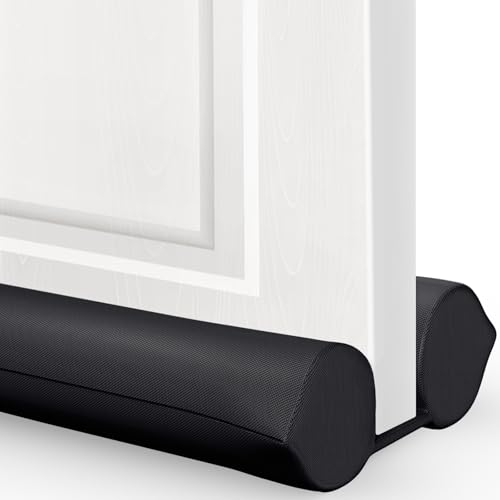
The slide-under design sets this stopper apart from screw-mounted or adhesive sweeps: it can be removed and repositioned without fasteners. Its foam tubes and outdoor-grade cover are made to reduce drafts, dust, noise and bugs, and it is sized for doors 30 to 36 inches wide with gaps up to 1.5 inches. That makes it useful where a temporary barrier is more important than permanent installation. The soft foam is not a rigid metal exclusion barrier, so buyers dealing with a confirmed mouse entry point should prioritize a close-fitting, chew-resistant seal instead.
Bottom line: Pick this removable option for a correctly sized door when easy removal matters.
Grotheory Silicone Sweep, 39 in, 2-Pack

The Grotheory sweep uses flexible silicone rather than foam or a metal face, and its two-piece pack gives you a 39-inch strip for each application. The maker describes a triple design intended to reduce dust, light and noise, with self-adhesive mounting for doors and other surfaces. Its flexibility can suit a buyer wanting a conforming strip on a smooth, clean surface. Adhesive-mounted silicone is not the same as a rigid rodent barrier, however; check that the seal contacts the floor across the full width and that the door still opens freely after fitting.
Bottom line: Choose this flexible adhesive strip for a smooth surface and a well-fitting seal.
Ormein Silicone Door Sweep, 39 in

Ormein emphasizes pliable silicone that can bend along a crooked floor, making this a distinct choice where a straight, rigid sweep may leave a gap. The 39-inch self-adhesive strip is intended for interior or exterior doors and for reducing airflow. Its flexible construction and stated lack of compression memory may help it remain in contact during ordinary door movement. The product is described as a draft seal, not a rigid metal mouse barrier, so a buyer focused on rodent exclusion should verify that the installed edge closes the entire gap without obstructing the door.
Bottom line: Pick this flexible strip when floor irregularities make a rigid seal difficult.
Holikme Adjustable Door Draft Stopper, 37 in
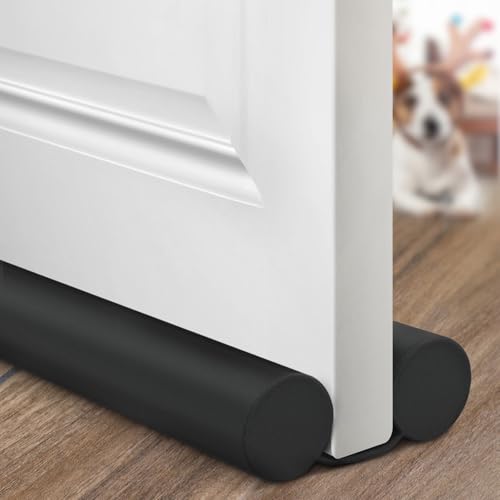
The hook-and-loop attachment is the distinguishing feature here: the stopper stays attached to the door and moves with it, so it does not need repositioning each time the door opens. At 37 inches, it is intended for a range of home doors and is described as compatible with carpet, vinyl, tile and wood. The maker says it blocks drafts, light, dust and pests. Its construction material is not clear from the product facts, and it is a soft draft-stopper style rather than a specified metal sweep; buyers seeking mouse exclusion should confirm the fit leaves no passable gap.
Bottom line: Choose this moving-door style when attachment and floor compatibility are priorities.
How to Choose a Door Stopper for Mice
A close-fitting door sweep matters more than a stopper’s draft-blocking label: mice can squeeze through an opening about 1/4 inch wide. Measure the gap at several points along the closed door, since floors and thresholds are often uneven. If any section has roughly 1/4 inch or more of open clearance, choose a seal that closes that section rather than relying on a loose insert. For a known rodent route, a metal-faced sweep is generally a more suitable barrier than soft foam, though the ends and the bottom edge still need to fit snugly. Also measure door width and check that the chosen strip will not prevent the door from opening or create a trip hazard.
Door Gap and Floor Fit
Measure the door width and floor clearance before selecting a sweep, because a strip that is too short leaves an entry route and one that drags can interfere with opening. Measure the gap at both ends and the center with the door closed; an uneven floor can make the center measurement misleading. A sweep’s maximum gap is not the same as a mouse-proof fit: the installed edge should meet the floor continuously, without an opening near 1/4 inch. Check the threshold height and floor surface too, since adhesive seals need a clean bonding surface and screw-mounted sweeps need a suitable place to attach. After installation, open and close the door several times and inspect the entire bottom edge.
Metal Sweeps Compared With Draft Stoppers
A metal-faced sweep and a fabric or foam draft stopper solve related but different problems: the former is a fixed door-bottom barrier, while a soft stopper chiefly reduces drafts and light. For mouse exclusion, prioritize a durable face and an uninterrupted floor contact; for a temporary draft block, removable foam may be more convenient. Flexible silicone can follow some uneven floors, but its adhesive bond and contact along the whole threshold matter. Use this guide to match the barrier style to the job.
| Need | Style to consider | Fit check |
|---|---|---|
| Rodent entry point | Metal-faced sweep | Continuous floor contact |
| Temporary draft blocking | Slide-under foam stopper | Door width and clearance |
| Uneven floor | Flexible silicone strip | Full-width contact after fitting |
Installation and Rodent Exclusion
Door sweeps work best as one part of exclusion, not as the only fix for a mouse problem. Seal other openings around pipes, foundations and wall penetrations; mice can enter through gaps around 1/4 inch, so inspect openings of that size or larger. Keep food and pet food in sealed containers, and remove crumbs that can attract rodents near the entry. For screw-mounted sweeps, use the fasteners and keep fingers clear while positioning the strip; do not leave protruding edges that could snag feet or damage flooring. Recheck the seal after the door has been used, and adjust it if wear or movement creates a gap.
Frequently Asked Questions
What size gap can a mouse squeeze through?
A house mouse can squeeze through an opening about 1/4 inch wide. Measure the closed door along its full width, since a small gap at one end can still provide an entry route.
Should a door sweep touch the floor?
Yes, a sweep intended to block pests should contact the floor continuously without preventing the door from moving. Check both ends and the center after installation, especially on an uneven threshold.
Are foam door stoppers enough to stop mice?
Foam stoppers are primarily draft barriers, not rigid rodent barriers. For a confirmed entry point, favor a durable, close-fitting sweep and seal other openings around 1/4 inch or larger.
How do I measure a door for a sweep?
Measure the door width and the closed-door gap at both ends and the center. Choose a strip that covers the full width, then confirm it does not drag or leave a mouse-sized opening.
Can a door sweep block mice and drafts?
A properly fitted sweep can reduce drafts while closing an under-door route, but floor contact is essential for both jobs. Inspect the whole edge after installation and check for openings near 1/4 inch.