
Spear for Ice Fishing: 5 Options Compared by Fit

For ice fishing, Aofong 5-Tooth Harpoon with 4.5-Foot Rod is the clearest match because its five-tooth harpoon comes with a telescoping rod that extends to 4.5 feet. Choose a compact frog or fish spear instead if you prefer a short hand-held tool; ZOVNKRIL 7-Foot Carbon Fiber Pole Spear and Scuba Choice 5-Foot Fiberglass Pole Spear are pole spears designed for underwater hunting rather than a simple short spear.
We earn a commission if you buy through links on this page. As an Amazon Associate I earn from qualifying purchases. Products are compared on manufacturer specifications, not hands-on testing.
- Best overall: Aofong 5-Tooth Harpoon with 4.5-Foot Rod – Its five-tooth harpoon attaches to a telescoping rod that extends to 4.5 feet.
- Best for compact use: B&M 7PKS Stainless Steel Spear – The stainless steel frog and fish spear measures 8.5 inches long.
- Best for underwater setups: Scuba Choice 5-Foot Fiberglass Pole Spear – The 5-foot pole spear breaks into two sections and includes three tips.
| Product | Best for | Spear style | Length | Material | Shop |
|---|---|---|---|---|---|
| Aofong 5-Tooth Harpoon with 4.5-Foot Rod | Extended reach | 5-tooth harpoon | 4.5 ft extended | Stainless steel | Check Price on Amazon |
| Eagle Claw AFROG5 Frog Spear | Compact frog spearing | 5-tine frog spear | — | — | Check Price on Amazon |
| B&M 7PKS Stainless Steel Spear | Short fish spear | Frog and fish spear | 8.5 in | Stainless steel | Check Price on Amazon |
| ZOVNKRIL 7-Foot Carbon Fiber Pole Spear | Breakdown pole spear | 3-piece pole spear | 7 ft | Carbon fiber | Check Price on Amazon |
| Scuba Choice 5-Foot Fiberglass Pole Spear | Multiple tip choices | 2-piece pole spear | 5 ft | Fiberglass | Check Price on Amazon |
Spears for Ice Fishing
Compare the spear style and reach with the way you plan to fish through the ice.
Aofong 5-Tooth Harpoon with 4.5-Foot Rod

Unlike the compact hand-held spears, this Aofong set pairs a five-tooth harpoon with a telescoping rod that extends to 4.5 feet. The harpoon has barbs, and the rod and head are stainless steel; the handle has a rubber grip. The maker says the harpoon’s natural length is about 15.8 inches. This is the clearest fit for someone who wants more reach at an ice-fishing hole. The multi-section rod is more involved to assemble and handle than a single short spear, so it may not suit someone seeking a minimal hand-held tool.
Bottom line: Choose this if you want an ice-fishing spear with a telescoping rod and multiple teeth.
Eagle Claw AFROG5 Frog Spear
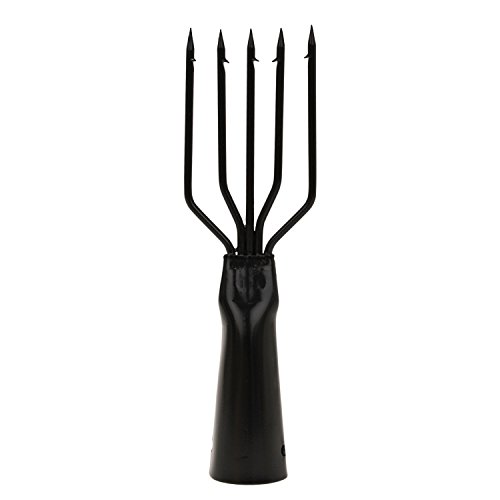
The Eagle Claw is a compact five-tine frog spear rather than a long pole spear. Its black finish and five-tine size make it a simple option for buyers seeking a short spear form. The specifications identify it as a frog spear and provide no pole length, so it is a less direct match for a buyer who wants extra reach for ice fishing. Choose it only if the short frog spear format suits your setup; shoppers who want an extended tool should consider a telescoping rod instead.
Bottom line: Pick this for a short, five-tine frog spear rather than an extended pole.
B&M 7PKS Stainless Steel Spear

The B&M stands out for its 8.5-inch length and stainless steel construction, making it a short hand-held frog and fish spear. That compact size may appeal to someone who does not want a sectional pole, but it offers less reach than the 4.5-foot telescoping setup. The maker identifies it for frog and fish spearing, not a dedicated ice-fishing rod system. Consider whether a short spear is appropriate for the hole and method you use before choosing it.
Bottom line: Choose this if you want an 8.5-inch stainless steel hand spear.
ZOVNKRIL 7-Foot Carbon Fiber Pole Spear

The ZOVNKRIL is a 7-foot, three-piece pole spear for underwater hunting, not a short hand spear. Its breakdown construction is intended to pack down, and the specifications identify a stainless steel head and slip-tip. The maker says its carbon-fiber shaft is lighter and stronger than standard aluminum and that its hardware is corrosion-resistant. This option is better suited to buyers seeking a long, separable pole spear; its underwater-hunting format may not be the right tool for ordinary ice-hole spearing.
Bottom line: Pick this for a long breakdown pole spear intended for underwater hunting.
Scuba Choice 5-Foot Fiberglass Pole Spear

The Scuba Choice differs from the three-piece carbon-fiber pole by using a two-piece fiberglass shaft and including three tip styles: a 12-inch paralyzer, a single-barb tip, and a 6-inch lionfish tip. Its full length is 5 feet, and it breaks down into two 24-inch sections. This is an underwater pole spear setup rather than a compact spear for a hole. The multiple tips offer different configurations, but the longer pole and separate pieces may be more than a buyer needs for short-range ice spearing.
Bottom line: Choose this if a 5-foot pole spear with three tip options fits your setup.
How to choose a spear for ice fishing
Choose by reach and head style first: a compact hand spear is different from a pole spear or a harpoon attached to an extension. A longer shaft keeps more of your hands away from the hole, while a multi-tooth head is a different point configuration from a single tip. Match the tool to the size of the opening and the fish you are permitted to spear; local rules can restrict both species and method. For a simple decision rule, if you want more reach than a hand-held spear provides, choose a rod whose extended length is given and confirm that it fits your fishing shelter and hole setup. Do not assume a spearfishing pole is interchangeable with a short ice-fishing spear just because both have a pointed head.
Ice conditions and safe spearing setup
Clear, solid ice should be at least 4 inches thick before a person walks on it, but that guideline does not guarantee safety; ice thickness can vary across the same body of water. Avoid judging ice by appearance alone, and account for current, snow cover, pressure ridges, and changing temperatures. Ice spearing also puts a person close to an open hole, so keep the opening and tools controlled, and never work alone on unsafe ice. Check the current state fishing regulations before setting up: spearing seasons, eligible species, licenses, and shelter requirements can vary. A spear that fits physically is not automatically legal for every fish or location.
Hand spears, harpoons, and pole spears
A hand spear prioritizes compact handling, while a telescoping harpoon combines a pointed head with a longer rod. A pole spear is a longer shaft used for underwater fishing and may break into sections for transport. Those formats involve different reach and handling; length alone does not establish that a product is appropriate for every ice-fishing method. For each tool, check that its assembled length suits your space, its head is appropriate for the intended fish, and any threaded connections are secure before use. Never leave a sharp point exposed when carrying or storing a spear. The comparison below distinguishes the common formats at a glance.
| Format | Typical use | Key fit check |
|---|---|---|
| Hand spear | Short-range, compact handling | Can you use it safely at your hole? |
| Telescoping harpoon | More reach with a rod and head | Does the extended reach fit your setup? |
| Pole spear | Underwater fishing with a longer shaft | Is it suited to your method and regulations? |
Care and handling after fishing
Rinse metal spear components with fresh water after use, especially when they have contacted salt water, then dry them before storage to reduce corrosion risk. Inspect the head, barbs, threads, and shaft joints before each outing; a loose threaded head or damaged shaft can compromise control. Keep sharp tips covered during transport and store a sectional pole disassembled only when its parts are dry and protected. Fiberglass and carbon-fiber shafts should be checked for cracks or splintering, while steel components should be checked for rust. These checks are particularly important for multi-piece tools, whose connections need to remain secure when assembled.
Frequently Asked Questions
How thick should ice be before walking on it?
A common minimum guideline is 4 inches of clear, solid ice for walking, but ice can be uneven and that figure is not a guarantee of safety. Avoid going alone, and do not rely on snow cover or appearance to judge thickness.
Do ice-fishing spear rules vary by state?
Yes, spearing seasons, allowed species, licenses, and shelter rules can differ by state and location. Check the current local fishing regulations before selecting a target or setting up.
What is the difference between a frog spear and a pole spear?
A frog spear is a compact hand-held tool, while a pole spear uses a longer shaft and may be designed for underwater fishing. Choose based on reach and method rather than assuming the names describe interchangeable tools.
How should I store a steel fishing spear?
Rinse steel components with fresh water after use, dry them thoroughly, and cover the point before storage. Inspect the head and threaded connections before the next outing for rust or looseness.
How long should an ice-fishing spear be?
There is no single length for every setup: a short hand spear and a rod that extends several feet serve different handling needs. Measure your usable space and choose a length that lets you control the tool without crowding the hole.