
Back Braces to Wear Under Clothes: 5 Compared

For a low-profile back brace to wear under clothes, choose Fitomo 0.5 mm Seamless Back Brace if a 0.5 mm fabric and seamless design are your priorities. Choose Fitomo 0.5 mm Mesh Back Brace instead if airflow panels and three aluminum stays matter more, or Skin-Tone 3+2 Lumbar Back Brace for a skin-tone belt with adjustable compression straps.
A back brace is a wraparound support worn at the waist; fit matters more than the size on your pants. Measure around your waist at navel height and use the maker’s size range when it is available.
We earn a commission if you buy through links on this page. As an Amazon Associate I earn from qualifying purchases. Products are compared on manufacturer specifications, not hands-on testing.
- Best overall: Fitomo 0.5 mm Seamless Back Brace – Its 0.5 mm fabric, seamless construction and removable lumbar pad suit discreet wear.
- Best for airflow: Fitomo 0.5 mm Mesh Back Brace – Large mesh panels and three aluminum stays distinguish this thin brace.
- Best for light support: Skin-Tone 3+2 Lumbar Back Brace – A skin-tone profile and two adjustable compression straps suit discreet, adjustable wear.
| Product | Best for | Profile or material | Support structure | Adjustability | Shop |
|---|---|---|---|---|---|
| Fitomo 0.5 mm Seamless Back Brace | Low-profile wear | 0.5 mm yoga fabric | Removable lumbar pad | Adjustable compression | Check Price on Amazon |
| Fitomo 0.5 mm Mesh Back Brace | Airflow panels | 0.5 mm fabric; mesh panels | 3 aluminum stays; flexible sides | — | Check Price on Amazon |
| Skin-Tone 3+2 Lumbar Back Brace | Neutral clothing | Thin, skin-tone profile | 3 steel plates; 2 spring stays | 2 compression straps | Check Price on Amazon |
| Lightweight Dual-Strap Back Brace | Stretchy compression | Neoprene bottom strap | Dual elastic straps | Adjustable | Check Price on Amazon |
| Sparthos Back Brace with Lumbar Pad | Added lumbar pad | Breathable mesh | Vertical support stays | Adjustable; lumbar pad | Check Price on Amazon |
Back braces to wear under clothes
Compare profile, support structure and fit features to find a brace that works with your clothing and daily routine.
Fitomo 0.5 mm Seamless Back Brace

For a smooth, low-profile fit, Fitomo 0.5 mm Seamless Back Brace combines 0.5 mm yoga fabric with a seamless one-piece design. A detachable lumbar pad lets the wearer position added padding at the lower back, and adjustable compression allows a closer fit. The maker says the brace is intended for discreet under-clothing wear and everyday activities such as sitting, standing and workouts. Measure the waist at navel height rather than using pants size: the ranges are S, 23.6–27 inches; M, 28–37.4 inches; L, 37.4–43.3 inches; and XL, 43.3–51.1 inches. The wide size overlaps make careful measurement especially useful.
Bottom line: Pick this if a seamless, 0.5 mm profile and removable lumbar pad are priorities.
Fitomo 0.5 mm Mesh Back Brace

For wearers who want airflow panels, Fitomo 0.5 mm Mesh Back Brace pairs a 0.5 mm profile with large mesh sections on both sides of the waist. Three aluminum stays provide structure, while flexible side supports are intended to move with the body. The maker describes the support as moderate and positions the brace for daily wear, including work, sitting and driving. This structure sets it apart from a seamless fabric design: it has stays and mesh panels rather than relying on thin fabric and a removable lumbar pad. Its size is medium, so shoppers needing another size should confirm fit availability before choosing it.
Bottom line: Choose this if mesh panels and a structured, moderate-support design suit your routine.
Skin-Tone 3+2 Lumbar Back Brace

For lighter-colored outfits, Skin-Tone 3+2 Lumbar Back Brace uses a thin, skin-tone profile that may blend more readily beneath blouses and workwear than a black belt. Its support combines three curved steel plates with two spring stays along the sides, and two compression straps adjust tension over the main belt. The maker describes the brace as intended for light-to-moderate daily support while sitting, standing and walking. Unlike the mesh model, its standout feature is a neutral color and mixed steel-and-spring structure. The size is medium; confirm that the belt’s sizing suits your waist before ordering.
Bottom line: Pick this if a skin-tone look and two adjustable compression straps matter most.
Lightweight Dual-Strap Back Brace

For a belt with a stretchy lower section, Lightweight Dual-Strap Back Brace uses a neoprene bottom strap and dual elastic straps. The maker says the neoprene is designed to conform around the hips and lower back while moving, and describes the belt as adjustable for home, work and exercise. That material and strap arrangement distinguish it from the thin fabric and mesh options. The specifications give a medium size but no waist range, so check the fit before ordering rather than assuming that a medium corresponds to a particular measurement. This is a less specifically low-profile choice than the 0.5 mm braces.
Bottom line: Choose this if a neoprene lower strap and dual elastic straps fit your needs.
Sparthos Back Brace with Lumbar Pad
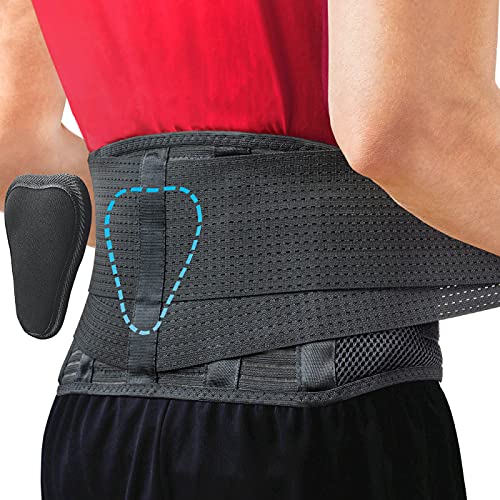
For a removable point of added padding, Sparthos Back Brace with Lumbar Pad includes an adjustable lumbar pad alongside vertical support stays. Breathable mesh is part of its construction, and the maker says the brace is designed for wear under clothing and movement such as walking, bending and stretching. The pad and stays make it a more structured option than the thin, seamless fabric model. The size is large, with no waist measurement range here; verify the fit before ordering. Its extra pad may create more bulk under close-fitting clothes than a brace designed around a 0.5 mm profile.
Bottom line: Pick this if you want a lumbar pad and vertical stays in a mesh brace.
How to choose a low-profile back brace
Choose a brace by matching its profile and structure to the clothes and activity you have in mind. A 0.5 mm profile is a concrete low-bulk specification; mesh panels prioritize airflow, while stays and pads add structure or localized padding. Flexible compression belts, metal stays and rigid orthoses are different support types, so do not assume they feel or fit alike. For discreet wear beneath fitted clothes, favor a thin profile without a bulky pad; if you want extra structure, allow more room in the garment. Start with a snug fit, not maximum tension. A brace should not restrict breathing or cause numbness, tingling, pain or skin irritation; loosen or remove it if those occur.
How to measure for a back brace
Measure around the waist at navel height and compare that number with the maker’s waist chart. Pants sizes can sit at a different height and are not a reliable substitute. Fitomo 0.5 mm Seamless Back Brace gives waist ranges in inches, including overlapping boundaries: M is 28–37.4 inches and L is 37.4–43.3 inches, so use your actual measurement and the maker’s fit guidance where ranges overlap. For the other braces, the size labels alone do not establish a comparable waist range; confirm fit before ordering. Measure over a thin base layer if you plan to wear the belt over one, and account for any pad or straps that add bulk. Recheck the fit seated and standing.
Back brace support types and their tradeoffs
Support construction changes how a brace feels beneath clothing. Soft fabric and elastic belts rely mainly on compression; flexible stays add shape, while metal stays or plates provide more structure. A removable lumbar pad adds a thicker point of contact, which can be useful for someone seeking extra padding but may show under close-fitting fabric. Mesh panels can increase airflow across covered areas, while a skin-tone exterior may blend better under pale clothes. Use this guide to match a feature to a need; no single construction is right for every wardrobe or activity.
The construction-to-need table distinguishes features rather than ranking support strength.
| Construction | What it offers | Consider when |
|---|---|---|
| Thin fabric | Lower bulk | Close-fitting layers |
| Mesh panels | Airflow through panels | Warm conditions |
| Stays or plates | More structure | You want a supported belt shape |
| Lumbar pad | Added localized padding | You want a padded contact point |
Safe wear and common fit mistakes
A back brace should feel secure without squeezing, and it should not interfere with breathing or normal movement. Tightening straps as far as possible is a common mistake; adjust gradually and stop if the belt causes numbness, tingling, pain or skin irritation. Remove it if symptoms occur, and seek medical advice for persistent symptoms, a new injury, or use after surgery. A brace is an external support, not a diagnosis or a replacement for care. Avoid assuming that a brace suited to standing will also be comfortable for prolonged sitting: test the fit in both positions before relying on it for a long workday or drive.
Frequently Asked Questions
Can a back brace show through fitted clothes?
A 0.5 mm profile is a useful low-bulk specification, but visibility also depends on fabric, color, seams and fit. A removable pad or stays can create more visible contours beneath close-fitting garments.
Where should I measure for a back brace?
Measure around your waist at navel height, not from your pants tag. Use the brace’s waist chart and check boundary overlaps carefully; for example, one provided chart places 37.4 inches in both medium and large ranges.
How tight should an under-clothes back brace feel?
The belt should feel secure without restricting breathing or movement. Loosen or remove it if you notice numbness, tingling, pain or skin irritation.
Can I wear a back brace while sitting?
Many flexible support belts are made for sitting as well as standing, but comfort depends on the fit and how the stays or pad meet your body. Check the fit both seated and standing, and loosen or remove the brace if it causes symptoms.
What is the difference between mesh and solid fabric braces?
Mesh panels allow more airflow through covered areas, while solid fabric offers a continuous fabric surface. Mesh does not by itself indicate a different level of support; check the stays, straps and pad separately.