
Best Choking Emergency Device Options by Use and Fit

For a home or travel backup, choose Portable Manual Suction Backup Kit, a manual suction device with two mask sizes; standard choking first aid remains the priority. Choose a training vest to practice techniques, or a bag or cabinet if you already have a device and need access or storage.
We earn a commission if you buy through links on this page. As an Amazon Associate I earn from qualifying purchases. Products are compared on manufacturer specifications, not hands-on testing.
- Best overall: Portable Manual Suction Backup Kit – The manual, non-powered kit includes two mask sizes and is identified as a secondary backup.
- Best for training: Anti-Choking Training Vest – The vest is designed to simulate airway obstruction and practice rescue movements.
- Best for visible storage: Choking Emergency Cabinet and Sign – The wall-mounted cabinet includes red emergency signage and does not include a choking device.
| Product | Best for | Purpose | Power | Included | Shop |
|---|---|---|---|---|---|
| Portable Manual Suction Backup Kit | Backup response | Emergency backup | Manual, non-powered | Two comfort masks | Check Price on Amazon |
| Anti-Choking Training Vest | Rescue practice | Simulation training | — | Training vest | Check Price on Amazon |
| Heimlich Assistant Drawstring Bag | Quick-access carrying | Carrying accessory | Not applicable | Red bag | Check Price on Amazon |
| Choking Emergency Cabinet and Sign | Visible wall storage | Device storage | Not applicable | Cabinet and sign; device excluded | Check Price on Amazon |
Choking emergency devices and related gear
These options serve different roles, from emergency backup to practice and storage, so choose by the task you need to cover.
Portable Manual Suction Backup Kit
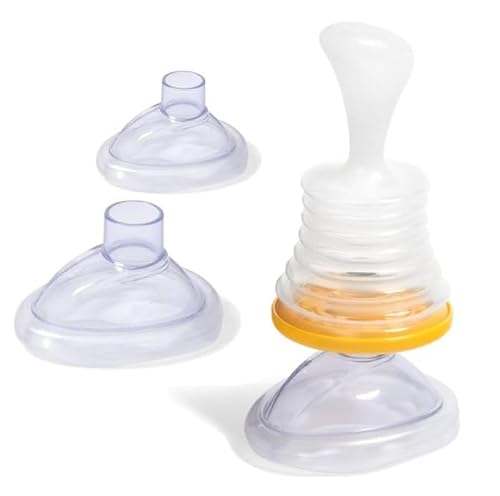
For someone seeking an emergency device rather than a training aid or storage accessory, this kit is the direct match. The maker identifies it as a secondary backup and says to prioritize established first-aid protocols and contact emergency services immediately during an incident. It operates by hand without batteries or electricity and includes two transparent comfort masks in different sizes. That makes it a portable option for home or travel use. Its role is backup, not a replacement for first aid or emergency services, so buyers who need practice or organized wall storage should choose a different type.
Bottom line: Choose this if you want a manual backup kit with two mask sizes.
Anti-Choking Training Vest

Unlike an emergency-response device, this vest is designed for practicing airway-obstruction response with another person. The maker says a wearer and a partner can demonstrate movements, including scenarios using a chair, desk or counter, and describes it as a way to practice back slaps and self-rescue techniques. That makes it relevant for training sessions rather than keeping on hand as a functional emergency device. The vest’s limitation is its practice-only role; anyone seeking an emergency backup device should select a device intended for that purpose instead.
Bottom line: Choose this for guided practice, not emergency response.
Heimlich Assistant Drawstring Bag

Unlike the backup device and training vest, this item is a red drawstring bag for carrying a choking rescue device. The name emphasizes lightweight construction and quick access, so it may suit someone who already owns compatible equipment and wants it kept together. The specifications identify the color but do not establish what device fits inside or whether a device is included; check compatibility before relying on the bag for a particular kit. A bag does not perform rescue or provide practice, so it cannot substitute for an emergency device or training.
Bottom line: Choose this only if you need a carrying bag for a device you already own.
Choking Emergency Cabinet and Sign
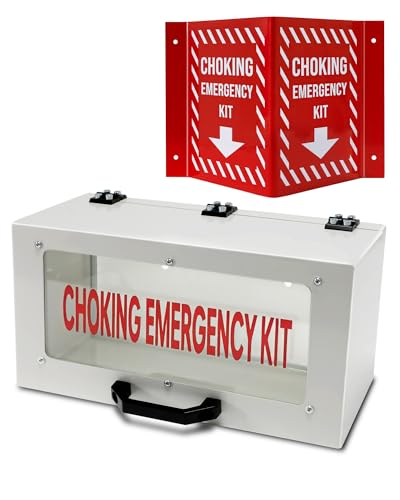
For organized access in a shared space, this wall-mounted cabinet and red sign serve a different purpose from a portable backup device. The maker says the cabinet is for storing choking first-aid supplies and emphasizes installing it in a visible, accessible location. The bundle includes the cabinet and signage, not the choking device itself, so the intended equipment must be sourced separately and confirmed to fit. This is a storage choice for a fixed location, not a portable response kit or a way to practice rescue steps.
Bottom line: Choose this to mark a fixed storage point for a separately obtained device.
How to choose a choking emergency device
Choose by role: emergency backup, skills practice or storage. A suction kit is intended for backup, while a simulator helps people rehearse actions and a bag or cabinet only carries or stores equipment. For a person who is choking, call emergency services for a severe obstruction and use established first-aid steps; do not delay those steps to find a backup device. In the United States, common adult choking first aid for a responsive person with severe obstruction uses cycles of 5 back blows followed by 5 abdominal thrusts. If the person becomes unresponsive, begin CPR and follow emergency-dispatch instructions. Training is useful because the correct response depends on the person’s age and condition.
Use this role guide to avoid buying storage or practice gear when you need a response device.
| Need | Choose |
|---|---|
| Secondary emergency backup | Manual suction kit |
| Practice rescue movements | Training vest |
| Carry a device already owned | Drawstring bag |
| Mark fixed shared storage | Cabinet and sign |
How choking first-aid devices fit into a response
A device should not replace first aid or an emergency call. The manual suction kit is explicitly described as secondary backup, and its maker says to prioritize standard protocols and contact emergency services immediately. For a responsive adult with severe airway obstruction, standard US guidance commonly uses 5 back blows and 5 abdominal thrusts, repeated until the blockage clears or the person becomes unresponsive. For infants, abdominal thrusts are not used; trained responders use infant-specific back blows and chest thrusts. Follow dispatcher instructions, and learn age-specific techniques in a recognized first-aid course. A suction device is not a reason to postpone care or assume the airway is clear.
Training gear versus emergency storage
A training vest is for rehearsing technique, while a bag and cabinet are for organizing access; none of those roles is interchangeable. Practice can help a responder learn the sequence and hand placement before an incident, but a simulator is not a working rescue device. For workplaces or shared homes, visible storage matters: place a cabinet sign where people can locate it quickly, and keep the actual device inside only if it is compatible with the cabinet. A drawstring bag is portable but does not confirm that the intended device is included. Before buying either storage option, check fit for your specific equipment.
Frequently Asked Questions
What should I do first when someone is choking?
For severe choking, contact emergency services and start age-appropriate first aid rather than searching for a backup device. Common US adult guidance for a responsive person uses 5 back blows followed by 5 abdominal thrusts.
Can a suction device replace back blows?
No; the suction kit here is identified as secondary backup, and its maker says to prioritize established first-aid protocols. Call emergency services during an incident and do not delay first aid to use a device.
How does choking first aid differ for infants?
Infant choking response uses back blows and chest thrusts, not abdominal thrusts. Take an infant first-aid course or follow emergency-dispatch instructions for the specific situation.
Does the wall cabinet include a choking device?
No; the cabinet bundle includes storage and signage, with the device excluded. Confirm that the equipment you plan to store fits the cabinet before relying on it.
Is a training vest useful during an emergency?
No; the vest is intended to simulate airway obstruction for practice, not to clear an obstruction during an emergency. Rehearse techniques before an incident and use an actual emergency response when someone is choking.