
FNATR 3D Printer Enclosure: Fit and Ventilation Compared

The FNATR 3D Printer Enclosure for Bambu Lab A1 is the direct match, with a ventilation cutout and a separate outlet for the printer’s mainboard. Choose FNATR Ventilation System V1 if you already have a compatible FNATR enclosure and need filtration; choose another enclosure if your printer does not fit the A1 model.
An enclosure surrounds a printer to limit drafts and contain dust; it does not replace room ventilation or establish that fumes are safe to breathe.
We earn a commission if you buy through links on this page. As an Amazon Associate I earn from qualifying purchases. Products are compared on manufacturer specifications, not hands-on testing.
- Best overall: FNATR A1 Enclosure – The A1-specific enclosure has a ventilation cutout and a separate mainboard heat outlet.
- Best for filtration: FNATR Ventilation System V1 – The system includes five-stage filtration, a hose and adapters, and three speeds.
- Best for larger printers: VEVOR Ventilated 3D Printer Enclosure – Its 23.6-by-23.6-by-31.5-inch stated size covers a range of printer models, subject to measuring first.
| Product | Best for | Dimensions | Ventilation or filtration | Other feature | Shop |
|---|---|---|---|---|---|
| FNATR A1 Enclosure | Bambu Lab A1 | 24.8 × 20.2 × 24.5 in | Ventilation cutout | LED light | Check Price on Amazon |
| FNATR Ventilation System V1 | Add-on filtration | 4.3 × 4.3 × 7.9 in | 5-stage; HEPA + carbon | 3 speeds | Check Price on Amazon |
| VEVOR Ventilated 3D Printer Enclosure | Larger enclosure | 23.6 × 23.6 × 31.5 in | Ventilation system | LED | Check Price on Amazon |
| TOPCUBE F2 A1 Enclosure | Active cooling | — | Active cooling fan | LED light | Check Price on Amazon |
FNATR 3D Printer Enclosures and Alternatives
Compare the A1 enclosure, its compatible filtration system, and other enclosure formats by size and airflow features.
FNATR A1 Enclosure
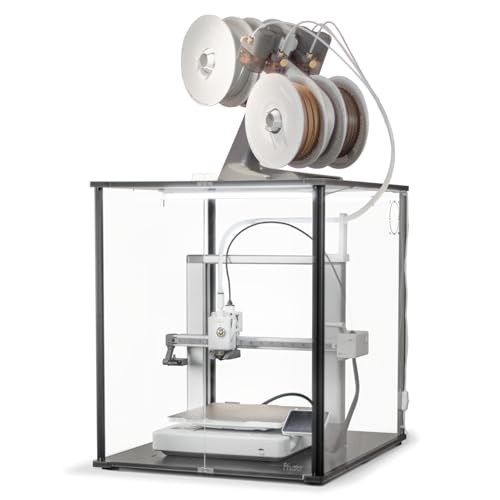
The FNATR A1 enclosure is the direct match for this search, unlike the standalone filtration system or general-purpose enclosures. Its dimensions are about 24.8 × 20.2 × 24.5 inches, and the maker describes a ventilation cutout, an LED light, and placement options for AMS Lite. The maker says pairing it with a separately sold ventilation system supports air circulation and filtering; a hose can also route fumes outside. A dedicated bottom outlet is intended to release heat from the printer’s mainboard. This is the fit to consider when you have the A1, but verify clearance for the printer and accessories.
Bottom line: Choose this if you have a Bambu Lab A1 and want its matching enclosure.
FNATR Ventilation System V1

The FNATR V1 is an add-on, not an enclosure, and is the only option here with a five-stage filtration system. The maker identifies activated carbon and HEPA filtration, three speeds, and an included hose and adapters. It is designed for FNATR A1 and A1 Mini enclosures; compatibility with other enclosures may require modifications. The maker says it also works with Bambu Lab P2S, P1S, and H2D when users print adapter parts, but not in laser mode. Its compact stated dimensions are about 4.3 × 4.3 × 7.9 inches. Choose it only after confirming your enclosure and printer configuration.
Bottom line: Choose this if you need the compatible FNATR filtration add-on.
VEVOR Ventilated 3D Printer Enclosure

The VEVOR enclosure offers a larger stated footprint than the FNATR A1 enclosure and lists a built-in ventilation system. Its dimensions are 23.6 × 23.6 × 31.5 inches, and the manufacturer names Bambu Lab A1, several Ender models, Neptune 4 Pro, and Kobra 2 Pro among compatible printers. The maker says the enclosure helps maintain temperature and expel smoke and dust. It also has a transparent acrylic construction and an LED. Since the size is an outside measurement and printer setups vary, measure the printer, spool path, and cable clearance before choosing it.
Bottom line: Choose this if its larger stated dimensions suit your printer and workspace.
TOPCUBE F2 A1 Enclosure
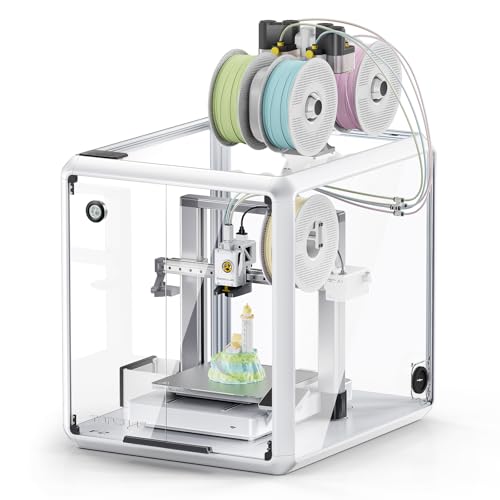
The TOPCUBE F2 differs from the FNATR enclosure by emphasizing an actively cooled base. The maker says its fan dissipates heat from the printer and its base combines cooling with load-bearing support; it also describes acrylic panels, an LED light, and odor isolation. The product is identified for Bambu Lab A1 and A1 Combo, so it is a related option rather than the FNATR enclosure itself. Consider this model if base cooling is a priority and you can confirm the enclosure’s footprint and height fit your setup.
Bottom line: Choose this if you want an A1 enclosure with an actively cooled base.
How to choose an A1 printer enclosure
Start with fit: measure the printer’s full footprint and height, including any spool holder, AMS Lite placement, and the space needed to open doors or reach controls. Compare those measurements with the enclosure’s usable interior, not only its outside dimensions; leave room for cables and airflow around the printer. Next decide whether the goal is draft and dust containment, a warmer chamber, or fume extraction, because those functions are not interchangeable. An enclosure is not a substitute for ventilation. For printing materials that can emit fumes, use ventilation that moves air outdoors or an appropriately designed filtration system, and keep the printer in a ventilated room. A measurable rule: if the printer plus its accessories exceed any interior enclosure dimension, do not assume the setup will fit.
Ventilation and filtration for 3D printing
Ventilation and filtration are different: a hose can carry air outdoors, while a filter recirculates air through filter media. HEPA media targets airborne particles; activated carbon adsorbs some gases, but performance depends on filter size, airflow, sealing, and replacement. FDM printing can release ultrafine particles and volatile organic compounds, so enclosure walls alone do not make the air safe. Keep the room ventilated and avoid directing exhaust toward people or open windows where it can re-enter. For a ducted setup, confirm the hose route, outlet location, and whether the fan can move air through the full duct run. For recirculating filtration, check that replacement filters are available and follow their replacement schedule.
Enclosure sizing and printer clearance
Enclosure dimensions matter at the printer’s widest and tallest points, including moving parts and filament paths. A printer that fits on paper may still hit a wall when its bed or toolhead moves, or leave too little room to load filament. Measure in inches and compare each axis separately; do not compare only enclosure volume. Also account for the desk or shelf’s load limit, since enclosures add weight and the printer moves during operation. A practical decision rule is to allow at least 2 inches of clearance around moving components where possible, then check the printer maker’s setup guidance for any larger required service or ventilation gap. The outside dimensions given for a model do not establish its interior capacity.
Temperature, materials, and enclosure safety
An enclosure can reduce drafts and help retain heat, which matters for materials prone to warping, but a hotter chamber is not suitable for every printer component or filament. PLA can soften when exposed to excess heat around the extruder and feed path, so do not assume that a closed enclosure is always beneficial; use the printer and filament makers’ temperature guidance. Never block a printer’s cooling vents or mainboard exhaust, and stop printing if electronics show overheating or abnormal operation. Keep flammable items away from the printer and do not leave a printer running unattended. If a product provides a dedicated heat outlet, keep that outlet unobstructed and confirm it matches the printer’s airflow needs before long prints.
Frequently Asked Questions
Does the FNATR enclosure include a ventilation system?
The FNATR A1 enclosure has a ventilation cutout, while its matching ventilation system is sold separately. The V1 system includes a hose and adapters and is designed for FNATR A1 and A1 Mini enclosures.
Can a 3D printer enclosure remove printing fumes?
An enclosure by itself contains the printer but does not remove fumes from the room. Use suitable ducted exhaust to outdoors or a correctly configured filter, and maintain room ventilation because FDM printing can emit particles and volatile compounds.
How much clearance should a 3D printer enclosure have?
Measure the printer at its widest and tallest points, including accessories and moving parts, and compare those numbers with the enclosure’s interior dimensions. Allow at least 2 inches around moving components where possible, then verify any larger clearance the printer maker requires.
Is an enclosure suitable for printing PLA?
PLA does not automatically need a warm enclosure, and excess heat around the extruder or filament path can cause feeding problems. Use the printer and filament makers’ temperature guidance, and keep cooling vents clear.
Can the FNATR ventilation system fit another enclosure?
The V1 is designed for FNATR A1 and A1 Mini enclosures; other enclosure compatibility may require modifications. Confirm fit and adapter requirements before using it with a different enclosure.