
Dr. Motion Compression Socks: Styles Compared

Dr. Motion Men Everyday Knee-High is the clearest match for men seeking everyday knee-high compression, with three graduated zones and 8–15 mmHg support; choose Dr. Motion Women’s Graduated Knee-High instead for the women’s version. For outdoor walking, hiking, or shorter coverage, compare the activity-focused knee-high, crew, and quarter styles.
Compression socks apply pressure to the lower leg, and fit and pressure level matter more than the brand name. Anyone with circulation problems or reduced sensation should ask a clinician before wearing compression socks.
We earn a commission if you buy through links on this page. As an Amazon Associate I earn from qualifying purchases. Products are compared on manufacturer specifications, not hands-on testing.
- Best overall: Dr. Motion Men Everyday Knee-High – Three-zone graduated compression at 8–15 mmHg in a six-pair men’s knee-high pack.
- Best for women’s knee-high fit: Dr. Motion Women’s Graduated Knee-High – Knee-high length, three graduated zones, and a non-binding comfort band.
- Best for hiking and walking: Dr. Motion Men’s Outdoor Compression Crew – Crew height with half cushioning, breathable mesh uppers, and dynamic arch support.
- Best for shorter coverage: Dr. Motion Women’s Compression Quarter – Quarter height with a six-pair pack and a women’s shoe-size fit range.
| Product | Best for | Style | Compression | Fit | Shop |
|---|---|---|---|---|---|
| Dr. Motion Men Everyday Knee-High | Men, everyday wear | Knee-high | 8–15 mmHg | Men’s shoe 7–12 | Check Price on Amazon |
| Dr. Motion Women’s Graduated Knee-High | Women, daily support | Knee-high | 8–15 mmHg | Women’s shoe 4–10 | Check Price on Amazon |
| Dr. Motion Men’s Outdoor Knee-High | Outdoor activity | Knee-high | — | Men’s sock 10–13 | Check Price on Amazon |
| Dr. Motion Men’s Outdoor Compression Crew | Hiking and walking | Crew | — | Men’s sock 10–13 | Check Price on Amazon |
| Dr. Motion Women’s Compression Quarter | Women, quarter height | Quarter | — | Women’s shoe 4–10 | Check Price on Amazon |
Dr. Motion compression socks compared
Compare the height, pressure, and fit details that distinguish these Dr. Motion styles.
Dr. Motion Men Everyday Knee-High
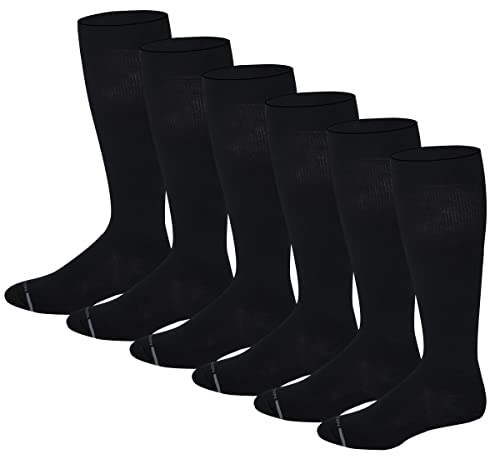
Dr. Motion Men Everyday Knee-High stands out for its pressure level and graduated construction: three zones run from ankle to calf, and the socks provide 8–15 mmHg compression. Dr. Motion says the mild compression is intended for everyday wear and support. The pack contains six pairs in black, with a sock size of 10–13 and fit for men’s shoe sizes 7–12.
The knee-high cut suits men who want coverage up the calf rather than a shorter activity sock. The pressure is mild, so shoppers seeking a stronger compression level should compare the mmHg rating carefully before choosing.
Bottom line: Choose this style for men’s everyday knee-high wear with a 8–15 mmHg level.
Dr. Motion Women’s Graduated Knee-High

Dr. Motion Women’s Graduated Knee-High is the women’s knee-high option, with three graduated compression zones and a non-binding comfort band at the top. Dr. Motion says its Class I mild compression measures 8–15 mmHg. The four-pair pack is black; the fit is women’s shoe sizes 4–10, corresponding to sock size 9–11.
The just-below-knee length provides more lower-leg coverage than crew or quarter socks, making this the direct choice for women who want a daily knee-high style. Its pressure remains mild, so someone specifically seeking stronger compression should look for a different stated mmHg range.
Bottom line: Choose this pair for women’s knee-high coverage and mild graduated compression.
Dr. Motion Men’s Outdoor Knee-High
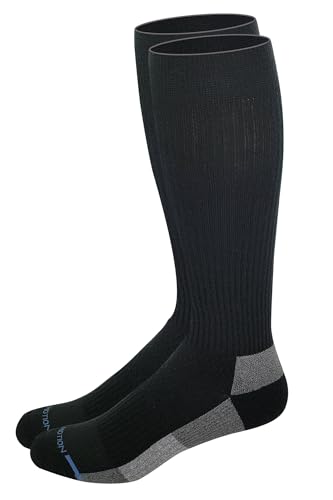
Dr. Motion Men’s Outdoor Knee-High is the outdoor-oriented knee-high choice, distinguished by moisture-wicking fabric plus arch support and cushioning at the heel and toe. The black style comes in sock size 10–13. Those comfort features separate it from the everyday packs, but the maker gives no pressure value to compare with the 8–15 mmHg styles.
Choose this style when outdoor activity features matter more than a known compression strength. Buyers who need a particular pressure level should confirm the mmHg rating before ordering; the word “compression” alone does not tell how much pressure the sock provides.
Bottom line: Choose this style for outdoor use when you do not need a specified compression level.
Dr. Motion Men’s Outdoor Compression Crew

Dr. Motion Men’s Outdoor Compression Crew differs from the knee-high choices with its crew cut and half-cushion construction. The three-pair assorted pack combines a TruDry polyester blend with heat-retaining acrylic, breathable mesh uppers, and dynamic arch support. Dr. Motion says the fabric wicks moisture; the socks are also described as latex-free and cruelty-free.
This is the activity-focused option for men who prefer crew coverage for walking or hiking rather than a knee-high.
Bottom line: Choose this style for men’s outdoor crew coverage with cushioning and arch support.
Dr. Motion Women’s Compression Quarter

Dr. Motion Women’s Compression Quarter is the shortest-cut option in this group, with quarter height and a six-pair white pack. It offers a softer, breathable, stretchy fabric and an all-day support design. The size is 9–11, fitting women’s shoe sizes 4–10.
Choose this style when quarter coverage suits your shoes or routine better than crew or knee-high socks.
Bottom line: Choose this style for women’s quarter-height coverage and a six-pair pack.
How to choose Dr. Motion compression socks
Start with sock height, pressure, and shoe-size fit, in that order. Knee-high socks cover the foot and lower leg to just below the knee; crew socks end around mid-calf, while quarter socks sit above the ankle. For a pressure, compare mmHg values: Dr. Motion Men Everyday Knee-High and Dr. Motion Women’s Graduated Knee-High specify 8–15 mmHg, while other styles here do not give a pressure figure.
Compression measurements describe pressure, not thickness or cushioning. Graduated socks are designed to apply the most pressure at the ankle and less higher up the leg. If a clinician has recommended a particular pressure, select a sock with that stated range rather than assuming every product called “compression” is equivalent.
How sock height and fit affect your choice
Match the sock to both your shoe size and the coverage you want; the same brand includes knee-high, crew, and quarter cuts. The women’s knee-high and quarter options state a fit of women’s shoe sizes 4–10, while the men’s everyday pair states men’s shoe sizes 7–12 and the men’s outdoor crew states sock size 10–13. These ranges are not interchangeable across styles.
A practical rule is to choose knee-high coverage when you want the lower leg covered, and crew or quarter coverage when a shorter sock suits the shoe and activity. Measure around the ankle and calf if you are between sizes or have unusually shaped legs, and check the product’s size chart against those measurements before ordering. A sock that bunches, rolls, or leaves deep marks may be the wrong fit.
Compression socks versus cushioned activity socks
A mmHg value helps distinguish pressure support from general athletic cushioning. The chart separates the styles by the pressure and activity features provided.
| Style | Useful for | What to compare |
|---|---|---|
| Knee-high, 8–15 mmHg | Mild daily compression | Pressure, graduated zones, leg fit |
| Outdoor knee-high | Outdoor wear | Moisture management, cushioning, pressure rating |
| Crew or quarter | Shorter coverage | Height, shoe fit, stated pressure |
Outdoor features such as mesh, moisture-wicking fabric, cushioning, and arch support address comfort and activity; they do not establish a compression strength. If pressure is the reason for buying, require an mmHg figure and verify that it matches the intended use. For walking or hiking, height and cushioning can be the deciding factors when no pressure level is specified.
Safety and care for compression socks
Ask a clinician before using compression socks if you have peripheral artery disease, significant circulation problems, diabetes-related loss of sensation, or unexplained leg swelling. Compression can be inappropriate for some conditions, and numbness can make an overly tight sock difficult to detect. Remove a sock and seek advice if you experience new pain, tingling, color change, or skin irritation.
Put socks on smoothly, without folds or a rolled top band, since bunching can create concentrated pressure. Wash according to the garment’s care label; heat and rough handling can wear elastic fibers and reduce their ability to maintain a consistent fit. Replace a pair when the fabric is stretched out, damaged, or no longer stays in place.
Frequently Asked Questions
What does 8–15 mmHg mean in compression socks?
The mmHg number measures pressure, and 8–15 mmHg is a mild compression range. It is not a measure of cushioning or sock thickness. Use a pressure level recommended for your needs rather than choosing by the word “compression” alone.
Should compression socks reach the knee?
Knee-high socks are useful when you want coverage over the foot and lower leg to just below the knee. Crew and quarter socks provide shorter coverage, so choose by the area you want covered and the fit of your shoes.
How tight should compression socks feel?
Compression socks should feel snug and supportive, not painful or numb. Smooth out wrinkles and avoid rolling the top band; remove them and seek advice if you notice new tingling, pain, skin changes, or color change.
Can people with diabetes wear compression socks?
People with diabetes-related circulation problems or reduced foot sensation should ask a clinician before wearing compression socks. Reduced sensation can make excessive tightness or skin irritation harder to notice.
How often should compression socks be replaced?
Replace compression socks when the elastic is stretched, the fabric is damaged, or the socks no longer stay in place. Washing and wear gradually affect elasticity, so inspect the fit rather than relying on a fixed replacement interval.