
Best Door Buzzer Entry System: 4 Access Kits Compared

For most people, Remote Magnetic Lock Entry System is the clearest choice because its magnetic lock provides a 600 pounds of holding force and its remotes work from about 100 feet. Choose an electric strike kit instead if your door uses a compatible cylindrical lockset or you need to select its power-loss behavior.
A door buzzer entry system lets someone release a locked door remotely; these kits pair access controls with either a magnetic lock or an electric strike.
We earn a commission if you buy through links on this page. As an Amazon Associate I earn from qualifying purchases. Products are compared on manufacturer specifications, not hands-on testing.
- Best overall: Remote Magnetic Lock Entry System – A 600-pound magnetic lock and four included remotes suit basic remote entry.
- Best for adjustable power-loss mode: Cylindrical Electric Strike Kit, 12V DC – The electric strike can be set to fail-safe or fail-secure operation.
- Best for high cycle count: Fail-Safe/Fail-Secure Electric Strike Kit – Its service life is 500,000 uses.
| Product | Best for | Lock type | Access controls | Power-loss mode | Shop |
|---|---|---|---|---|---|
| Remote Magnetic Lock Entry System | Remote magnetic entry | Magnetic lock | Keypad, 4 remotes, exit button | — | Check Price on Amazon |
| Cylindrical Electric Strike Kit, 12V DC | Power-loss choice | Electric strike | Remote, exit button, buzzer | Fail-safe or fail-secure | Check Price on Amazon |
| Upgraded Electric Strike Kit | Impact rating | Electric strike | Remote, button, buzzer | Fail-safe or fail-secure | Check Price on Amazon |
| Fail-Safe/Fail-Secure Electric Strike Kit | Cycle-life figure | Electric strike | Remote, button, buzzer | Fail-safe or fail-secure | Check Price on Amazon |
Best door buzzer entry systems
Compare the lock mechanism and access controls first, then match the system to your door and egress needs.
Remote Magnetic Lock Entry System
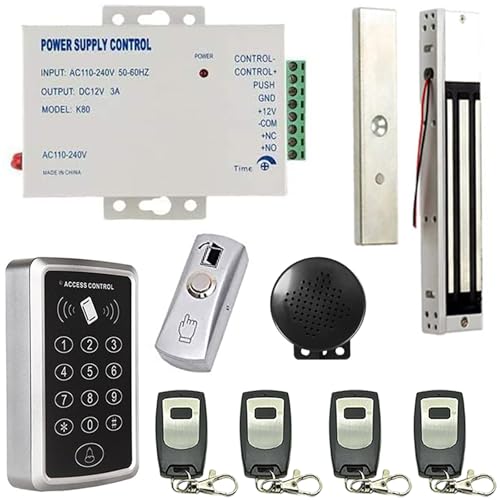
Unlike the electric strike kits, this system uses a magnetic lock and includes a keypad alongside four remotes. The maker gives the remote range as about 100 feet and the lock force as 600 pounds; its power unit accepts 100–240V input and supplies 12V/3A output. A metal push-to-exit button handles egress from inside. This arrangement suits a door where the magnet can be mounted and remote release is the priority. A limitation is that the force rating is lower than the 2,200-pound figures associated with some strike kits, so compare the actual door hardware and security need rather than the number alone.
Bottom line: Choose this if remote release and a keypad matter more than an adjustable strike mode.
Cylindrical Electric Strike Kit, 12V DC

This strike kit stands out for its explicit 12V DC supply and adjustable fail-safe or fail-secure mode. The maker gives a 2,200-pound holding-force figure and a lifespan above 500,000 cycles. It is intended for cylindrical mechanical locks, so it suits buyers replacing or adding access control to that kind of latch arrangement. The useful distinction is what happens when power fails: fail-safe unlocks, while fail-secure remains locked. The kit is not a universal fit for every door; check the lockset and frame geometry before choosing an electric strike.
Bottom line: Choose this if cylindrical-lock compatibility and configurable power-loss behavior fit your door.
Upgraded Electric Strike Kit

For buyers comparing strike kits, this one specifies a maximum impact resistance of 2,200 pounds after electrification rather than the holding-force wording used by some alternatives. It is made of alloy metal and offers fail-safe or fail-secure operation by repositioning a screw. The maker also identifies use with cylindrical mechanical locksets and remote release plus an exit button. That combination suits a compatible door where the selected power-loss state is important. Its quoted impact figure is not interchangeable with a holding-force rating, so do not use the two measures as a direct ranking of security.
Bottom line: Choose this if you want a strike kit whose rating is impact resistance.
Fail-Safe/Fail-Secure Electric Strike Kit

This kit distinguishes itself with a service life of 500,000 uses, making cycle count a useful comparison point for frequently operated doors. It offers wireless remote unlocking and a button for opening from inside, and its operating mode can be chosen between fail-secure and fail-safe. The maker cautions buyers to confirm the strike size, so matching the existing lock and frame matters before installation. The cycle figure does not establish that the kit fits a particular door or predicts service life under every installation; verify the hardware dimensions as well as the desired power-loss behavior.
Bottom line: Choose this if the 500,000-use life and selectable mode match your requirements.
How to choose a door buzzer entry system
Choose the lock mechanism to match the door: a magnetic lock holds the door with an energized magnet, while an electric strike releases the latch at the frame so the door can open. A strike is generally the closer match when a door already has a compatible cylindrical lockset; a magnetic lock requires a suitable mounting surface and secure wiring. For these options, compare the keypad or remote access method, exit control, and behavior when power is lost. A practical decision rule is to select a strike when the installed latch and frame are compatible; consider a magnetic lock only when the door can accept its magnet and armature mounting. Do not treat force figures as directly comparable if one describes impact resistance and another holding force.
Fail-safe versus fail-secure operation
Fail-safe means the lock releases when power is lost; fail-secure means the door remains locked from the outside without power. That choice changes both security and emergency egress, so decide based on the door’s role rather than choosing the mode with the larger force number. A magnetic lock normally releases when its electrical power is interrupted, unlike a fail-secure strike configuration. Access-controlled doors must still allow required egress, and building and fire rules vary by occupancy and installation. Before installing any powered lock on an exit door, verify applicable local requirements and ensure occupants can exit safely during a power interruption. Never rely on a remote or keypad as the only way out.
Check lockset and door fit before installation
Electric strikes must align with the latch bolt and the frame opening; a mismatch can prevent latching or release. Cylindrical locksets use a spring latch that extends into the frame, but strike dimensions and door handing still affect compatibility. Measure the existing strike opening and compare its shape and dimensions with the replacement before removing hardware. Magnetic locks need a flat, stable mounting position for the magnet and armature plate, with the plate able to meet the magnet squarely when the door closes. Frame material and door movement can affect mounting options. If the door or frame needs cutting, confirm that the work will not weaken the frame or interfere with a required exit route.
Power, wiring and safe operation
Low-voltage access-control kits still connect to mains power through a power unit, so installation requires care around both the supply and the lock circuit. The magnetic-lock option here uses a power unit rated for 100–240V input and 12V/3A output; the strike option is identified as 12V DC. Use a correctly rated supply and keep wiring protected from damage, moisture and pinch points. A door-release button should be positioned so occupants can use it without relying on the remote. Test normal release, exit-button operation and the chosen power-loss state after installation, then periodically check that the latch or magnet engages consistently and that the door closes fully.
Frequently Asked Questions
What is the difference between a magnetic lock and an electric strike?
A magnetic lock holds the door with an energized magnet, while an electric strike releases the frame-side latch so the door can open. Magnetic locks commonly release when power is lost; strikes can be configured for fail-safe or fail-secure behavior.
What does fail-safe mean on an electric strike?
Fail-safe means the strike releases when electrical power is lost. That may aid egress but reduces exterior security during an outage, so account for the door’s use and local requirements before selecting the mode.
What does fail-secure mean when power goes out?
A fail-secure strike stays locked from the outside when power is lost. Occupants must still have a safe means to exit, and the door’s egress arrangement should comply with applicable local rules.
How do I know whether an electric strike will fit my door?
Compare the strike opening with the door’s latch bolt, frame cutout and lockset type; cylindrical locksets are one common match but dimensions still matter. Check those measurements before installation, especially if the frame needs modification.
Can a magnetic lock be used on an exit door?
A magnetic lock can be part of an exit-door system only when the installation provides compliant egress and meets applicable building and fire rules. Confirm the local requirements and provide a safe release method that does not depend solely on a remote.