
Monk Fruit Sugar Without Erythritol: 5 Options Compared

For a pure, single-ingredient monk fruit sweetener without erythritol, DureLife is the closest match because it contains only monk fruit extract. Choose an allulose blend instead if you need a granulated 1:1 sugar substitute for baking; those blends are not pure monk fruit.
We earn a commission if you buy through links on this page. As an Amazon Associate I earn from qualifying purchases. Products are compared on manufacturer specifications, not hands-on testing.
- Best overall: DureLife Pure Monk Fruit, 5 oz – Its only ingredient is monk fruit extract, with no erythritol or fillers.
- Best for 1:1 baking: NatureBell Monk Fruit and Allulose, 3 lb – The monk fruit and allulose blend is described as a 1:1 white sugar substitute.
- Best for brown sugar swaps: Micro Ingredients Golden Monk Fruit, 2 lb – Its golden allulose blend is a 1:1 brown sugar replacement that browns and caramelizes.
| Product | Best for | Sweetener type | Package size | Sugar replacement ratio | Shop |
|---|---|---|---|---|---|
| DureLife Pure Monk Fruit, 5 oz | Pure extract | Pure monk fruit extract | 5 oz | — | Check Price on Amazon |
| Morning Pep Pure Monk Fruit, 5 oz | Pure extract servings | Pure monk fruit extract | 5 oz | — | Check Price on Amazon |
| NatureBell Monk Fruit and Allulose, 3 lb | White sugar swaps | Monk fruit and allulose blend | 48 oz | 1:1 for white sugar | Check Price on Amazon |
| Lakanto Golden Monk Fruit with Allulose, 1 lb | Golden sugar texture | Golden monk fruit and allulose blend | 16 oz | — | Check Price on Amazon |
| Micro Ingredients Golden Monk Fruit, 2 lb | Brown sugar baking | Golden monk fruit and allulose blend | 32 oz | 1:1 for brown sugar | Check Price on Amazon |
Monk fruit sugar without erythritol options
The key distinction is pure monk fruit extract versus blends that combine monk fruit with allulose.
DureLife Pure Monk Fruit, 5 oz

DureLife is the pure-extract choice in this group: the powder contains monk fruit extract without erythritol, other sugar alcohols, or fillers. A small measure is intended to sweeten drinks and recipes, so it does not function as a 1:1 sugar replacement. The 5-ounce package suits shoppers who want a single-ingredient sweetener rather than a bulk baking blend. Its concentrated format can make measuring unfamiliar; start with a small amount and adjust to taste instead of substituting it cup for cup for sugar.
Bottom line: Choose this if you want pure monk fruit extract and can measure a concentrated sweetener.
Morning Pep Pure Monk Fruit, 5 oz
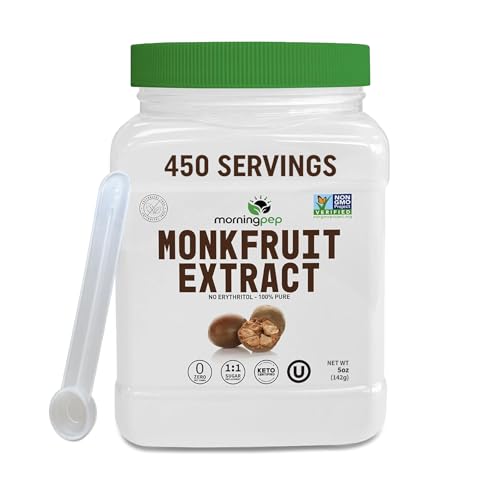
Morning Pep is another pure monk fruit extract, but it distinguishes itself by stating more than 450 servings in a 5-ounce package. The powder contains no erythritol, other sugar alcohols, or fillers, and the maker identifies it as zero calorie. This fits shoppers prioritizing a single-ingredient extract and a serving count for planning use. Like other concentrated extracts, it is not presented as a 1:1 replacement for sugar, so it is less suitable when a baking recipe depends on sugar’s volume or texture.
Bottom line: Pick it for pure extract with a serving count, not a cup-for-cup sugar swap.
NatureBell Monk Fruit and Allulose, 3 lb
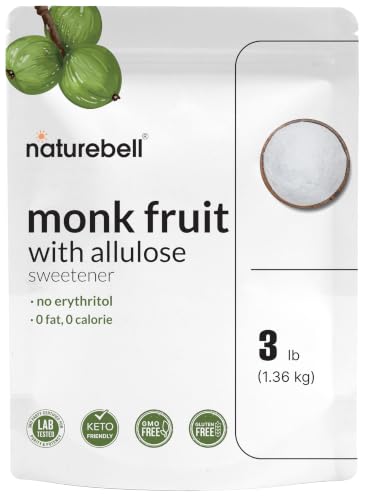
NatureBell differs from the pure extracts by combining monk fruit with allulose and giving a 1:1 white-sugar substitution ratio. The 3-pound package is the largest in this group, making it the option for shoppers who want a bulk blend for baking, beverages, or cooking. The maker says the formula has zero calories and zero net carbs. Because allulose is a second sweetening ingredient, this is not a pure monk fruit extract; choose one of the single-ingredient powders if avoiding all added sweeteners is the priority.
Bottom line: Choose this for a bulk allulose blend that measures like white sugar.
Lakanto Golden Monk Fruit with Allulose, 1 lb

Lakanto is a golden monk fruit-and-allulose blend positioned as a raw cane sugar substitute, rather than a pure extract or a 1:1 white-sugar blend. Its 1-pound package sits between the 5-ounce extracts and larger baking bags. The maker says it dissolves quickly and helps keep baked goods moist, which may suit recipes where a golden-sugar style is wanted. It contains allulose, so it is a partial match for someone seeking monk fruit without erythritol, not for someone seeking monk fruit as the sole ingredient.
Bottom line: Pick this when a golden allulose blend is a better fit than pure extract.
Micro Ingredients Golden Monk Fruit, 2 lb

Micro Ingredients makes the brown-sugar-oriented choice: its golden monk fruit and allulose blend is a 1:1 brown sugar replacement and is described as browning and caramelizing. The 2-pound pouch provides up to 226 servings, so it suits frequent baking or everyday use better than a small extract package. The maker also describes it as suitable for hot and cold drinks. This blend includes allulose, and the ratio is for brown sugar; choose a pure extract for a single-ingredient sweetener or a different blend for a white-sugar ratio.
Bottom line: Choose it for brown sugar-style baking and a 1:1 replacement ratio.
How to choose monk fruit sweetener without erythritol
Start by deciding whether you want pure extract or a blend. Pure monk fruit extract is concentrated, so a small amount can sweeten a drink, but it does not automatically replace sugar’s bulk in a recipe. Allulose blends are bulk sweeteners; check the package ratio and whether it targets white or brown sugar before adapting a recipe. For a cup-for-cup substitute, pick a product that explicitly says 1:1 and matches the sugar type in the recipe. When you only need sweetness in coffee or tea, pure extract may be enough, but begin with a small measure because concentrated powders can be easy to overdo.
Pure monk fruit versus allulose blends
Pure extract has monk fruit as its sweetening ingredient, while the blended options here pair it with allulose. That difference matters if your goal is to avoid erythritol specifically versus avoid all additional sweeteners. The pure extracts satisfy the former and are also single-ingredient products; the allulose products satisfy the no-erythritol requirement but are not pure monk fruit. Blend formats may be easier for baking because some specify a 1:1 ratio. Use the ratio only for the named sugar type: a brown sugar substitute should not be assumed to behave like a white sugar substitute.
| Need | Product type | Deciding point |
|---|---|---|
| Single ingredient | Pure monk fruit extract | Concentrated; not a 1:1 swap |
| White sugar replacement | Monk fruit and allulose blend | Look for a 1:1 white sugar ratio |
| Brown sugar replacement | Golden monk fruit and allulose blend | Look for a brown sugar ratio |
Using monk fruit in baking and drinks
Pure extract and granulated blends behave differently in recipes because sweetness and bulk are separate jobs. A concentrated powder can sweeten coffee or tea with a small amount, but replacing a full measure of sugar may leave a recipe short of volume and alter texture. A 1:1 blend is more straightforward when a recipe uses white or brown sugar, but follow the specific match named by the maker. Baking also depends on browning, moisture, and structure, not just sweetness, so avoid swapping a pure extract into a recipe that relies on sugar’s bulk. For drinks, dissolve a small amount and adjust gradually.
What to check before choosing a sugar substitute
Check the full ingredient statement if avoiding more than erythritol: “without erythritol” does not mean “pure monk fruit” when a blend contains allulose. Also compare package size and serving claims carefully; a serving count is useful only alongside the amount used per serving. For a recipe calling for a particular kind of sugar, verify that the product ratio names that same kind rather than assuming all 1:1 blends interchange. These options are sweeteners, not nutritional equivalents to sugar in every recipe, and a zero-calorie claim alone does not describe how the product contributes to texture or browning.
Frequently Asked Questions
Is monk fruit without erythritol always pure monk fruit?
No. Some erythritol-free sweeteners combine monk fruit with allulose, while pure extracts use monk fruit extract alone. Check the ingredient type if avoiding all additional sweeteners.
Can pure monk fruit replace sugar cup for cup?
Not based on these products’ stated uses: the pure extracts are concentrated, and neither gives a 1:1 sugar ratio. For a cup-for-cup recipe swap, choose a blend that explicitly matches the sugar type.
Which monk fruit sweetener works as a brown sugar substitute?
Choose a product that explicitly identifies itself as a brown sugar replacement. Micro Ingredients states a 1:1 brown sugar ratio, while a golden color alone does not establish that ratio.
How much pure monk fruit should I add to coffee?
Start with a very small measure because pure monk fruit extract is concentrated. Add gradually and taste, since these pure extract options do not give a universal cup-of-coffee dose.
Are monk fruit and allulose blends erythritol-free?
The three allulose blends here are identified as having no erythritol. They are not pure monk fruit, because allulose is also part of each blend.