
Best Micro-Infusion at Home: 5 Kits Compared

SHINING FACE 0.25 mm Micro-Infusion Kit is the best fit for most people seeking the best micro-infusion at home because it pairs a 0.25 mm stamp with a biweekly routine and included peptide serum. Choose ANPOL 0.25 mm Fillable Micro-Infusion Kit if you prefer to fill the applicator with your own moisturizing serum, or Microrevive Titanium Micro-Infusion Kit for a weekly schedule.
Micro-infusion tools use fine contact points to apply serum at the skin’s surface; they are not a substitute for professional procedures.
We earn a commission if you buy through links on this page. As an Amazon Associate I earn from qualifying purchases. Products are compared on manufacturer specifications, not hands-on testing.
- Best overall: SHINING FACE 0.25 mm Micro-Infusion Kit – Includes a 0.25 mm stamp, peptide serum, and an every-two-weeks routine.
- Best for custom serum: ANPOL 0.25 mm Fillable Micro-Infusion Kit – Its fillable bottle is designed to work with your favorite moisturizing serum.
- Best for weekly use: Microrevive Titanium Micro-Infusion Kit – The brand recommends one serum vial per session, once a week.
| Product | Best for | Applicator depth | Included serum | Suggested schedule | Shop |
|---|---|---|---|---|---|
| SHINING FACE 0.25 mm Micro-Infusion Kit | Biweekly skincare | 0.25 mm | Collagen peptide, hyaluronic acid | Every 2 weeks | Check Price on Amazon |
| SHINING FACE 3-Month Micro-Infusion Kit | Longer routine | — | Collagen peptide, hyaluronic acid | Every 2 weeks | Check Price on Amazon |
| ANPOL 0.25 mm Fillable Micro-Infusion Kit | Custom serum | 0.25 mm | User-provided moisturizing serum | Every 2 weeks | Check Price on Amazon |
| Microrevive Titanium Micro-Infusion Kit | Weekly routine | — | Hyaluronic acid, collagen, aloe vera | Once weekly | Check Price on Amazon |
| Qure 3-Month Micro-Infusion System | Six sessions | — | — | Every 2 weeks | Check Price on Amazon |
At-home micro-infusion kits
Compare applicator details, serum formats, and the use schedules to find a routine that suits you.
SHINING FACE 0.25 mm Micro-Infusion Kit

SHINING FACE 0.25 mm Micro-Infusion Kit stands out for specifying a 0.25 mm stamp and a biweekly schedule, with two serum bottles intended for each session. The kit includes two micro-infusion devices and four peptide-serum bottles, pairing collagen peptides with hyaluronic acid. That makes it a fit for someone who wants an included serum and a defined two-week cadence rather than a weekly routine. The main tradeoff is the short, one-month supply, so it suits a trial-length routine better than a longer kit. The brand recommends using it once every two weeks.
Bottom line: Choose this if you want an included peptide serum and a clearly stated biweekly schedule.
SHINING FACE 3-Month Micro-Infusion Kit

SHINING FACE 3-Month Micro-Infusion Kit differs from the one-month kit by including a three-month supply: four infusion devices and 12 peptide-serum bottles. Its collagen-peptide and hyaluronic-acid formula is intended for use every two weeks, making it suitable for buyers who want more sessions in one package. The applicator depth is not included among the product specifications here, so buyers who require a particular needle depth should confirm the applicator measurement before ordering. The maker describes the design as gentle, but that claim does not establish suitability for every skin type.
Bottom line: Choose this if a three-month supply matters more to you than an applicator depth.
ANPOL 0.25 mm Fillable Micro-Infusion Kit
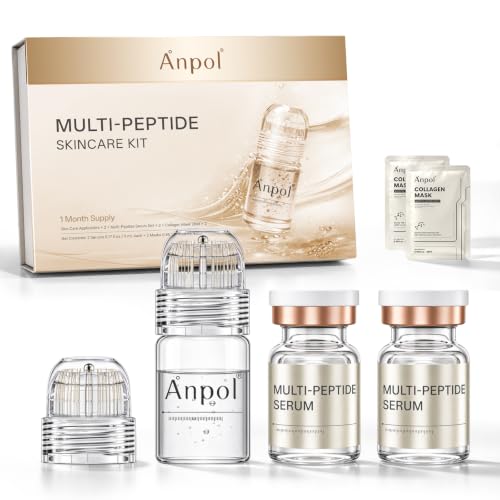
ANPOL 0.25 mm Fillable Micro-Infusion Kit is the option for shoppers who want to supply their own moisturizing serum: its bottle is filled before use, rather than relying on a set of included serum vials. It has a 0.25 mm applicator and is intended for face and neck use, with a five-minute routine repeated every two weeks. The package also includes two collagen masks. Unlike kits with a bundled serum, this one leaves formula selection to the buyer; use only a serum suitable for the applicator and intended area, and follow its hygiene directions.
Bottom line: Choose this if you want to use your own moisturizing serum and prefer a 0.25 mm applicator.
Microrevive Titanium Micro-Infusion Kit

Microrevive Titanium Micro-Infusion Kit is distinct for its titanium micro-stamp and weekly use schedule. The kit pairs the applicator with hyaluronic-acid serum containing collagen and aloe vera; the brand directs users to apply one full vial per session with a press-and-lift motion. This is the clearest fit among these options for someone who prefers a weekly cadence rather than a biweekly one. The applicator depth is not given in the product specifications, which matters if you are comparing by contact-point length. Its serum formula is fixed rather than a bring-your-own-serum setup.
Bottom line: Choose this if a weekly routine and an included hyaluronic-acid serum suit your preferences.
Qure 3-Month Micro-Infusion System

Qure 3-Month Micro-Infusion System focuses on a three-month supply described as six sessions, with a use schedule of once every two weeks. That makes it a less spec-rich choice for buyers comparing needle measurements or ingredients, while the six-session count gives a useful routine duration. The brand frames it as a five-minute at-home application; check the included components and formula before choosing if those specifics determine your fit.
Bottom line: Choose this if a six-session, biweekly schedule is your main requirement.
How to choose an at-home micro-infusion kit
Start with the applicator and schedule, then decide whether you want a bundled serum. The kits here span weekly and every-two-weeks routines, and one specifies a 0.25 mm contact-point depth. A short depth measurement does not make a tool risk-free: any device that contacts skin needs clean handling and should not be used over broken, irritated, or infected skin. Avoid sharing stamps, and stop if use causes persistent pain or irritation. Check whether the package provides sealed single-use applicators or a reusable component, because cleaning needs differ. If you have a skin condition, a history of keloids, or use prescription skin treatments, ask a qualified clinician before using a skin-contact tool.
Micro-infusion schedules and serum formats
These kits describe either weekly or biweekly use, so compare cadence with how consistently you can follow a routine. A weekly schedule uses sessions about twice as often as a two-week schedule; do not combine schedules from different products. Serum format also changes the decision: some kits include a fixed formula, while the ANPOL bottle is designed for a moisturizing serum selected by the user. A stamp’s contact points are not the same as a clinic’s microneedling device, and at-home cosmetic tools should not be treated as professional procedures. The table groups the options by the differences that are actually supplied for each product.
Use this table to match the kit’s routine to your preferred serum approach.
| Need | Matching option |
|---|---|
| Biweekly use with 0.25 mm depth | SHINING FACE 0.25 mm Micro-Infusion Kit or ANPOL 0.25 mm Fillable Micro-Infusion Kit |
| Biweekly use with a longer supply | SHINING FACE 3-Month Micro-Infusion Kit or Qure 3-Month Micro-Infusion System |
| Weekly use | Microrevive Titanium Micro-Infusion Kit |
| Bring your own moisturizing serum | ANPOL 0.25 mm Fillable Micro-Infusion Kit |
Safe use and hygiene for facial stamps
Clean handling matters whenever a tool touches facial skin; never share an applicator, and discard single-use components after their intended session. The 0.25 mm stamps are shallow cosmetic applicators, but even shallow contact can irritate skin or introduce contamination if used on damaged skin or handled carelessly. Wash and dry hands before handling the device, keep it off the eye area, and avoid applying it over active acne, cold sores, cuts, or inflamed patches. Do not layer strong exfoliating acids or retinoids immediately around a session unless a clinician advises otherwise. A clinician can help decide whether a skin-contact routine is appropriate, especially with eczema, rosacea, a bleeding disorder, or immune suppression.
Common mistakes when comparing micro-infusion kits
Do not assume that a longer supply means a deeper applicator or a better serum match. Package duration, bottle count, applicator depth, and ingredients are separate buying factors, and some options provide more of those specifics than others. Match the session count to the cadence: six sessions at two-week intervals spans about 12 weeks. Do not substitute a weekly schedule into a biweekly kit’s instructions, since the manufacturer’s intended frequency differs. If needle depth is a deciding factor, confirm the measurement before ordering; otherwise compare the schedule and whether the formula is included or user-selected. Treat claims such as “gentle” or “radiant” as brand claims rather than guarantees of a result.
Frequently Asked Questions
How often should I use an at-home micro-infusion stamp?
Schedules in these kits range from once a week to once every two weeks. Follow the schedule for the particular device rather than increasing frequency to chase faster results.
Can I use my own serum with a micro-infusion kit?
The ANPOL kit is designed for a user-provided moisturizing serum, while other options include a formula. Use only a serum suitable for that applicator and avoid formulas with irritating actives on freshly contacted skin.
Can I use a facial stamp on irritated skin?
No; avoid stamping over irritated, broken, or infected skin. Wait until the area has recovered, and ask a clinician about persistent inflammation or a skin condition.
How long does a six-session micro-infusion supply last?
At one session every two weeks, six sessions cover roughly 12 weeks. A weekly schedule would use six sessions in about six weeks, so use the cadence specified for the kit.
Is a 0.25 mm facial stamp the same as clinical microneedling?
No; an at-home cosmetic stamp is not the same as a professional microneedling procedure. The 0.25 mm measurement describes the specified contact-point depth, not a guarantee of safety or a particular result.