
Stren Monofilament Fishing Line: 3 Options Compared

For a clear Stren monofilament line in a 10-pound test, Stren Original Mono, 10 lb is the direct match, with 300 yards per spool. Choose Stren Original Mono, 6 lb instead for a 6-pound test and a much longer spool; anglers seeking 50-pound line or a blue option can consider the different-brand alternative, ROCRETA Geode Mono, 50 lb.
Monofilament is a single-strand nylon line that stretches under load, so choose by target fish, cover and reel capacity rather than spool length alone.
We earn a commission if you buy through links on this page. As an Amazon Associate I earn from qualifying purchases. Products are compared on manufacturer specifications, not hands-on testing.
- Best overall: Stren Original Mono, 10 lb – It is the clear Stren option with a 10-pound test and 300-yard spool.
- Best for long spools: Stren Original Mono, 6 lb – Its clear 6-pound Stren spool holds 2,400 yards.
- Best for heavier test: ROCRETA Geode Mono, 50 lb – It offers a 50-pound test on a 500-yard blue spool.
| Product | Best for | Pound test | Spool length | Color | Shop |
|---|---|---|---|---|---|
| Stren Original Mono, 10 lb | Clear 10-pound line | 10 lb | 300 yd | Clear | Check Price on Amazon |
| Stren Original Mono, 6 lb | Long light-test spool | 6 lb | 2,400 yd | Clear | Check Price on Amazon |
| ROCRETA Geode Mono, 50 lb | Heavier blue mono | 50 lb | 500 yd | Blue | Check Price on Amazon |
Stren Monofilament Fishing Line Options
Compare these lines by test strength, spool length and color to find the right match for your reel and fishing conditions.
Stren Original Mono, 10 lb

For anglers who want a clear Stren line in a 10-pound test, this spool is the direct fit among these options. It holds 300 yards, and the maker describes the line as low-memory for easier handling and casting. A 10-pound test can suit general freshwater setups, but line diameter and reel capacity affect how much fits on a spool; the test rating alone does not determine capacity. This spool is shorter than the 2,400-yard Stren option, so it may be a less convenient choice when you need a large amount of line or want to respool multiple reels.
Bottom line: Choose this for a clear Stren line in a 10-pound test.
Stren Original Mono, 6 lb
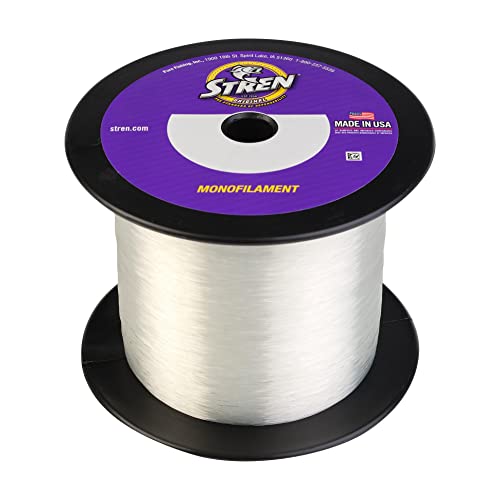
The standout here is spool length: this clear Stren Original spool contains 2,400 yards of 6-pound-test line, compared with 300 yards on the other Stren option. The maker cites knot, shock and tensile strength, abrasion resistance, limpness and controlled stretch. A lighter test can be useful when your target and fishing conditions call for lighter tackle, but it leaves less margin for rough cover or sudden heavy loads than a higher test. Check the reel’s line-capacity markings before spooling; a bulk spool does not mean every reel can take the full amount.
Bottom line: Pick this when you want a long spool of clear 6-pound Stren line.
ROCRETA Geode Mono, 50 lb

Unlike the two Stren options, this is a ROCRETA Geode line in blue, with a 50-pound test and 500-yard spool. The maker describes it as low-memory and calls out knot strength, tensile strength and abrasion resistance; the features also identify yellow and green as UV-reactive colors, not blue. This is a related monofilament option rather than a Stren product, and its heavier test and different color make it a poor substitute for someone specifically seeking clear 6- or 10-pound line. Confirm that a 50-pound line suits your rod, reel and target before choosing it.
Bottom line: Choose this only if you want a blue 50-pound mono line rather than Stren.
How to choose monofilament fishing line
Match pound test to the fish, cover and tackle, then check diameter and reel capacity. Pound test is the line’s rated breaking load; it is not a guarantee that a knot or a worn section will hold that load. Monofilament stretches under tension, which can help absorb sudden surges but can also make subtle bites feel less direct than with low-stretch line types. Nylon mono also has memory: coils left on a spool can affect casting, especially when line diameter and spool size are mismatched. Use the reel’s capacity label as the starting point, and avoid choosing solely by the largest yardage number. The line’s intended test and diameter must suit the reel and the fishing situation.
How spool length and reel capacity fit together
Reel capacity depends on line diameter as well as yardage, so a 2,400-yard spool does not mean a reel can hold all 2,400 yards. Most spinning reels are filled to about 1/8 inch below the spool lip; overfilling can cause loops to fall off, while a large gap can shorten casts. Use the capacity printed on the reel or its manual for a close match, and do not mix capacities calculated for different line diameters. When replacing line, remove old line if the reel would otherwise be overfilled. Keep the spool aligned with the reel’s recommended loading direction to reduce line twist, a common source of tangles.
What monofilament stretch means while fishing
Nylon monofilament commonly stretches roughly 15% to 25% under heavy load, depending on construction and line condition. That stretch can cushion a hard run and reduce shock at a knot, but a long length of stretchy line can soften hook-setting force. Rod action, drag setting and distance to the fish also affect how the line behaves. A smooth drag lets line leave the reel under tension rather than relying on the line alone to absorb every surge. Retie after abrasion against rocks, dock edges or shells, and cut back any visibly rough section; damage can weaken line even when the remaining spool looks sound.
How to store and replace monofilament
Sunlight and heat gradually degrade nylon line, so store spare spools in a cool, dark place rather than on a dashboard or in direct sun. Replace line when it has been exposed to prolonged sunlight, feels rough, shows nicks, or repeatedly coils and tangles despite correct spooling. There is no single replacement interval for every angler: use frequency, storage and abrasion as the deciding conditions. After a snag or hard fight, inspect the first several feet and retie if the line is scuffed. Discard old line responsibly; loose line can entangle wildlife, so do not leave cut lengths on shore.
Frequently Asked Questions
Does monofilament fishing line stretch much?
Yes. Nylon monofilament commonly stretches about 15% to 25% under heavy load, though construction and condition change the amount. Stretch can cushion sudden runs but can reduce hook-setting feel over long distances.
How full should a spinning reel spool be?
Fill most spinning reels to about 1/8 inch below the spool lip. Too much line can create loose loops, while too little can reduce casting distance.
How often should I replace monofilament line?
Replace mono when it is rough, nicked, badly coiled or exposed to prolonged sun and heat. Usage and storage matter more than a universal calendar interval.
Can I put 50-pound mono on any fishing reel?
No. Check the reel’s capacity markings and the rod and reel’s intended line range before spooling 50-pound line. Thicker line takes more spool space and may not suit lighter tackle.