
Sloppy Stage 2 Cam: LS Cam Kits Compared by Fit

For a Sloppy Stage 2 cam, Sloppy Mechanics Stage 2 Cam Kit is the named cam package with 228/230 duration, .585-inch lift and a fit range from 4.8L to 6.2L LS engines. Choose another package if your engine has AFM, VVT or a different fitment need; confirm compatibility and required supporting parts before installation.
A camshaft changes valve opening timing and lift, so spring compatibility, engine configuration and tuning matter as much as the cam itself.
We earn a commission if you buy through links on this page. As an Amazon Associate I earn from qualifying purchases. Products are compared on manufacturer specifications, not hands-on testing.
- Best overall: Sloppy Mechanics Stage 2 Cam Kit – Includes the 228/230, .585-inch-lift Sloppy Stage 2 cam with springs, pushrods and seals.
- Best for specified replacement: KAISAL E-1840-P Sloppy Stage 2 Cam – Names E-1840-P and flags AFM incompatibility and the need for non-stock springs.
- Best for lifter kit: Sloppy Mechanics E-1840-P Cam, Springs & Lifters – Pairs the E-1840-P cam with springs and lifters for listed LS applications.
| Product | Best for | Cam specs | Included parts | Fitment | Shop |
|---|---|---|---|---|---|
| Sloppy Mechanics Stage 2 Cam Kit | Complete cam package | 228/230, .585/.585-inch, 112 LSA | Springs, pushrods, hat seals | 4.8L–6.2L Gen 3/4 LS | Check Price on Amazon |
| KAISAL E-1840-P Sloppy Stage 2 Cam | Camshaft replacement | .585/.585-inch lift | Camshaft only | 1997–2007 LS; excludes AFM | Check Price on Amazon |
| Sloppy Mechanics E-1840-P Cam, Springs & Lifters | Cam with lifters | E-1840-P; profile figures incomplete | Camshaft, springs, lifters | Listed LS applications, 1997–2013 | Check Price on Amazon |
Sloppy Stage 2 Cam Options
Compare the cam specifications, package contents and fitment notes before choosing a setup.
Sloppy Mechanics Stage 2 Cam Kit

Sloppy Mechanics Stage 2 Cam Kit is the named Sloppy Mechanics Stage 2 cam package, with a 228/230 profile, .585-inch intake and exhaust lift, and 112-degree lobe separation. Its package combines the camshaft with PAC Racing 1218 springs, chromoly pushrods and OEM-style hat seals, making it the clearest choice here for buyers seeking those parts together. The fitment spans Gen 3/4 LS 4.8L through 6.2L engines, including LS1, LS2, LQ4 and LQ9. The maker recommends a 2,600–2,800 rpm stall converter for automatics; that recommendation may not suit every transmission or vehicle combination.
Bottom line: Choose this package if you want the named cam and its springs, pushrods and seals together.
KAISAL E-1840-P Sloppy Stage 2 Cam
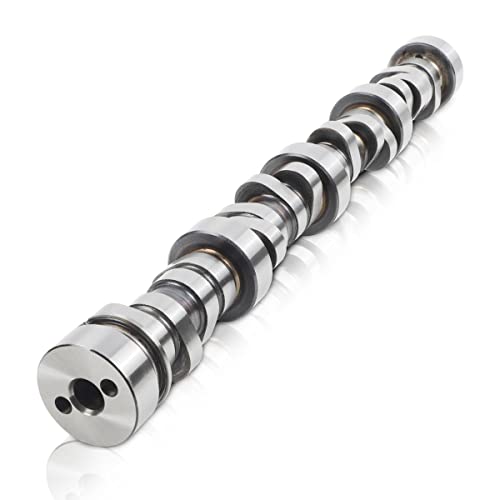
KAISAL E-1840-P Sloppy Stage 2 Cam is a camshaft-only E-1840-P option, rather than a multi-part kit like Sloppy Mechanics Stage 2 Cam Kit or Sloppy Mechanics E-1840-P Cam, Springs & Lifters. The maker specifically excludes AFM engines and says stock valve springs cannot be used, recommending PAC1218 springs. That makes this a possible match for buyers sourcing a cam separately, but not for someone expecting springs or other valvetrain parts in the package. Confirm exact engine fitment and supporting components before selecting it.
Bottom line: Choose this if you want the E-1840-P cam by itself and your engine is not AFM-equipped.
Sloppy Mechanics E-1840-P Cam, Springs & Lifters

Sloppy Mechanics E-1840-P Cam, Springs & Lifters combines the Sloppy Mechanics E-1840-P cam with springs and lifters, distinguishing it from the cam-and-spring option Sloppy Mechanics Stage 2 Cam Kit and the camshaft-only package KAISAL E-1840-P Sloppy Stage 2 Cam. Its fitment text names several LS vehicles and engines across 1997–2013, including 4.8L, 5.3L, 5.7L, 6.0L and 6.2L applications; it also specifies a 3-bolt cam sprocket mount. Buyers who need to compare profile figures or verify a particular vehicle should confirm those details before choosing this kit.
Bottom line: Choose this if you need a cam package that includes springs and lifters and matches your 3-bolt setup.
How to choose a Sloppy Stage 2 cam setup
Start with the engine code and valvetrain configuration, then compare cam profile and package contents. A camshaft’s duration, lift and lobe separation affect valve events; the figures should be considered together, not as a single measure of performance. Match valve springs to the cam’s lift and the engine’s intended rpm range, and check pushrod length and retainer-to-seal clearance during assembly. A kit containing springs or pushrods does not by itself confirm that every part is right for every engine combination. Automatic transmissions can also need a higher-stall converter when a cam has a more pronounced idle; Sloppy Mechanics Stage 2 Cam Kit gives a 2,600–2,800 rpm recommendation, which is a specific maker suggestion rather than a universal rule.
Check LS engine fitment before installation
Fitment labels such as Gen 3/4 and engine displacement are starting points, not a substitute for checking the exact engine configuration. Cam sprocket mounting also matters; Sloppy Mechanics E-1840-P Cam, Springs & Lifters identifies a 3-bolt mount. Before ordering, match engine year, displacement, cylinder-head and valvetrain setup, AFM/VVT status, and sprocket style to the intended parts. If the build has under 0.050 inch of piston-to-valve clearance, do not proceed without checking the combination with a qualified engine builder; clearance depends on the specific cam, heads, pistons and assembly.
What supporting parts and tuning does an LS cam need
Cam swaps commonly require valve springs suited to the cam, compatible pushrods, seals and fresh gaskets; lifters may also be replaced as part of a broader valvetrain refresh. Inspect spring installed height and coil-bind clearance against the spring maker’s specifications instead of assuming a spring kit fits unchanged. Work on a cooled, securely supported vehicle, disconnect the battery before electrical work, and use the engine maker’s service procedure for timing and torque steps. Incorrect cam timing can cause poor running or mechanical contact.
Common mistakes when installing a Stage 2 LS cam
The most consequential mistakes are relying on displacement alone for fit, reusing stock springs when a cam requires different ones, and skipping clearance checks. Confirm AFM/VVT status, cam sprocket bolt pattern, spring specifications, pushrod length and retainer clearance before assembly. A new cam and lifter set also need appropriate break-in and lubrication procedures for the specific parts; hydraulic roller components and oils do not all share one procedure. Mark timing components before disassembly and verify crank-to-cam timing during reassembly. If the cam’s complete duration and lobe-separation figures are essential to your build, use only a package with confirmed specifications rather than inferring them from a Stage 2 label.
Frequently Asked Questions
Can I use a Sloppy Stage 2 cam with stock valve springs?
Not when the cam’s requirements call for different springs. KAISAL E-1840-P Sloppy Stage 2 Cam specifically says stock springs cannot be used and recommends PAC1218 springs; confirm spring compatibility for the exact cam and engine.
Does a Sloppy Stage 2 cam fit an AFM LS engine?
Not according to KAISAL E-1840-P Sloppy Stage 2 Cam, which explicitly excludes AFM engines. AFM-related hardware and controls can affect the required valvetrain setup, so verify the engine configuration before selecting a cam.
What does 112 LSA mean on a camshaft?
LSA means lobe separation angle, the angle in crankshaft degrees between the intake and exhaust lobe centerlines. A 112-degree LSA is one part of the cam profile; duration, lift, engine setup and tuning also affect how the combination behaves.
How much piston-to-valve clearance should an LS cam have?
Many engine builders use about 0.080 inch intake and 0.100 inch exhaust as conservative minimum targets, but the required clearance depends on the engine combination and measurement method. Check the actual assembled clearance; do not assume a cam fits safely based only on engine displacement.
Does an automatic need a higher-stall converter with this cam?
The maker of Sloppy Mechanics Stage 2 Cam Kit recommends a 2,600–2,800 rpm stall converter for automatics. Converter choice also depends on vehicle weight, transmission and intended use, so treat that range as a starting recommendation rather than a universal specification.