
First Lite Hunting Gear: 5 Picks by Purpose and Fit

First Lite hunting gear covers clothing and accessories, so choose by the job: the Navigator Hoody is the versatile outer or mid layer, while the other pieces address pants, hand warmth, face coverage or pant support. Pick a different item if you need one of those specific functions rather than a hooded layer.
Layering pieces work best when matched to activity and conditions; a softshell’s DWR finish can resist light precipitation but is not a substitute for waterproof protection.
We earn a commission if you buy through links on this page. As an Amazon Associate I earn from qualifying purchases. Products are compared on manufacturer specifications, not hands-on testing.
- Best overall: First Lite Navigator Hunting Hoody – The 30D stretch-woven hoody can serve as a standalone layer or a mid layer.
- Best for late-season legs: First Lite 308 Lined Pant – Fleece lining and thigh zip vents combine warmth with adjustable ventilation.
- Best for touchscreen use: First Lite Aerowool Touch Liner Glove – Thumb and index fingertips are touchscreen compatible.
- Best for cold-weather face coverage: First Lite Wind River Balaclava – Midweight Merino-X fabric and ear holes suit concealed, cold-weather use.
| Product | Best for | Item type | Material | Fit | Shop |
|---|---|---|---|---|---|
| First Lite Navigator Hunting Hoody | Versatile layering | Hooded softshell | 30D stretch-woven polyester | X-Large | Check Price on Amazon |
| First Lite 308 Lined Pant | Late-season pants | Fleece-lined pant | Fleece-lined softshell | 32W x 34L | Check Price on Amazon |
| First Lite Aerowool Touch Liner Glove | Touchscreen liner | Liner glove | Aerowool merino blend | Large | Check Price on Amazon |
| First Lite Stretch Nylon Suspenders | Pant support | Pant suspenders | Nylon webbing | One size | Check Price on Amazon |
| First Lite Wind River Balaclava | Cold face coverage | Balaclava | Merino-X | One size | Check Price on Amazon |
First Lite Hunting Gear by Purpose
Compare each garment or accessory by its role, material and fit.
First Lite Navigator Hunting Hoody

The Navigator is the most adaptable clothing layer in this group: wear it as a standalone hunting jacket or as a mid layer. First Lite says its 37.5 active fleece lining traps warmth when stationary and releases heat during movement. The 30D stretch-woven polyester face has a PFAS-free DWR finish and is designed to block wind and light precipitation while remaining air-permeable.
This suits hunters moving between stillness and high-output activity. The limitation is weather protection: the finish is for light precipitation, so choose a waterproof shell when sustained rain is expected.
Bottom line: Choose this if you want one hooded layer for changing activity levels.
First Lite 308 Lined Pant

The 308 Lined Pant is the only bottom in this group, combining fleece lining with a 32W x 34L fit. First Lite says its 37.5 fleece technology traps heat while managing moisture, and the pant includes thigh zip vents for temperature adjustment. Four-way stretch and cargo pockets support movement and carrying small essentials.
These pants suit hunters looking for a warmer leg layer for late-season conditions. The limitation is that the size is specific, so check that the 32-inch waist and 34-inch inseam match your fit before choosing them; the vents do not replace adjusting layers for changing weather.
Bottom line: Pick these for a fleece-lined pant with thigh vents.
First Lite Aerowool Touch Liner Glove

The Aerowool Touch Liner is the lightest hand layer described here, made to fit beneath a heavier glove or cover hands during early-season hunts. The maker gives a 150 g/m² fabric weight and a 37.5 Technology lining; First Lite says the lining wicks moisture and dries quickly. Thumb and index fingertips are touchscreen compatible.
This is a fit for hunters who want a thin liner while retaining phone access. It is not the choice for substantial insulation on its own: the product is described as an ultralight layer, so pair it with a heavier glove when conditions call for more warmth.
Bottom line: Choose these if you need a thin touchscreen-compatible liner.
First Lite Stretch Nylon Suspenders

These suspenders address pant support rather than warmth or weather protection. They use adjustable stretch nylon webbing and clip attachments; First Lite says they are specially designed for Boundary Stormtight, Corrugate Guide, Guide Lite and Sawbuck Brush Pants. One size fits all, and the clips attach to most pants with belt loops.
They suit hunters who want adjustable support, especially with the named First Lite pant lines. The limitation is attachment compatibility: a clip that fits most belt-loop pants is not a guarantee for every waistband, so check the pant’s loop layout before relying on the fit.
Bottom line: Pick these for adjustable clip-on support for compatible pants.
First Lite Wind River Balaclava
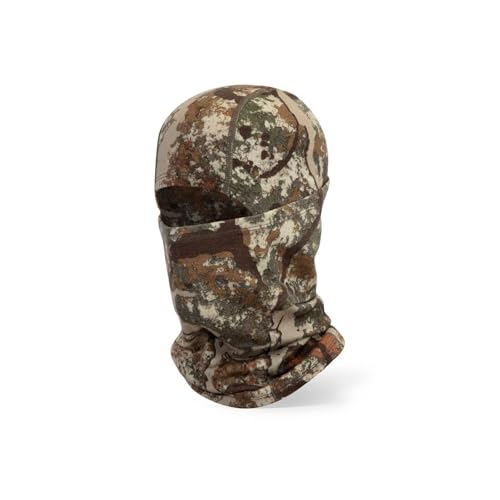
The Wind River Balaclava is the dedicated face-covering option in this range, made from midweight Merino-X with a 250 fabric weight and a 4.2-ounce actual weight. First Lite says the merino regulates warmth, and its two-piece design leaves full ear holes to aid hearing. The fit is one size.
This suits cold-weather hunting when face concealment and ear access matter. The limitation is its midweight construction: it is not a lightweight face cover for warm conditions. For any hunt, make sure face coverage does not obstruct hearing or interfere with safe handling of equipment.
Bottom line: Choose this for midweight face coverage with open ear holes.
How to Choose First Lite Hunting Gear
Start with the job each piece must do: a hoody layers the torso, lined pants insulate the legs, liner gloves layer under heavier gloves, suspenders support pants, and a balaclava covers the face. For changing exertion, use layers you can add or remove; opening vents can release heat without removing pants. A DWR finish helps shed light precipitation, but DWR-treated fabric should not be treated as waterproof protection for sustained rain. If your priority is one garment for movement and pauses, choose a layer that can serve as both an outer layer and a mid layer. If you need a specific accessory, select by its function first, then confirm that its size or fit works for you.
How to Layer for Hunting Conditions
Use a base layer next to skin, an insulating layer for warmth, and an outer layer to limit wind or precipitation; remove or vent layers as activity increases to reduce sweat buildup. The Navigator Hoody can fill either the outer or mid-layer role, while the fleece-lined pant adds insulation to the legs. A liner glove is designed to sit below a heavier glove, not replace one when more insulation is needed. DWR is a water-repellent surface treatment, not the same as a waterproof membrane. For hunts with sustained rain, plan a separate waterproof shell. Also match insulation to exertion: a stationary sit and a steep, active approach create different heat demands.
How Hunting Clothing Fit Affects Mobility
Fit should leave room for the layers you expect to wear without restricting movement at the shoulders, hips or knees. The pant size is a 32-inch waist by 34-inch inseam, while the hoody is X-Large; the gloves are Large and the accessories are one size. Those labels do not establish how a garment fits over your own layers, so check your measurements against the garment’s sizing guidance before ordering. For suspenders, compatibility depends on attachment points: the clips suit many belt-loop pants, with four First Lite pant lines specifically named as designed fits. A smooth range of motion while raising arms, crouching and stepping is a useful fit check.
Hunting Safety and Visibility
Hunting clothing needs to preserve safe movement, hearing and visibility as well as provide warmth. A balaclava with ear holes leaves the ears open, but face coverage should still allow clear hearing and an unobstructed field of view. Blaze-orange requirements vary by state, species and season, so check the current regulation for the location and hunt rather than assuming camouflage alone is sufficient. Avoid letting gloves interfere with a secure grip or safe firearm handling; a touchscreen fingertip is a convenience, not a substitute for a safe grip. Before a hunt, confirm that every layer permits free movement and that accessories do not snag on equipment.
Care for Merino and DWR Hunting Layers
Care depends on fabric and finish: merino garments and synthetic softshells can have different washing requirements, so use each garment’s care label rather than applying one method across the set. Heat and abrasive laundering can shorten the life of performance fabrics, while residue from unsuitable detergents may affect a water-repellent finish. DWR can wear with use and laundering; when water stops beading, use the garment maker’s approved care or reproofing method. Dry garments fully before storing them to limit odor and mildew. Keep gloves, balaclavas and liners clean between hunts, since sweat and dirt can reduce comfort and contribute to fabric wear.
Frequently Asked Questions
Can the Navigator Hoody replace a rain jacket?
No: its DWR finish is for light precipitation, not sustained rain. Use a waterproof shell when prolonged or heavy rain is expected.
Are liner gloves warm enough for cold-weather hunts?
A liner glove is intended to add a thin layer, often beneath a heavier glove. Add an outer glove when conditions or long stationary periods call for more insulation.
What does DWR mean on hunting clothing?
DWR means durable water repellent, a surface treatment that helps water bead on fabric. It does not make a garment equivalent to a waterproof shell.
How should hunting pants fit over base layers?
Leave enough room for the layers you plan to wear while keeping the waistband and inseam secure during crouching and stepping. Compare your waist and inseam measurements with the garment sizing guidance before choosing a size.
Do hunters need blaze orange over camouflage?
Requirements depend on state, species and season, so verify the current rule for the hunt location. Camouflage does not establish that a garment meets a required visibility rule.
How do I keep a DWR finish working?
Follow the garment care label and use its approved wash and reproofing method. DWR can lose effectiveness with wear and laundering, so reproof when water no longer beads as expected.