
Teapots Made in the USA: 4 Options Compared

Fiesta Covered Teapot, 44-Ounce is the clearest match for teapots made in the USA because its maker explicitly says it is made in the USA and gives a 44-ounce capacity. Choose a different pot if a removable infuser, stainless steel construction, or glass stovetop use matters more than confirmed domestic origin.
A teapot is a vessel for steeping or serving tea; a kettle is designed to heat water, and some products combine both roles.
We earn a commission if you buy through links on this page. As an Amazon Associate I earn from qualifying purchases. Products are compared on manufacturer specifications, not hands-on testing.
- Best overall: Fiesta Covered Teapot, 44-Ounce – The ceramic teapot explicitly says it is made in the USA and holds 44 ounces.
- Best for loose-leaf tea: Frieling 18/8 Stainless Steel Teapot, 22 oz – Its micro-etched stainless infuser includes a leaf guard and the pot holds 22 ounces.
- Best for stovetop use: Teabloom Kyoto Glass Tea Maker, 24 oz – The product combines a glass tea maker and stovetop kettle in a 24-ounce vessel.
| Product | Best for | Capacity | Material | Infuser or use | Shop |
|---|---|---|---|---|---|
| Fiesta Covered Teapot, 44-Ounce | Made-in-USA match | 44 oz | Vitrified ceramic | Covered teapot | Check Price on Amazon |
| Frieling 18/8 Stainless Steel Teapot, 22 oz | Loose-leaf brewing | 22 oz | 18/8 stainless steel | Micro-etched infuser | Check Price on Amazon |
| Juvale Japanese Cast Iron Teapot, 32 oz | Heat retention | 32 oz | Cast iron | Stainless infuser basket | Check Price on Amazon |
| Teabloom Kyoto Glass Tea Maker, 24 oz | Stovetop versatility | 24 oz | Glass and stainless steel | Removable infuser; stovetop | Check Price on Amazon |
Teapots Made in the USA and Alternatives
The domestic-origin match is ceramic; the other options differ in capacity, material, or brewing function.
Fiesta Covered Teapot, 44-Ounce

The 44-ounce vitrified ceramic body has a lead-free glaze, and it is dishwasher, microwave, and oven safe. Its covered, larger-format design suits serving several cups without relying on a separate infuser. The trade-off is that no removable tea filter is identified, so buyers who want loose leaves contained during steeping may prefer an infuser-style pot. The maker also states a 5-year chip-resistance warranty.
Bottom line: Choose this if stated US manufacture and a 44-ounce ceramic serving pot are the priorities.
Frieling 18/8 Stainless Steel Teapot, 22 oz
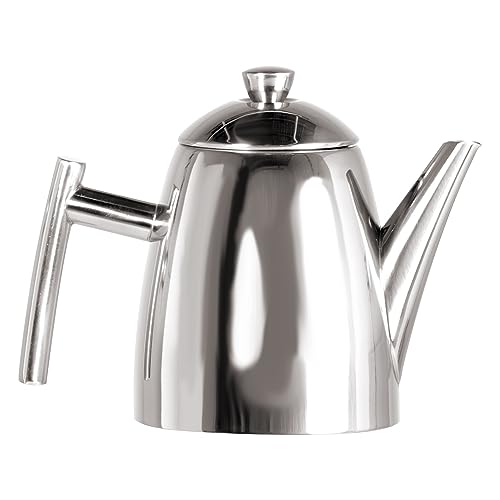
Frieling 18/8 Stainless Steel Teapot, 22 oz stands out for its micro-etched infuser and built-in leaf guard, which are intended to hold back small tea particles. The 22-ounce single-wall, mirror-finished body is 18/8 stainless steel with a neutral-to-taste design. That combination suits someone who values contained loose-leaf brewing in a smaller pot. Its features do not establish that it was made in the USA, so it is a related alternative rather than a confirmed domestic-origin choice. The single-wall construction also differs from heat-retaining cast iron.
Bottom line: Pick this for its fine infuser and 22-ounce stainless format, not for confirmed US origin.
Juvale Japanese Cast Iron Teapot, 32 oz

Juvale Japanese Cast Iron Teapot, 32 oz differs from the ceramic option with a cast iron body designed for heat retention and a stainless infuser basket. Its 32-ounce capacity is between the 22-ounce and 44-ounce options, making it a middle-size choice for serving multiple cups. The product also mentions a trivet, though its features do not establish US manufacture. Cast iron is the defining trade-off: it offers a different heat profile and weight than glass or stainless steel, and the product name identifies a Japanese style rather than domestic origin.
Bottom line: Choose this when cast iron heat retention and a 32-ounce capacity matter more than US origin.
Teabloom Kyoto Glass Tea Maker, 24 oz
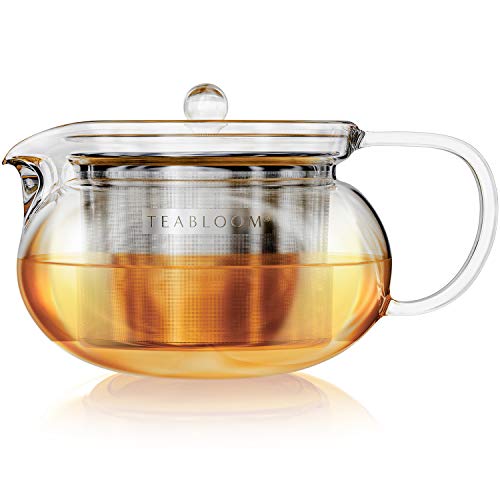
Teabloom Kyoto Glass Tea Maker, 24 oz is the functional outlier: a two-in-one tea maker and stovetop kettle with a removable stainless steel infuser. Its 24-ounce capacity is described as four 6-ounce cups or two 12-ounce mugs, and it can also be used for blooming teas or fruit-water infusion. The product features do not confirm US manufacture, so buyers seeking a clearly domestic-made teapot should focus elsewhere. Its glass body offers a different experience from ceramic, cast iron, and stainless steel, and its combination function matters most if heating and steeping in one vessel is useful.
Bottom line: Pick this for a combined stovetop and steeping vessel rather than a confirmed US-made teapot.
How to choose a teapot made in the USA
Start with an explicit country-of-origin statement, then compare capacity and brewing design. Among these choices, only the Fiesta pot says it is made in the USA; the other products should not be treated as domestic-made based on brand or style names alone. Capacity ranges here from 22 to 44 ounces, so estimate servings using your usual cup size: a 6-ounce cup yields about 3.7 servings from 22 ounces, while a 44-ounce pot yields about 7.3. A built-in or removable infuser matters if you brew loose leaves directly in the pot. Also distinguish a teapot for steeping and serving from a stovetop kettle meant to heat water.
For a simple decision, choose the 44-ounce ceramic option when domestic origin is essential; choose by brewing function only when origin is flexible.
Teapot capacity and serving size
Capacity is easiest to compare in ounces, but cup size changes the number of servings. A common serving measure is 6 to 8 ounces: at 6 ounces, a 24-ounce vessel makes four cups, while at 8 ounces it makes three. A 32-ounce pot makes roughly four to five 6- to 8-ounce cups, and a 44-ounce pot makes about five to seven. Mug servings often run 10 to 12 ounces, cutting those counts substantially. Leave headroom rather than filling to the rim, especially when pouring hot tea. If you usually serve two people using 12-ounce mugs, a 22- or 24-ounce vessel is a closer fit than a 44-ounce pot.
| Capacity | Approx. 6-ounce cups | Practical fit |
|---|---|---|
| 22 oz | 3–4 | Small tea service |
| 24 oz | 4 | Four small cups |
| 32 oz | 5 | Several servings |
| 44 oz | 7 | Larger gatherings |
Infusers, materials, and stovetop use
Infuser design determines whether leaves stay contained while tea steeps. Fine mesh or micro-etched stainless filters can retain smaller particles than an open basket, while a removable basket makes it easier to lift leaves out after steeping. Material changes care and use: ceramic is a serving-pot choice, cast iron is valued for retaining heat, and glass makes the steeping contents visible. Only use a teapot on a stovetop when its maker specifically identifies it for that purpose; the Kyoto is described as a stovetop kettle and tea maker, while the other options are not identified that way. Do not assume that an oven-safe ceramic pot is automatically stovetop-safe.
Safe handling and everyday care
Hot water and hot vessels can scald, so pour slowly, keep the handle secure, and place the pot on a stable, heat-resistant surface. A trivet is useful for protecting a tabletop, and the cast iron option includes one. Avoid abrasive scrubbers on polished finishes and rinse infusers promptly to clear tea particles. For stovetop glassware, avoid sudden temperature changes, such as pouring cold water into a hot vessel; thermal shock can crack glass. Check that the intended vessel is rated for the heat source before heating water in it.
Frequently Asked Questions
How many cups does a 24-ounce teapot make?
A 24-ounce vessel makes four 6-ounce cups or two 12-ounce mugs, as described for the Kyoto. Smaller or larger pours change the serving count.
Can I heat every teapot on a stovetop?
No; only use a pot on a stovetop when it is identified for that use.
What capacity teapot suits two large mugs?
For two 12-ounce mugs, aim for at least 24 ounces of usable capacity. A 22-ounce pot may fall short once headroom is allowed for pouring.
Does a teapot infuser keep fine tea particles out?
A micro-etched filter with a leaf guard is designed to hold back small particles, as on the 22-ounce stainless option. Particle retention still depends on the tea cut and filter openings.