
Best Floor Door Locks: 5 Options Compared by Fit

For a floor-mounted lock for a sliding or glass door, choose WDONAY Spring-Loaded Floor Door Lock because its spring-loaded rod extends from 0.47 to 2.32 inches. Choose a temporary barrier instead if you want travel security or do not want a floor-mounted latch; Portable Door Stopper Lock and Trustella Portable Door Lock fit only certain inward-opening doors, while the bars suit other setups.
We earn a commission if you buy through links on this page. As an Amazon Associate I earn from qualifying purchases. Products are compared on manufacturer specifications, not hands-on testing.
- Best overall: WDONAY Spring-Loaded Floor Door Lock – A zinc-alloy spring latch with a keyed, retracting rod for sliding, glass, and wooden doors.
- Best for travel: Portable Door Stopper Lock – A 9-ounce portable lock fits inward-opening doors with a 0.2-to-2-inch gap.
- Best for adjustable reach: Rerishom 2-Pack Security Bar – The security bar adjusts from 17.5 to 46 inches for hinged doors and up to 43 inches for sliding doors.
| Product | Best for | Type | Fit range | Material | Shop |
|---|---|---|---|---|---|
| WDONAY Spring-Loaded Floor Door Lock | Sliding glass doors | Floor-mounted latch | Rod: 0.47–2.32 in | Zinc alloy | Check Price on Amazon |
| Portable Door Stopper Lock | Hotel room travel | Portable door lock | Gap: 0.2–2 in | — | Check Price on Amazon |
| Trustella Portable Door Lock | Inside-room privacy | Portable door lock | At least 0.08 in gap | Stainless steel | Check Price on Amazon |
| Rerishom 2-Pack Security Bar | Two-door coverage | Security bar, 2-pack | 17.5–46 in; sliding: 43 in | — | Check Price on Amazon |
| AceMining Door Security Bar | Portable door bracing | Security bar | 21–46 in | — | Check Price on Amazon |
Floor Door Locks and Other Door Security Options
Match the device to the door’s movement and opening direction before choosing a fit range.
WDONAY Spring-Loaded Floor Door Lock
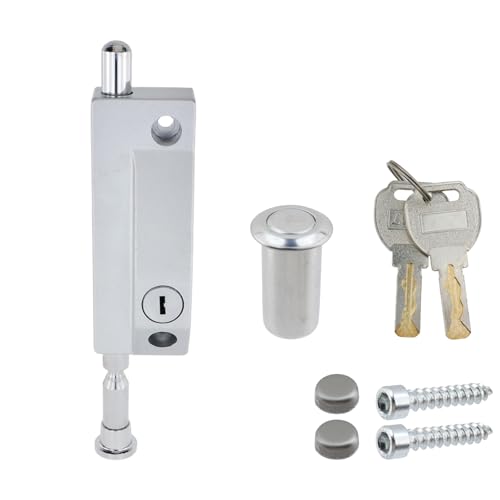
Unlike portable barriers, this floor-mounted spring latch uses a keyed rod to secure compatible rotating glass, sliding glass, and wooden doors. The zinc-alloy body measures 7.36 by 1.59 by 1.44 inches, and the retractable rod ranges from 0.47 to 2.32 inches. That makes the rod’s extension and the door’s alignment central to fit: measure the distance to the receiving point before choosing it. The manufacturer says the rod retracts when the key is inserted and turned. This option requires a suitable floor or receiving surface; buyers who need a no-install travel barrier should choose a portable device instead.
Bottom line: Pick this if you need a keyed floor latch and can align its rod with the door.
Portable Door Stopper Lock

For travel without a floor-mounted installation, this 9-ounce portable lock is designed for inward-opening doors with a gap from 0.2 to 2 inches. It sits beneath the handle and tightens in place, so opening direction and gap—not floor clearance—decide whether it fits. A storage pouch is included for carrying it between stays. The maker describes it as an added barrier for hotels, apartments, bedrooms, and rentals, not a replacement for a built-in lock. It will not serve buyers seeking a permanent floor latch, and the door’s swing and gap need to match its range.
Bottom line: Choose this for a compact, removable barrier on a compatible inward-opening door.
Trustella Portable Door Lock

Unlike the travel stopper’s gap range, this portable lock requires at least a 2 mm gap and a strike plate that accepts its metal claw. It is intended for a single inward-opening hinged door and uses a hand-tightened adjustment mechanism; silicone caps help reduce movement and contact marks. Stainless steel construction and tool-free setup suit someone seeking an additional barrier while inside a room. The maker excludes sliding, double, and outward-opening doors, so this is not a universal fit or a floor-mounted lock. Check the strike plate and door configuration before relying on this option.
Bottom line: Pick this for an inward-opening hinged door with a compatible strike plate.
Rerishom 2-Pack Security Bar

This two-bar set differs from a floor latch by bracing against a door rather than using a keyed floor rod. Each bar adjusts from 17.5 to 46 inches, with a 43-inch reach for sliding doors, and has a 1.57-inch diameter. The maker says it withstands up to 400 pounds of pressure; that performance claim should not be treated as a substitute for correct placement or the door’s own lock. The two-piece pack can suit separate openings, but its size and bracing style make it less convenient than a small portable lock for travel.
Bottom line: Choose this if you want two adjustable bars for doors within their reach.
AceMining Door Security Bar

Compared with a floor-mounted latch, this 2.2-pound bar is a removable brace for door or window security, with an adjustable length of 21 to 46 inches. Its lever is designed for adjustment, and the product is described for home, apartment, and hotel use. A bar takes more space to carry than a compact lock, and it does not provide the keyed floor-latch action of WDONAY Spring-Loaded Floor Door Lock.
Bottom line: Pick this if a removable brace within the reach suits your door or window.
How to Choose a Floor Door Lock
A floor-mounted latch is the closest match when you want a rod to engage a receiving point at the floor; a portable lock or bar is a different kind of barrier. First identify whether the door is hinged or sliding, then measure the path between the latch and its receiving point. For WDONAY Spring-Loaded Floor Door Lock, the rod range is 0.47 to 2.32 inches, so a required extension outside that range rules it out. Temporary locks also have fit constraints: Portable Door Stopper Lock requires an inward-opening door and a 0.2-to-2-inch gap, while Trustella Portable Door Lock needs a compatible strike plate and inward swing. Choose a bar only when its adjustable reach spans the place where it must brace.
For a permanent floor installation, the floor surface and door alignment must allow the rod to enter and retract without binding. Confirm the door can still open freely when the lock is disengaged.
Floor Latches Versus Portable Door Bars
A floor latch secures a door by engaging a rod with a receiving point, while a portable bar braces between the door and another surface. The distinction matters more than the word “lock”: WDONAY Spring-Loaded Floor Door Lock is a keyed floor-mounted spring latch, whereas Rerishom 2-Pack Security Bar and AceMining Door Security Bar are adjustable bars and Portable Door Stopper Lock and Trustella Portable Door Lock are removable locks for certain inward-opening doors. The table gives the deciding measurements and style at a glance.
| Device style | Example | Fit check |
|---|---|---|
| Keyed floor latch | WDONAY Spring-Loaded Floor Door Lock | Rod extension: 0.47–2.32 in |
| Portable lock | Portable Door Stopper Lock | Inward swing; gap 0.2–2 in |
| Security bar | Rerishom 2-Pack Security Bar | 17.5–46 in; sliding reach 43 in |
Bars and temporary locks are not interchangeable with a permanently installed latch. Keep the door’s normal exit path usable, especially where the door is part of an emergency egress route.
Measuring Door and Floor Clearance
Measure the receiving point before selecting a floor door lock: the rod must reach it while the door is in its closed position. For WDONAY Spring-Loaded Floor Door Lock, compare the required rod extension with its 0.47-to-2.32-inch range; if the measurement falls outside that interval, select a different solution. For a portable under-handle lock, measure the door-to-frame gap and confirm the door swings inward. A security bar instead needs a bracing span within its adjustment range, measured between the contact points it will use.
Floor-mounted hardware also needs a stable, aligned mounting location; a loose or uneven contact point can keep a spring rod from engaging smoothly. Do not assume the fit of one door transfers to another, even when both doors look similar.
Using Door Security Devices Safely
A secondary lock or brace should not block a required exit. Before using any added barrier, practice releasing or removing it from the inside, and keep keys for a keyed latch accessible to the occupants. A portable lock that only works on an inward-opening door is unsuitable for an outward-opening door, and a bar must stay firmly seated at its contact points to function as intended.
Do not interpret a maker’s pressure rating as a guarantee against forced entry: door construction, frame condition, installation, and placement all affect real performance. Use the built-in lock as designed and treat an added device as a supplement, not a substitute for a safe exit or sound door hardware.
Frequently Asked Questions
Can a floor door lock work on a sliding glass door?
Yes, some floor latches are designed for sliding glass doors, including WDONAY Spring-Loaded Floor Door Lock. Its rod extends from 0.47 to 2.32 inches, so measure the required engagement distance and alignment first.
How do I measure a door gap for a portable lock?
Measure the space between the closed door and its frame at the point where the lock will sit. Portable Door Stopper Lock is specified for a 0.2-to-2-inch gap and an inward-opening door.
Will a door security bar fit every sliding door?
No; the bar must reach between its contact points and remain securely braced. Rerishom 2-Pack Security Bar gives a 17.5-to-46-inch adjustment range and a 43-inch reach for sliding doors.
Can an added door lock block an emergency exit?
Yes, a secondary lock or bar can impede an exit if occupants cannot release it quickly. Keep the exit path usable and make sure everyone who may need to leave can release the device from inside.
Does a floor-mounted door latch need a precise alignment?
Yes, its rod must line up with the receiving point when the door is closed. For WDONAY Spring-Loaded Floor Door Lock, the rod’s 0.47-to-2.32-inch extension range also limits the available reach.