
Best Oil Additive for Noisy Lifters: 4 Options

Liqui Moly Hydraulic Lifter Additive 8367 is the best oil additive for noisy lifters for most drivers because it is specifically formulated for hydraulic lifters and is suitable for turbocharged vehicles and catalytic converters. Choose another option if you need a formula expressly listed for gasoline and diesel engines or want a larger bottle.
Oil additives are supplements mixed into engine oil; they are not a substitute for diagnosing low oil pressure, incorrect oil, or worn components.
We earn a commission if you buy through links on this page. As an Amazon Associate I earn from qualifying purchases. Products are compared on manufacturer specifications, not hands-on testing.
- Best overall: Liqui Moly Hydraulic Lifter Additive 8367 – A 300 mL hydraulic lifter additive that the maker says helps prevent tappet noise.
- Best for gasoline engines: Hot Shot’s Secret Tick Fix + Protect 32 oz – A 32 oz formula specifically intended for modern gasoline engines with valvetrain designs.
- Best for gasoline and diesel: Liqui Moly Hydro-Stößel-Additiv 1009 – A 300 mL hydraulic lifter additive listed for petrol and diesel engines, but not wet-clutch motorcycles.
| Product | Best for | Volume | Engine fit | Shop |
|---|---|---|---|---|
| Liqui Moly Hydraulic Lifter Additive 8367 | Hydraulic lifters | 10.1 fl oz | — | Check Price on Amazon |
| Hot Shot’s Secret Tick Fix + Protect 32 oz | Gasoline engines | 32 fl oz | Gasoline | Check Price on Amazon |
| Rislone XTREME LUBE 4102 | Sludge-related noise | 16.9 fl oz | — | Check Price on Amazon |
| Liqui Moly Hydro-Stößel-Additiv 1009 | Gasoline and diesel | 10.1 fl oz | Gasoline and diesel | Check Price on Amazon |
Oil Additives for Noisy Lifters
Compare formulas by intended engine fit and the specific lifter or noise claims they make.
Liqui Moly Hydraulic Lifter Additive 8367

Liqui Moly Hydraulic Lifter Additive 8367 stands out for its explicit hydraulic lifter focus and stated suitability for vehicles with turbochargers and catalytic converters. The 300 mL bottle is intended to improve oil lubrication properties and clean valve bores; the maker says it helps prevent engine noise caused by hydraulic tappets. That makes it a direct match when the noise is associated with hydraulic lifters rather than a general engine-treatment need. The product’s application does not establish that a noise is caused by a lifter, so drivers with persistent noise or an oil-pressure warning should diagnose the engine before relying on an additive.
Bottom line: Choose it when you want a targeted hydraulic lifter formula for a turbocharged or catalytic-converter-equipped vehicle.
Hot Shot’s Secret Tick Fix + Protect 32 oz

Hot Shot’s Secret Tick Fix + Protect 32 oz is the largest bottle among the focused lifter-noise choices and is specifically aimed at gasoline engines. The maker says the formula is designed to clean and free sticking or collapsing hydraulic lifters, improve oil flow to valvetrain components, and reduce engine noise; it also claims up to 30% less friction and wear versus untreated full synthetic motor oil. The focus on gasoline engines makes it a poor fit for a diesel-only application. A noise caused by mechanical damage or inadequate oil pressure still calls for diagnosis rather than assuming an additive can correct it.
Bottom line: Choose it for a gasoline engine when a larger, lifter-focused formula is your priority.
Rislone XTREME LUBE 4102

Rislone XTREME LUBE 4102 differs by positioning its lifter-noise approach around sludge and deposit removal rather than a hydraulic lifter-only formula. The maker says it removes and prevents sludge, and that deposits can contribute to noisy valves and lifters or obstruct oil passages and screens. Its 16.9 oz bottle is also promoted for friction and wear reduction across a broader temperature range. This is the relevant distinction for someone considering deposit buildup as a possible contributor, but the product’s claims do not diagnose the cause of a tick. Persistent noise should be checked for oil-level, pressure, or component problems.
Bottom line: Choose it if you want an engine treatment whose approach centers on sludge and deposits.
Liqui Moly Hydro-Stößel-Additiv 1009
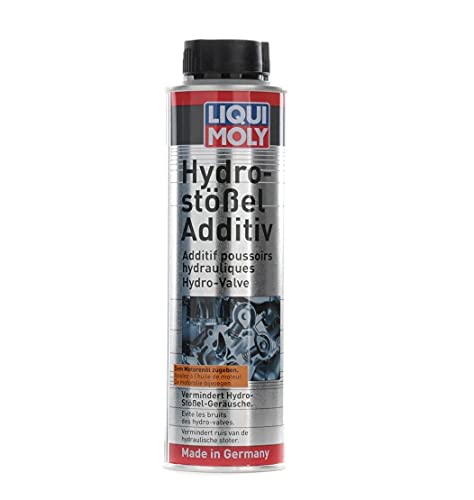
Liqui Moly Hydro-Stößel-Additiv 1009 has the broadest fuel compatibility among these focused choices: it is listed for gasoline and diesel engines and for commercially available motor oils. The maker says it dampens noise from worn hydraulic lifters and supports tappet function. Its 300 mL size matches Liqui Moly Hydraulic Lifter Additive 8367, but the exclusion for motorcycles with wet clutches is an important fit distinction. Do not use it in that motorcycle application. As with any additive, a quieter engine is not proof that a worn or oil-starved component has been repaired.
Bottom line: Choose it for a gasoline or diesel engine, but not a motorcycle with a wet clutch.
How to choose an oil additive for noisy lifters
Start by matching the additive’s engine application, then distinguish a hydraulic lifter formula from a general engine treatment. Hydraulic lifters use engine oil pressure to take up clearance in the valvetrain; restricted oil flow or a sticking lifter can contribute to tapping. A bottle that claims to quiet lifters does not establish the source of the sound. Check the dipstick on level ground and compare the oil grade and specification with the owner’s manual before adding anything. If the oil-pressure warning is on, stop the engine safely rather than trying an additive. When the noise persists after correcting a low oil level, arrange diagnosis instead of increasing the additive dose.
What lifter noise can indicate
A brief tick at cold start can differ from a persistent tick: cold, thicker oil may take longer to circulate through small oil passages, while ongoing noise can point to an oil supply or mechanical problem. Low oil level, a clogged filter, incorrect viscosity, low oil pressure, and wear are all possible causes, so sound alone is not a diagnosis. Note whether the noise changes as the engine warms, whether an oil warning appears, and whether it began after an oil change. Do not keep driving with an oil-pressure warning; inadequate lubrication can quickly damage an engine. An additive is not a repair for a failing oil pump, blocked pickup, or worn valvetrain part.
Compare lifter additive types and fit
Choose a product by its engine fit and approach, not by bottle size alone. Dedicated hydraulic lifter additives focus on tappet noise, while broader engine treatments may emphasize deposits or friction. Use this comparison to narrow the application before checking the vehicle’s oil requirements.
| Need | Relevant choice |
|---|---|
| Hydraulic lifter focus and turbo/catalytic converter suitability | Liqui Moly Hydraulic Lifter Additive 8367 |
| Gasoline-engine fit with a 32 oz bottle | Hot Shot’s Secret Tick Fix + Protect 32 oz |
| Deposit-focused engine treatment | Rislone XTREME LUBE 4102 |
| Gasoline and diesel fit, excluding wet-clutch motorcycles | Liqui Moly Hydro-Stößel-Additiv 1009 |
Use the engine’s required oil viscosity and performance specification as the boundary: an additive should not be used to make an unsuitable oil acceptable. A larger container is not a reason to add more than the product directs.
How to use an oil additive safely
Use the bottle’s mixing directions and account for the additive as part of the total oil volume; overfilling can cause foaming and lubrication problems. Check the dipstick after the engine has been shut off and the oil has settled, using the vehicle maker’s measurement procedure. Keep oil and additives away from hot exhaust parts, and clean spills promptly because engine oil can make surfaces slippery. Never open a hot pressurized cooling system while diagnosing engine noise. If an additive is incompatible with the vehicle or oil system, it may create a problem rather than solve one, so verify application first—especially for wet-clutch motorcycles, which need oil compatible with clutch operation.
Frequently Asked Questions
Can an oil additive stop hydraulic lifter ticking?
An additive may quiet ticking when restricted flow or deposits contribute to the noise, but it cannot establish or fix every cause. Persistent ticking, particularly with an oil-pressure warning, needs prompt diagnosis.
Should I add oil additive when the engine is cold?
Follow the product’s mixing directions, and do not pour additive into hot engine parts where oil can burn or splash. Check the dipstick using the vehicle maker’s procedure after the oil has settled.
Can lifter noise come from low engine oil?
Yes, a low oil level can reduce oil supply to the valvetrain and contribute to noise. Check the level on level ground; an oil-pressure warning means stop the engine safely rather than continuing to drive.
Will thicker oil quiet noisy lifters?
Use only the viscosity grade and oil specification required for the engine, since thicker oil is not a universal fix and can flow more slowly when cold. A continuing tick after confirming the correct oil needs diagnosis.
Can I use a lifter additive in a wet-clutch motorcycle?
Not every additive is suitable for wet-clutch motorcycles; Liqui Moly Hydro-Stößel-Additiv 1009 specifically excludes them. Verify the motorcycle’s oil and clutch requirements before using an additive.