
Aphrona LED Face Mask: 5 Models Compared

The Aphrona LED face mask with 415 nm blue light and adjustable 5-to-50-minute sessions is the clearer choice when those settings matter; the other Aphrona model is distinguished by its Milky Way design and stated dimensions. Choose a different brand if you specifically want near-infrared wavelengths, multiple modes, or a cordless design.
We earn a commission if you buy through links on this page. As an Amazon Associate I earn from qualifying purchases. Products are compared on manufacturer specifications, not hands-on testing.
- Best overall: Aphrona LED Mask, Pearl – Its 415 nm blue-light feature and adjustable 5-to-50-minute timer make its settings concrete.
- Best for Milky Way design: Aphrona Milky Way PDT-FACE – This Aphrona model identifies itself as the Milky Way PDT-FACE and gives its dimensions and weight.
- Best for near-infrared: Wavytalk Glow Time LED Mask – It specifies a 630 nm red and 850 nm near-infrared mode.
| Product | Best for | Light wavelengths | Modes or timer | Dimensions or chips | Shop |
|---|---|---|---|---|---|
| Aphrona LED Mask, Pearl | 415 nm blue light | 415 nm blue; red wavelength not given | 5–50 minutes; 15-minute default | 150 LED chips | Check Price on Amazon |
| Aphrona Milky Way PDT-FACE | Milky Way model | Red and blue; exact wavelengths not given | — | 10.83 × 7.6 × 0.22 in; 0.85 lb | Check Price on Amazon |
| Wavytalk Glow Time LED Mask | Three light modes | 415 nm blue; 590 nm amber; 630 nm red | 3 modes | 456 LED chips | Check Price on Amazon |
| INIA Red Light Therapy Mask | Four wavelength modes | 620 nm red, 630 nm red, 460–470 nm blue | 4 modes | 220 LEDs | Check Price on Amazon |
| gelpal 7+1 Color LED Mask | Multiple color options | Red, blue, amber, and other color options | 7+1 colors | — | Check Price on Amazon |
Aphrona LED Face Masks and Alternatives
Compare the Aphrona models first, then consider alternatives if their specified wavelengths or modes better match your needs.
Aphrona LED Mask, Pearl

The Pearl Aphrona mask is the option here with a 415 nm blue-light wavelength and a timer adjustable from 5 to 50 minutes, defaulting to 15. It has 150 narrow-spectrum LED chips, and the maker says the mask is FDA cleared. Those specifics suit buyers who want the wavelength and session controls identified before choosing.
Bottom line: Choose this if a defined 415 nm blue-light setting and adjustable session time are priorities.
Aphrona Milky Way PDT-FACE
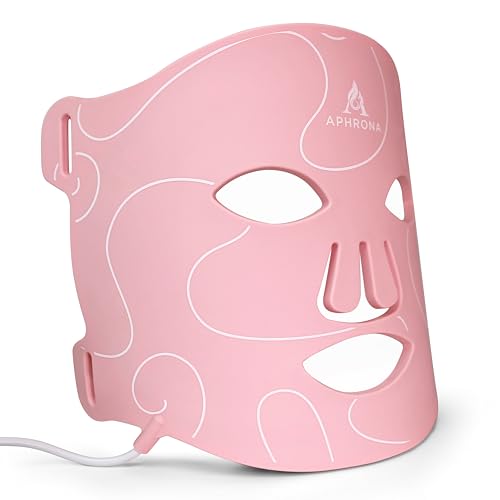
The Aphrona Milky Way PDT-FACE stands apart from the Pearl model by giving its physical dimensions and weight: 10.83 by 7.6 by 0.22 inches and 0.85 pound. The maker describes a specialized light-guide material and customized light waves, but the maker does not establish specific wavelengths or a session timer. That makes it a fit for shoppers choosing by this model and its size, rather than for anyone who needs a particular wavelength or timed routine confirmed.
Bottom line: Pick this when the Milky Way model and its dimensions are your deciding factors.
Wavytalk Glow Time LED Mask
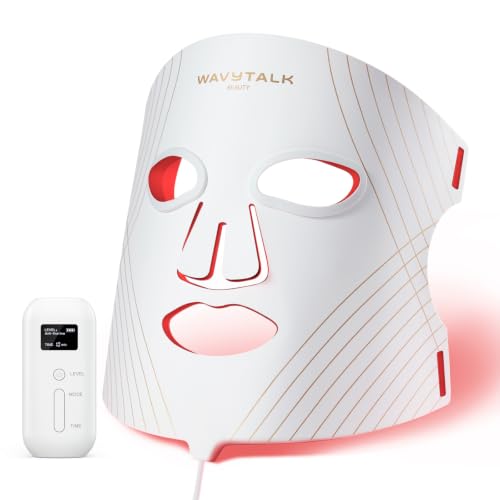
Wavytalk is a non-Aphrona alternative with four stated wavelengths arranged into three modes: red plus near-infrared, blue plus red, and amber. Its 456 LED chips distinguish it from the Aphrona options, while the maker describes the mask as FDA-cleared. The maker reports clinical results, but individual outcomes are not guaranteed. Choose it if defined amber and near-infrared options matter more than staying with Aphrona; skip it if you want an Aphrona-branded device.
Bottom line: Consider this if three modes, including amber and near-infrared, suit your routine.
INIA Red Light Therapy Mask
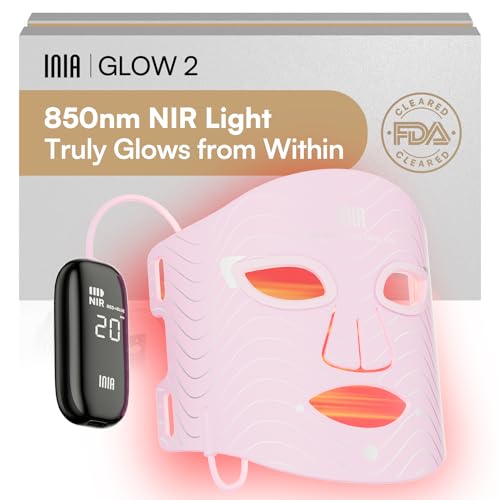
It has 220 LEDs and a rechargeable 2,600 mAh battery. The maker describes a 10-to-30-minute timer and 105 mW/cm² output. This suits buyers who want several selectable modes and rechargeable operation, but it is not an Aphrona product and its blue wavelength differs from the 415 nm option above.
Bottom line: Choose this if its four modes and rechargeable design fit your preferences.
gelpal 7+1 Color LED Mask

The gelpal mask is a non-Aphrona alternative centered on seven color options plus an indicator-light color, rather than the specific wavelength choices given for some other masks. Its maker identifies red, blue, and amber light and describes a cordless design with up to 14 uses per full charge. The maker also describes it as an over-the-counter LED device. This may suit buyers who want a cordless, multi-color format; shoppers comparing precise wavelengths should favor a model with those figures provided.
Bottom line: Consider this if cordless use and a range of color options matter most.
How to Choose an Aphrona LED Face Mask
Start with wavelength and controls, not the number of colors in a product name. Blue LED devices commonly use wavelengths around 405–420 nm, while red-light devices commonly use roughly 620–660 nm; near-infrared is typically around 800–900 nm. These bands are not interchangeable, so match the wavelength to the light type you want. For a routine requiring a precisely timed session, choose a mask that gives a timer range; a default setting alone does not tell you whether it can be adjusted. If a specific wavelength is essential and it is not provided, confirm it before ordering. Also check the device instructions for eye protection and compatible use with topical products.
LED Face Mask Wavelengths and Modes
LED masks use light-emitting diodes to deliver selected bands of light, and mode labels usually combine one or more bands. Blue light is typically in the 405–420 nm range, red light around 620–660 nm, and near-infrared around 800–900 nm; a device may use different values within those bands. Compare the actual wavelength figures when they are available, rather than assuming that “red and blue” means the same settings across masks. The table separates the wavelength coverage from broader color descriptions.
| Specified coverage | What to compare | Choose when |
|---|---|---|
| Blue near 415 nm | Whether red wavelength is also specified | A particular blue band is important |
| Red plus near-infrared | Each wavelength and whether they combine | You want both bands in a mode |
| Multiple colors without precise wavelengths | Which bands and controls are documented | Color choice matters more than exact figures |
More modes do not by themselves show how much light reaches the skin. Output, treatment distance, and session length also affect exposure, so compare those only when the manufacturer provides comparable figures.
Fit, Session Length, and Eye Safety
A face mask should sit as intended by its manufacturer, with openings aligned to the eyes, nose, and mouth; dimensions alone cannot establish a comfortable fit for every face. Check the mask’s measured width and length against your needs, and confirm the fit range if it is not clear before buying. Session lengths differ by device, so use the device-specific timer rather than carrying a routine from another mask. Bright LEDs can cause discomfort when viewed directly; keep the eyes closed or use the eye protection supplied or instructed for that device. People with eye conditions, light sensitivity, or medicines that increase light sensitivity should ask a clinician before using light therapy.
Common LED Mask Selection Mistakes
A common mistake is treating “FDA cleared” as interchangeable with FDA approval or as a promise of a particular cosmetic result. Clearance applies to a device’s regulatory pathway and does not guarantee that every user will see the same outcome. Another mistake is choosing by LED count alone: chip count does not tell you the wavelength, output at the skin, or treatment duration. Compare those values when stated, and do not infer a missing measurement from a feature name. For consistent comparison, record the wavelengths, timer range, and mask dimensions separately. If a product’s wavelength or fit is central to your choice but unclear, verify that detail before ordering.
Frequently Asked Questions
What wavelength is used for blue LED face masks?
Blue LED masks commonly use wavelengths around 405–420 nm, though exact settings differ by device. Compare the manufacturer’s wavelength figure when a particular band matters.
How often should an LED face mask be used?
There is no single schedule that applies to every LED mask; session length and frequency are device-specific. Use the device’s own directions rather than applying another mask’s routine.
Can I use an LED mask with skincare products?
Product compatibility depends on the mask and the topical product. Check the device instructions, and avoid combining light exposure with a photosensitizing product unless a clinician says it is appropriate.
Do LED face masks need eye protection?
Bright LEDs should not be stared at directly, and eye protection requirements vary by device. Follow the mask’s eye-safety instructions, especially if you have an eye condition or light sensitivity.
What does FDA cleared mean for an LED mask?
FDA clearance is not the same as FDA approval and does not guarantee a cosmetic outcome. Look for the specific regulatory wording and use the device only as directed.