
VEVOR Sewing Machines: Models Compared by Use

For thick, layered fabric, the VEVOR industrial lockstitch model is the stronger match, with a maker-rated speed of 5,000 stitches per minute and a claim of sewing up to 10 denim layers. Choose the VEVOR serger for edge finishing instead; a serger trims and encases fabric edges, rather than forming the same kind of seam as a lockstitch machine.
The cobbler machine and the Brother and SINGER models are alternatives, not VEVOR machines: consider the cobbler for shoe or leather work, and the household machines for general sewing features.
We earn a commission if you buy through links on this page. As an Amazon Associate I earn from qualifying purchases. Products are compared on manufacturer specifications, not hands-on testing.
- Best overall: VEVOR Industrial Lockstitch 550W – Industrial lockstitch format, 550W servo motor and 5,000 SPM speed suit heavy layered fabric.
- Best for edge finishing: VEVOR Metal Serger Overlock – A 3- or 4-thread serger reaches 1,250 SPM for finishing fabric edges.
- Best for leather repair: ColouredPeas Cobbler Sewing Machine – Cobbler-style construction is intended for shoes, leather goods and clothing, with a 0.48-inch maximum thickness.
| Product | Best for | Machine type | Maximum speed | Motor power | Shop |
|---|---|---|---|---|---|
| VEVOR Industrial Lockstitch 550W | Layered heavy fabric | Industrial lockstitch | 5,000 SPM | 550 W | Check Price on Amazon |
| VEVOR Metal Serger Overlock | Finished fabric edges | 3/4-thread serger | 1,250 SPM | 112 W | Check Price on Amazon |
| ColouredPeas Cobbler Sewing Machine | Leather and shoe repair | Cobbler machine | — | 250 W | Check Price on Amazon |
| Brother XM2701 Portable Sewing Machine | Everyday sewing | Portable household machine | — | — | Check Price on Amazon |
| SINGER Heavy Duty 500 Super Bundle | Stitch variety and case | Heavy-duty household machine | — | — | Check Price on Amazon |
VEVOR Sewing Machines and Alternatives
Compare the machine type and stated operating figures against the kind of sewing work you plan to do.
VEVOR Industrial Lockstitch 550W
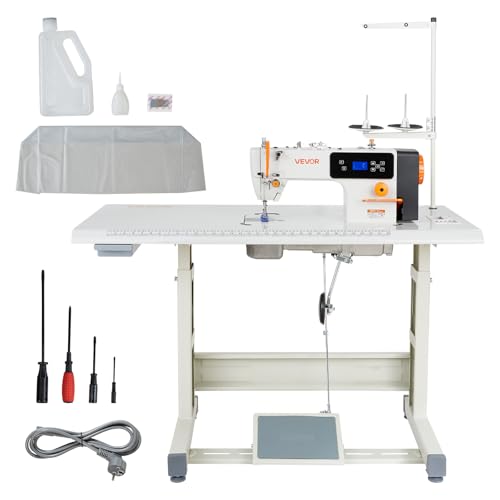
The VEVOR industrial lockstitch stands apart with an auto thread trimmer and servo motor, making it the industrial option among these machines. Its LCD controls adjust speed, needle position and soft start; a knee lifter and manual presser-foot lift provide additional fabric control. The maker says it sews up to 10 layers of denim and runs at 5,000 SPM. This set suits a dedicated sewing workspace and heavier projects. Its 134.48-pound weight and table stand make it less suitable for someone who needs a portable machine or mainly wants decorative stitch choices.
Bottom line: Choose this for a stationary setup focused on heavier fabric and lockstitch sewing.
VEVOR Metal Serger Overlock

The VEVOR serger is the edge-finishing choice, unlike the industrial lockstitch model, and supports either 3- or 4-thread setups. It has adjustable stitch length and width, an LED light and suction feet, with an iron-and-plastic body. The maker gives a maximum speed of 1,250 SPM and a 112W motor rating. This machine suits household users who want to finish raw fabric edges or handle simple repairs. A serger is not a substitute for a standard sewing machine’s general seam-making tasks, so it may not be the only machine needed for a project.
Bottom line: Pick this when edge finishing is a primary household sewing task.
ColouredPeas Cobbler Sewing Machine

The ColouredPeas cobbler machine differs from the VEVOR models by targeting shoe and leather repair, with electric and manual operation. It has a stainless steel base, and the maker gives a maximum sewing thickness of 0.48 inches. The product notes that its electric mode provides limited power and that manual operation may still be needed with thick leather. That limitation matters for buyers expecting motorized sewing through dense material without effort. Consider it for cobbler-style repairs rather than as a conventional all-purpose garment machine.
Bottom line: Choose this for cobbler-style repairs where manual operation is acceptable.
Brother XM2701 Portable Sewing Machine

The Brother XM2701 is a portable household machine, unlike the VEVOR industrial and serger formats, and provides 27 built-in stitches. Its features include an automatic needle threader, drop-in top bobbin, six sewing feet and a free arm for cuffs, sleeves and pant legs. This makes it a fit for everyday sewing tasks and users who want built-in stitch choices. The maker does not give a speed or motor rating, so it is not a direct performance comparison with the VEVOR machines that provide those figures.
Bottom line: Choose this for portable household projects and a range of built-in stitches.
SINGER Heavy Duty 500 Super Bundle
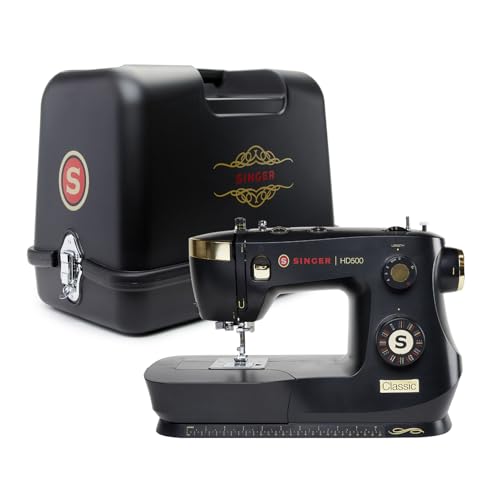
The SINGER Heavy Duty 500 bundle combines a household machine with a matching hard carrying case, separating it from the VEVOR machines’ industrial or serger roles. It offers 23 built-in stitches and 110 stitch applications, including a one-step buttonhole, plus adjustable stitch length and width. A metal frame, LED light and built-in needle threader are also included. This bundle suits users who want stitch options and a storage case in one purchase.
Bottom line: Pick this for varied household stitch applications and the included hard case.
How to choose a sewing machine type
Choose by the seam you need: lockstitch machines join fabric, while sergers trim and wrap raw edges with overlock stitching. A 3-thread serger is commonly used for edge finishing, while 4-thread setups add a second needle thread for a more secure seam. Industrial machines prioritize sustained sewing and material handling; household machines typically emphasize versatility and ease of setup. For a project dominated by garment seams, start with a standard machine; for frequent knitwear edge finishing, consider a serger. If the machine must sew thick materials, check the maker’s material capacity and presser-foot clearance rather than relying only on the “heavy duty” label.
Lockstitch and serger differences
A lockstitch and an overlock stitch do different jobs: a lockstitch joins fabric with a top thread and bobbin thread, while an overlock stitch loops thread around a cut edge. A serger’s built-in trimming can make a clean edge in one pass, but it does not replace every seam, topstitch or buttonhole a conventional machine can sew. Use this quick comparison to match the machine to the work.
| Need | Machine type | Key distinction |
|---|---|---|
| Join seams and general sewing | Lockstitch household or industrial | Uses a needle thread and bobbin thread |
| Trim and finish raw edges | Serger / overlock | Loops thread around the fabric edge |
| Repair shoes or leather goods | Cobbler machine | Designed around shoe and leather access |
For one machine to cover both seam construction and edge finishing, prioritize a conventional machine first and add a serger when edge work is frequent.
Match fabric thickness to machine capacity
Needle size, thread weight, fabric layers and presser-foot clearance all affect whether a machine can handle a project. For repeated thick-material work, choose a machine whose capacity covers the full layered stack, not just one sheet of fabric; leave a margin rather than working constantly at the limit. A 0.48-inch maximum thickness is about 12.2 mm, but material type and the machine’s feed path also matter. For leather or shoe repair, a cobbler configuration may provide more useful access than a general household machine. Do not force fabric under the presser foot: a jammed needle can break and cause injury.
Set up a safe sewing workspace
Keep fingers clear of the needle path and use the handwheel to position the needle when threading or adjusting fabric near the presser foot. Industrial machines can sew rapidly: at 5,000 stitches per minute, the needle cycles more than 83 times per second, so speed control and a stable table matter. Place the foot pedal where it cannot be pressed accidentally, and switch power off before changing needles or clearing a jam. For heavy table-mounted machines, secure the stand on a level floor and keep the work area free of loose cords and fabric that could snag.
Frequently Asked Questions
Can a serger replace a regular sewing machine?
No, a serger is mainly for trimming and finishing fabric edges, while a conventional machine handles many general seams and stitch applications. Choose a serger as a complement when edge finishing is frequent, not as an automatic replacement for all sewing tasks.
What does a four-thread serger do?
A four-thread serger uses two needle threads and two loopers to form an overlock seam. The extra needle thread generally makes it more suitable for seams that need more strength than a simple edge finish.
How many denim layers can an industrial machine sew?
Layer count varies with denim weight, needle, thread and the machine’s feed system. For the VEVOR industrial model here, the maker claims a capacity of up to 10 denim layers; treat that as a maximum, not a guarantee for every denim stack.
Is 5,000 stitches per minute fast for sewing?
Yes, 5,000 SPM is a high machine speed for controlled sewing, equivalent to about 83 stitches each second. Beginners and detail work benefit from starting slowly and increasing speed only when fabric control is steady.
Can a cobbler machine sew thick leather electrically?
Not necessarily; the ColouredPeas cobbler machine notes its electric mode provides limited power and may require manual operation on thick leather. Its maximum thickness is 0.48 inches, and leather stiffness and shape can affect the work.