
Non Toxic Dry Erase Markers: 5 Picks Compared

For most children’s whiteboard activities, Mini Fine Tip Markers, 12 Colors stands out with 12 colors, a 3.74-inch mini format and maker-claimed ASTM D4236 and EN71 compliance. Choose Crayola Dura-Wedge Tip, 10 Count instead if washable ink on skin and most washable clothing matters more than a compact barrel.
Dry erase markers write on wipe-off surfaces with ink designed to be removed after use; non-toxic labeling does not mean ink is safe to eat or inhale.
We earn a commission if you buy through links on this page. As an Amazon Associate I earn from qualifying purchases. Products are compared on manufacturer specifications, not hands-on testing.
- Best overall: Mini Fine Tip Markers, 12 Colors – Its 12 colors and short fine tip format suit small hands and compact storage.
- Best for washable ink: Crayola Dura-Wedge Tip, 10 Count – The maker says the ink washes from skin and most washable clothing.
- Best for board storage: maxtek Magnetic Fine Tip, 12 Count – Magnetic caps attach to metal or magnetic surfaces, and the fine point makes 1–2 mm lines.
- Best for varied strokes: DD.DOG Brush Tip, 12 Colors – The flexible brush tip is designed to make both thick and thin marks.
| Product | Best for | Tip | Count | Marker length | Shop |
|---|---|---|---|---|---|
| Mini Fine Tip Markers, 12 Colors | Small hands | Fine | 12 | 3.74 in | Check Price on Amazon |
| Crayola Dura-Wedge Tip, 10 Count | Washable ink | Dura-wedge | 10 | — | Check Price on Amazon |
| coojsoo Mini Fine Tip, 12 Colors | Letter tracing | Fine | 12 | 3.8 in | Check Price on Amazon |
| maxtek Magnetic Fine Tip, 12 Count | Board storage | Fine, 1–2 mm | 12 | — | Check Price on Amazon |
| DD.DOG Brush Tip, 12 Colors | Flexible strokes | Flexible brush | 12 | — | Check Price on Amazon |
Non toxic dry erase markers compared
Compare the tip, set size and physical format against the way the markers will be used.
Mini Fine Tip Markers, 12 Colors

The 3.74-inch barrel makes this set shorter than the 3.8-inch mini set, while its fine tip is suited to smaller writing and drawing. The 12-color assortment supports color-coded practice, and the maker says the low-odor ink wipes from whiteboards and other nonporous surfaces. The maker also claims ASTM D4236 and EN71 compliance. Choose these for children ages 3 and up who want a compact multicolor set. The short barrel may be less comfortable for adults or anyone who prefers a full-size marker.
Bottom line: Pick this set for compact, colorful fine tip practice with children ages 3 and up.
Crayola Dura-Wedge Tip, 10 Count

The standout distinction here is washability: the maker says the ink washes from skin, most washable clothing and most painted walls, in addition to erasing from wipe-off surfaces. Its Dura-Wedge tips differ from the fine and brush tips in the other sets, and the pack contains 10 assorted-color markers. The maker describes the set as non-toxic and suitable for children ages 3 and up. It suits families prioritizing cleanup after art activities. The set has fewer colors than the 12-count options, which matters for color-coded lessons.
Bottom line: Choose this for washable ink when cleanup from skin and clothing is a priority.
coojsoo Mini Fine Tip, 12 Colors

At 3.8 inches, this mini set is slightly longer than Mini Fine Tip Markers, 12 Colors, and its uses include letter tracing and preschool activities. The 12-color assortment and low-odor ink are intended for whiteboards, tiles, glass and other nonporous surfaces; the maker says the marks wipe away with a dry cloth or tissue. This suits young learners who need a portable set for drawing and early writing practice. The fine tip is better suited to narrow lines than broad, filled-in brush strokes.
Bottom line: Pick this for mini fine tip markers aimed at tracing and preschool practice.
maxtek Magnetic Fine Tip, 12 Count
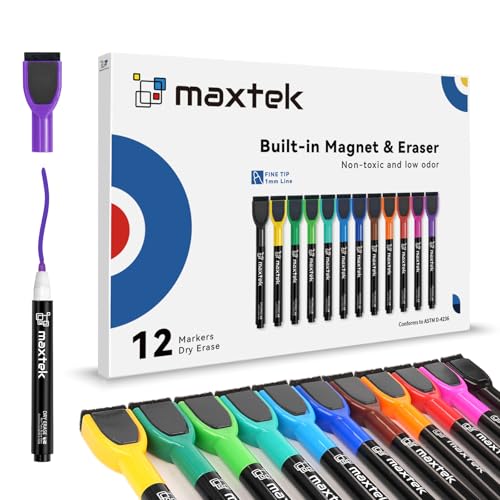
The magnetic caps distinguish this 12-count fine tip set: the maker says they attach to metal and magnetic surfaces, offering a place to keep markers near a compatible board. The 1–2 mm line range supports precise writing, and the maker says the ink meets ASTM D-4236 and is low odor. Color may appear less bold on glass, acrylic or blackboard than on a standard porous whiteboard, according to the maker. Choose it for board-side storage and narrow lines; it is less suited to broad strokes.
Bottom line: Choose this when magnetic cap storage and 1–2 mm writing lines are useful.
DD.DOG Brush Tip, 12 Colors

The flexible brush tip separates this set from the fine tip and wedge tip choices: the maker says it can create both thick and thin strokes. Twelve colors support drawing, doodling and handwriting activities, and the maker says the markers are low odor and comply with ASTM D4236 and EN71. The maker also describes the barrel material as food-grade polypropylene, which does not mean the ink is edible. Choose these for expressive whiteboard drawing; the flexible point may be less predictable than a fine point for small lettering.
Bottom line: Pick this for whiteboard art that benefits from variable-width strokes.
How to choose non toxic dry erase markers
Choose by tip, cleanup needs and the surface where the marks will go. Fine tips suit small writing; wedge tips offer a broader contact area, while brush tips flex to make variable-width strokes. Dry erase ink is made for wipe-off surfaces such as whiteboards; a porous surface can hold pigment and may not clean as easily. Low odor is not the same as odorless, so use markers with normal room ventilation. ASTM D4236 is a labeling practice for art materials addressing chronic health hazards, not a declaration that ink is edible or safe in every kind of exposure. For children under age 3, avoid giving markers with small caps unless an adult can manage the choking hazard.
Match the marker tip to the task
Fine points are the better choice when letters or lines need to stay narrow, while flexible brush tips suit drawing that needs changing stroke width. Wedge tips provide a middle ground for general writing and broader marks. Line width depends on tip shape, pressure and angle; a 1–2 mm point, such as the one in maxtek Magnetic Fine Tip, 12 Count, gives a more concrete guide than a tip name alone. Use this quick match to narrow the choice before considering color count or storage.
| Need | Tip or feature to choose |
|---|---|
| Small lettering | Fine tip |
| Thick and thin drawing strokes | Flexible brush tip |
| Washable cleanup | Maker-claimed washable ink |
| Keep markers by a magnetic board | Magnetic caps |
Check surface and cleanup fit
Whiteboards and other smooth, nonporous surfaces are the intended targets for dry erase ink; glass and tile can work, but marker performance varies by formula and surface finish. A standard porous whiteboard may show richer color than glass or acrylic for some formulas, as the maker notes for maxtek Magnetic Fine Tip, 12 Count. Test a small area before using a marker on an unfamiliar surface, especially painted walls, because wiping can affect the finish. Use a dry cloth or tissue for routine removal when the maker recommends it, and do not assume washable ink means every fabric or painted surface will release the color. If color intensity on glass is essential, confirm suitability for that exact surface before choosing.
Frequently Asked Questions
Are non toxic dry erase markers safe for toddlers?
Non-toxic labeling does not make marker ink edible or remove the choking risk from small caps. Some sets here are intended for ages 3 and up; keep caps and markers away from children who may mouth them.
Does ASTM D4236 mean marker ink is edible?
No. ASTM D4236 is an art-material labeling practice concerning chronic health hazards, not a food-safety certification. Keep marker ink out of mouths and follow the product age guidance.
Can dry erase markers write on glass?
Some dry erase markers work on glass, but color strength can vary by ink and surface. On hard nonporous surfaces, test a small area first and confirm the specific marker is meant for that use.
How do you remove dry erase marker ink?
On a compatible whiteboard, start with a dry cloth or tissue; some makers specify this method. Washable claims can cover skin and most washable clothing, but do not assume every fabric or painted finish will clean completely.
What marker tip is best for handwriting practice?
A fine tip is generally the practical choice for narrow letters, while brush tips are intended for varying stroke widths. For lines around 1–2 mm, select a marker that states that range and try it on the intended board.