
Clopay Garage Door Bottom Seal Replacement Compared

For a Clopay single-slot door with a 9-foot opening, Clopay Single-Slot Seal, 9 ft is the closest match because it is made for that door length and anchor style. Choose Clopay Single-Slot Seal, 16 ft for a longer single-slot seal, or consider T-end options only if your door has a matching T-track retainer.
A garage door bottom seal is a flexible strip that closes the gap beneath the door; the retainer profile matters more than the brand name alone.
We earn a commission if you buy through links on this page. As an Amazon Associate I earn from qualifying purchases. Products are compared on manufacturer specifications, not hands-on testing.
- Best overall: Clopay Single-Slot Seal, 9 ft – Its fit is a Clopay single-slot door with a 9-foot length.
- Best for longer single-slot doors: Clopay Single-Slot Seal, 16 ft – It is a 16-foot seal specifically described for Clopay single-slot doors.
- Best for T-end replacement: Clopay T-End Seal, 4.5 in x 20 ft – It has 5/16-inch T-ends and is identified as a Clopay part.
| Product | Best for | Length | Retainer style | Material | Shop |
|---|---|---|---|---|---|
| Clopay Single-Slot Seal, 9 ft | 9-foot single-slot | 9 ft | Single slot | Rubber | Check Price on Amazon |
| Clopay Single-Slot Seal, 16 ft | Longer single-slot | 16 ft | Single slot | Rubber | Check Price on Amazon |
| Clopay T-End Seal, 4.5 in x 20 ft | Clopay T-end | 20 ft | 5/16-in T-ends | — | Check Price on Amazon |
| DGSL T-End Seal, 16 ft | Dual-profile barrier | 16 ft | 5/16-in T-ends | Rubber | Check Price on Amazon |
| Holikme EPDM T-Track Seal, 22 ft | Long T-track runs | 22 ft | 5/16-in double T-track | EPDM rubber | Check Price on Amazon |
Clopay Garage Door Bottom Seal Replacements
Match the seal profile to the door’s retainer before choosing by length or material.
Clopay Single-Slot Seal, 9 ft

For a 9-foot Clopay single-slot door, this replacement matches both the door length and anchor style. The rubber strip is intended to close the bottom gap against dust and weather, and the maker says it installs easily. This is the most direct choice when the door has one slot and a 9-foot opening. Its key limitation is fit: the maker specifically excludes doors without a single-slot anchor, so a similar-looking channel or T-track is not enough to establish compatibility.
Bottom line: Choose this for a 9-foot Clopay door with a confirmed single-slot retainer.
Clopay Single-Slot Seal, 16 ft

This 16-foot rubber seal is specifically identified for Clopay single-slot doors, making its length the main difference from the 9-foot replacement. The maker describes it as wear-resistant and says two people can guide it into place during installation. It suits a longer run or a buyer who needs extra seal length, but the product is still limited to single-slot anchors; it should not be chosen for a T-end retainer just because the material is rubber. Confirm the full run length before cutting or fitting.
Bottom line: Pick this when a Clopay single-slot door needs a 16-foot run.
Clopay T-End Seal, 4.5 in x 20 ft
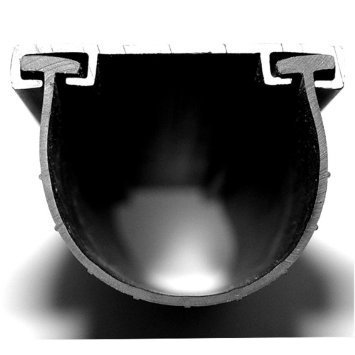
Unlike the single-slot strips, this Clopay part uses 5/16-inch T-ends and comes in a 20-foot length. The maker identifies it as a factory-direct part rather than an aftermarket seal, which may matter to someone replacing an existing T-end profile. The width is 4.5 inches. This is a related replacement, not a fit for a single-slot retainer; check that the door has a T-end track sized for the ends before choosing it.
Bottom line: Choose it only when the existing Clopay seal has matching 5/16-inch T-ends.
DGSL T-End Seal, 16 ft

This 16-foot rubber strip differs from the Clopay-specific choices by using a 5/16-inch T-end design and a U-plus-O ring profile. The maker says the flexible rubber operates from -40°F to 140°F and describes the seal as weatherproof. That profile is for a compatible T-channel, not a Clopay single-slot anchor, so the door’s retainer must match before this option is considered. It is a fit for buyers seeking the dual-profile construction and willing to verify the track dimensions.
Bottom line: Consider it for a matching 5/16-inch T-channel and a 16-foot run.
Holikme EPDM T-Track Seal, 22 ft

At 22 feet, this is the longest strip among these options and is made for a 5/16-inch double T-track rather than a single-slot anchor. Its EPDM rubber has an operating range of -40°F to 240°F, and the U-and-O ring structure is intended to provide a layered seal. It suits buyers replacing a compatible double T-track seal over a longer run. The important limitation is its track requirement: a Clopay label or door brand alone does not confirm that the retainer matches.
Bottom line: Pick this for a compatible 5/16-inch double T-track needing up to 22 feet.
How to choose a Clopay bottom seal by retainer
Choose by the channel profile first: a single-slot anchor and a T-end retainer are different attachment systems. Single-slot replacements should only go into the matching slot, while T-end seals slide into compatible tracks; a 5/16-inch T-end measurement is a common profile dimension, but it does not establish fit unless the retainer accepts it. Inspect the existing seal end or remove a short section to identify its shape before ordering. Measure the opening width and compare it with the seal’s run length; a 9-foot door calls for a 9-foot match, while a longer strip is useful only if it can be fitted cleanly. If your retainer does not clearly match, confirm its width and profile before ordering.
Seal length and bottom-gap fit
Measure the door opening from inside edge to inside edge with the door closed, then choose a seal long enough to cover the full width without a gap at either end. A practical decision rule is to select the 9-foot option for a 9-foot opening when its anchor profile matches; do not substitute a T-end seal for a single-slot strip to gain length. The seal should contact the floor evenly across the opening, not drag hard enough to bow the door or prevent closure. A sloped or uneven floor can leave a gap even with the right seal length, so inspect the closed door at several points. Trim only after confirming the retainer fit and run length.
What the seal profiles mean
Bottom seals attach through a retainer, and the cross-section determines whether the strip can stay in place as the door moves. A single-slot seal is shaped for its specific single channel; a T-end design has projecting ends that engage a T-track, while a double T-track retainer accepts its matching end arrangement. The term “Clopay” does not by itself identify which profile is installed. Use the end shape and track dimensions as the deciding criteria, then consider whether the seal is rubber or EPDM and how long the strip is.
| Retainer found on door | Seal type to consider | Fit check |
|---|---|---|
| Single slot | Clopay single-slot seal | Slot shape and run length match |
| T-end track | 5/16-inch T-end seal | Track accepts the measured ends |
| Double T-track | Double T-track seal | Both track channels match |
Safe replacement and common fit mistakes
Replace a seal when it is cracked, flattened, or no longer touches the floor evenly; these conditions can leave openings for drafts and debris. Keep hands clear of hinges, rollers, and the track, and do not loosen springs or cables to make the door easier to work on: garage-door springs store dangerous force. Disconnect the opener before working and keep the door secured against movement; if the door cannot be safely stabilized, use a qualified door technician. A frequent mistake is buying by length or brand while overlooking the anchor profile. Another is cutting a strip before checking the whole opening, which can leave an uncovered corner or an unusable short section.
Frequently Asked Questions
How do I identify a Clopay single-slot seal?
Look at the retainer or the end of the existing strip: a single-slot design fits one matching channel, not a T-end track. A 5/16-inch T-end profile is a different attachment style, so compare the cross-section rather than relying on the door brand.
How much bottom seal length does a garage door need?
The seal should cover the full opening width, so measure the closed door from inside edge to inside edge. For a 9-foot opening, choose a 9-foot seal when the retainer profile also matches; a longer strip may require careful trimming.
Can a T-end seal fit a single-slot Clopay door?
No, not if the door has only a single-slot anchor: T-end seals attach through a matching T-track instead. Check the existing retainer profile before choosing a seal, even when both products are described as garage door replacements.
When should I replace a garage door bottom seal?
Replace it when the rubber is cracked, flattened, or leaves visible floor gaps with the door closed. Check across the entire width, since an uneven garage floor can leave a gap in one spot even when the rest of the seal makes contact.
Is it safe to replace a garage door bottom seal alone?
Work only with the opener disconnected and the door secured so it cannot move; avoid springs, cables, rollers, and hinges. Garage-door springs hold dangerous tension, so do not loosen or adjust them as part of a seal replacement.