
Best Sealant for Cedar Wood: 5 Options Compared

For most cedar projects, SEAL-ONCE Nano+Poly Cedar Sealer stands out because it is a penetrating water-based sealer rather than a color-forward stain-and-sealer. Choose a different product if you want semi-transparent cedar color or a larger container for a broad surface.
Cedar sealants help limit moisture exposure; the right finish depends on whether you want the wood grain and natural color to remain prominent or add a tinted appearance.
We earn a commission if you buy through links on this page. As an Amazon Associate I earn from qualifying purchases. Products are compared on manufacturer specifications, not hands-on testing.
- Best overall: SEAL-ONCE Nano+Poly Cedar Sealer – Its penetrating formula is made to create a water-resistant shield below the wood surface.
- Best for warranty coverage: Thompson’s WaterSeal Natural Cedar – The maker guarantees five years on decks and seven years on fences and siding.
- Best for large projects: Ready Seal Natural Cedar, 5 Gallon – The 5-gallon container is suited to covering more exterior wood at once.
| Product | Best for | Formula | Color | Container | Shop |
|---|---|---|---|---|---|
| SEAL-ONCE Nano+Poly Cedar Sealer | Penetrating protection | Water-based, penetrating | Cedar | 1 gallon | Check Price on Amazon |
| Ready Seal Natural Cedar, 1 Gallon | Flexible application | Oil-based stain and sealer | Natural cedar | 1 gallon | Check Price on Amazon |
| Thompson’s WaterSeal Natural Cedar | Warranty terms | Water-based acrylic-alkyd | Natural cedar | 1 gallon | Check Price on Amazon |
| Olympic WaterGuard Woodland Cedar | Soap-and-water cleanup | Water-based stain and sealer | Woodland cedar | 1 gallon | Check Price on Amazon |
| Ready Seal Natural Cedar, 5 Gallon | Broad surface coverage | Oil-based stain and sealer | Natural cedar | 5 gallons | Check Price on Amazon |
Cedar Wood Sealants Compared
Compare the finish, formula, and container size to match a cedar sealer to your surface and application needs.
SEAL-ONCE Nano+Poly Cedar Sealer

The penetrating formula sets this sealer apart from the semi-transparent stain-and-sealers here: the maker says it works below the wood surface to create a water-resistant shield. The water-based finish is intended for exterior uses including siding, log homes, outdoor furniture, decks, and fences; it is described as odorless and ultra-low VOC. Choose it when a penetrating treatment matters more than adding a semi-transparent stain. Its color is cedar, but the facts do not establish how much color it adds, so buyers seeking a particular tint should confirm the finish before ordering.
Bottom line: Choose this if a penetrating, water-based sealer is your priority.
Ready Seal Natural Cedar, 1 Gallon
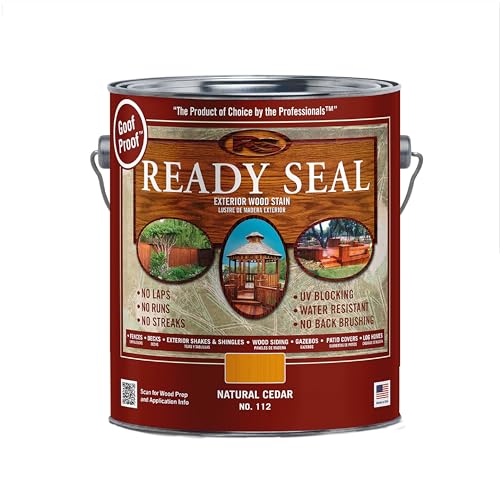
This option is distinguished by application flexibility: the maker says it can be sprayed, rolled, or brushed, needs no back-brushing, and can be applied in direct sunlight. The natural cedar stain-and-sealer is intended for exterior decks, fences, and siding, and the maker says it resists moisture and UV exposure. It suits buyers who want a tinted finish and several ways to apply it. The can covers a smaller project quantity than the five-gallon version, so a broad surface may call for more than one container.
Bottom line: Pick this for a natural cedar stain and flexible application methods.
Thompson’s WaterSeal Natural Cedar

The warranty terms distinguish this semi-transparent sealer: the maker guarantees five years on decks and seven years on fences and siding. Its one-coat recommendation adds moderate color while allowing medium wood grain to show, and the maker says it exceeds ASTM D4446 for wood waterproofing. This is a fit for buyers who want a tinted finish and a warranty tied to surface type. The warranty durations differ by application, so match the intended surface to the corresponding term rather than assuming the longer period applies everywhere.
Bottom line: Choose this when warranty terms and semi-transparent color are key.
Olympic WaterGuard Woodland Cedar

Soap-and-water cleanup is the distinguishing practical feature of this water-based stain-and-sealer. The semi-transparent woodland cedar formula combines color and waterproofing in one ready-to-use coat; the maker says it dries in about 24 hours and resists wear from foot traffic. Its protection periods are up to three years on decks and four years on fences and siding. Consider it for a tinted exterior finish where easy cleanup is useful. The deck protection period is shorter than the fence and siding period, so choose expectations by surface.
Bottom line: Pick this for a ready-to-use tinted formula with soap-and-water cleanup.
Ready Seal Natural Cedar, 5 Gallon

The five-gallon container is the key difference from the one-gallon Ready Seal option, making this a better match when a project needs a larger quantity of the same natural cedar stain-and-sealer. The maker describes the formula as usable by sprayer, roller, or brush, with no back-brushing required, and says it resists moisture and UV exposure. It is intended for exterior decks, fences, siding, and similar wood projects. The large container is less convenient for a small touch-up; estimate the surface area and coverage from the product label before committing to a quantity.
Bottom line: Choose this for a large exterior project needing a five-gallon container.
How to choose a cedar wood sealant
Choose by finish first: a penetrating sealer emphasizes water resistance, while a semi-transparent stain-and-sealer adds color as well as moisture protection. Cedar exposed outdoors naturally weathers toward gray with UV exposure; a tinted finish can slow the visual change, but it will not keep the wood looking freshly milled forever. For a clear or near-natural look, check how much color the product adds before committing. For a deck, also compare the maker’s surface-specific protection period rather than treating fence and siding claims as equivalent. A measurable rule: if matching an existing finish matters, test the selected coating on an inconspicuous 6-by-6-inch area and let it dry fully before coating the whole surface.
Prepare cedar before sealing
Clean, dry wood is the starting point for an exterior finish; coating damp cedar can interfere with adhesion and drying. A moisture meter reading below 15% is a useful target for many exterior finishing jobs, though product directions can set a different limit. Remove dirt, mildew, and loose old finish, then allow the wood to dry after washing. Sanding needs depend on the existing surface: rough or weathered fibers may need smoothing, while intact coatings may need removal or compatibility checks. Do not seal cedar immediately after rain or washing; wait until the surface and end grain are dry, not merely until the face looks dry.
Compare penetrating sealers and stain-and-sealers
Penetrating sealers soak into wood rather than relying only on a surface film, while stain-and-sealers combine water resistance with visible pigment. Semi-transparent coatings leave some grain visible; opaque finishes hide more grain, so the desired appearance should guide the category choice. Oil-based and water-based formulas also differ in cleanup and handling, with water-based products generally cleaned using soap and water when their label permits. This table gives a practical starting point; confirm that the selected product is intended for the specific cedar surface.
| Need | Finish type to consider | Trade-off |
|---|---|---|
| Keep the grain prominent | Penetrating or semi-transparent | Color appearance varies by wood and coat |
| Add visible cedar color | Semi-transparent stain-and-sealer | Pigment changes the natural appearance |
| Cover a broad project | Choose container size by area | Too much coating can be left over |
Apply exterior sealer safely
Apply exterior coatings only in conditions allowed by the product label, and keep people and pets away from wet surfaces until the finish is dry. Some products permit direct-sun application, but that claim should not be assumed for every sealer; heat and wind can change how quickly a coating flashes off. Use gloves and eye protection when handling coatings, and avoid breathing spray mist by using appropriate ventilation and respiratory protection. Keep oil-based coating and solvent-soaked rags away from flames and heat; some oil-finish rags can self-heat, so follow their disposal directions carefully. Avoid applying before rain unless the product explicitly allows the expected weather window.
Frequently Asked Questions
How often should cedar be resealed outdoors?
Many exterior wood finishes need inspection annually, with reapplication commonly needed every 2 to 5 years depending on sun, rain, traffic, and product type. Horizontal decks usually wear faster than vertical siding because they hold water and receive foot traffic.
Can cedar be sealed while it is still damp?
No; wait until cedar is dry, and use a moisture meter reading below about 15% as a practical target for many finishing jobs. End grain and shaded boards can retain moisture after the face appears dry.
Should cedar be sanded before applying sealer?
Sand rough fibers or weathered raised grain, but remove incompatible peeling coatings before applying a new finish. Start with a small test area because sanding can change how much stain cedar absorbs.
Does a clear sealer stop cedar from turning gray?
A clear water repellent alone may not block enough UV to preserve cedar’s original color. Pigmented semi-transparent finishes generally provide more UV shielding, though the added pigment changes the wood’s appearance.
How many coats of cedar sealer are needed?
The required coat count depends on the product and the surface; one product here recommends one coat, while that does not apply automatically to other formulas. Excess coating can leave a tacky or uneven surface, so use the product’s coverage and coat directions.