
Iron-On Fabric Backing: 4 Options Compared by Use

For general sewing support, Medium-Weight Fusible Interfacing, White or PLANTIONAL Medium-Weight Non-Woven Interfacing is the closest match because each is medium-weight, single-sided fusible interfacing in an 11.6-inch-by-30-yard roll. Choose Sulky Tender Touch Cut-Away Stabilizer or Poolin Embroidery Stitch Cover, 7-Inch Squares instead when the goal is to cover completed embroidery stitches rather than stabilize fabric during construction.
Iron-on fabric backing uses heat-activated adhesive to bond a layer to fabric; the right kind depends on whether you need structure or stitch coverage.
We earn a commission if you buy through links on this page. As an Amazon Associate I earn from qualifying purchases. Products are compared on manufacturer specifications, not hands-on testing.
- Best overall: Medium-Weight Fusible Interfacing, White – Medium-weight, single-sided fusible interfacing in an 11.6-inch-by-30-yard roll suits general sewing support.
- Best for polyester backing: PLANTIONAL Medium-Weight Non-Woven Interfacing – This roll specifies non-woven polyester construction and a heat-activated adhesive.
- Best for stretch embroidery: Sulky Tender Touch Cut-Away Stabilizer – Its cut-away stabilizer is described as flexible for stretch garments and applied by ironing.
- Best for stitch coverage: Poolin Embroidery Stitch Cover, 7-Inch Squares – These 7-inch squares are designed to cover the back of completed embroidery.
| Product | Best for | Format | Size | Material or use | Shop |
|---|---|---|---|---|---|
| Medium-Weight Fusible Interfacing, White | General sewing support | Roll | 11.6 in × 30 yd | White; single-sided adhesive | Check Price on Amazon |
| PLANTIONAL Medium-Weight Non-Woven Interfacing | Polyester interfacing | Roll | 11.6 in × 30 yd | Polyester; single-sided adhesive | Check Price on Amazon |
| Sulky Tender Touch Cut-Away Stabilizer | Stretch embroidery backing | Cut-away stabilizer | 7.9 × 14.2 in | Lightweight; embroidery backing | Check Price on Amazon |
| Poolin Embroidery Stitch Cover, 7-Inch Squares | Finished stitch coverage | Pre-cut squares | 7 × 7 in; 50 pieces | Soft fusible backing | Check Price on Amazon |
Iron-On Fabric Backing Options
Choose a sewing interfacing for fabric support or an embroidery backing for covering stitches after sewing.
Medium-Weight Fusible Interfacing, White

Medium-Weight Fusible Interfacing, White comes as a long, medium-weight roll for projects that need fusible support rather than a small patch for embroidery. The white, single-sided adhesive can be trimmed to a pattern, and the maker says it is intended for use with materials ranging from silk to denim. Its 11.6-inch width may require piecing for larger pattern sections, so measure the area before cutting. The maker says an iron activates the adhesive and that instructions are included; test a scrap of the project fabric first to check the bond and appearance.
Bottom line: Pick this roll for broad sewing use when white, medium-weight support fits the project.
PLANTIONAL Medium-Weight Non-Woven Interfacing

PLANTIONAL Medium-Weight Non-Woven Interfacing distinguishes itself with a non-woven polyester construction, while retaining the same 11.6-inch-by-30-yard roll format as Medium-Weight Fusible Interfacing, White. It is medium-weight, single sided, and heat activated, making it a fit for projects that call for fusible structure rather than a backing applied to finished embroidery. The maker describes it for clothing and crafts and says it comes in black and white; the variant is medium-weight white. Polyester construction and medium-weight may not suit every fabric hand, so test a small fabric-and-interfacing sample before committing to a garment panel.
Bottom line: Choose this when you specifically want a polyester non-woven roll in white.
Sulky Tender Touch Cut-Away Stabilizer

Unlike the long sewing-interfacing rolls, Sulky Tender Touch Cut-Away Stabilizer is a lightweight cut-away embroidery stabilizer intended to cover the back of finished stitching. Its maker describes the material as flexible and suitable for garments that stretch, including spandex, athletic wear, golf shirts and sports apparel. The iron-on format avoids pinning or spray during application, according to the maker. This is a specialized choice for embroidery backs, not a substitute for adding structure across a garment pattern. Its 7.9-by-14.2-inch size also covers much less area than a yardage roll, so it fits smaller embroidery zones.
Bottom line: Choose this for a flexible cover over embroidery on stretch garments.
Poolin Embroidery Stitch Cover, 7-Inch Squares
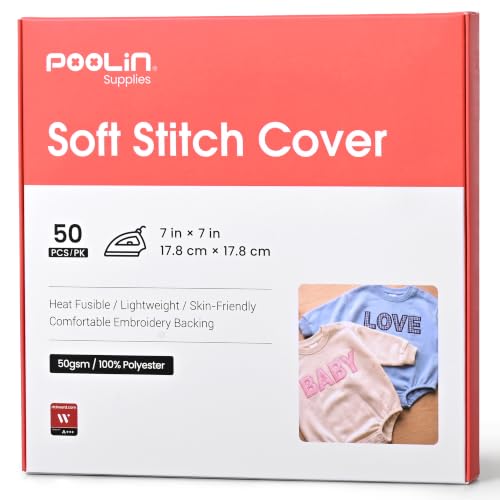
Poolin Embroidery Stitch Cover, 7-Inch Squares is supplied as fifty 7-by-7-inch squares for covering scratchy embroidery backs after stitching is complete. That post-embroidery purpose sets it apart from stabilizer used beneath fabric while a machine embroiders and from interfacing used to shape garment pieces. The maker recommends cutting a square to size and pressing it over the finished embroidery for 10–15 seconds; the product is described as lightweight and flexible. Pre-cut squares limit coverage per piece, however, so large designs or multiple embroidery areas may need more than one square.
Bottom line: Pick these pre-cut squares when the task is covering finished stitches.
How to Choose Iron-On Fabric Backing
Choose backing by the job: fusible interfacing supports fabric, while embroidery cover backing goes over finished stitches. Interfacing is commonly sold in woven, non-woven and knit forms, and light, medium or heavy weights; match its weight and drape to the project fabric rather than assuming heavier is stronger for every garment. For collars, cuffs and waistbands, structure is often useful; for soft knits, a flexible backing is less likely to feel rigid. A practical decision rule is to use a small test piece whenever the garment fabric is delicate, stretchy or textured. Heat can affect fabric and adhesive differently, so test the bond and appearance before cutting the full pattern piece.
How to Apply Fusible Interfacing
Place fusible interfacing adhesive-side against the fabric’s wrong side, then press rather than sliding the iron. A press cloth helps protect the outer fabric, and short, firm presses are generally safer than dragging a hot iron across the piece because sliding can distort fabric or shift the layers. Let the bonded piece cool flat before handling; adhesive needs time to set, and moving it while warm can loosen the bond. Use the project fabric’s care limits and the interfacing maker’s application directions for heat and dwell time. Keep fingers clear of the iron and work on a stable ironing surface. A test scrap can reveal bubbling, shine or poor adhesion before the full piece is fused.
Interfacing and Embroidery Backing Serve Different Jobs
Interfacing adds support during garment construction; an embroidery cover backing smooths the inside of completed stitching. Embroidery stabilizer used during stitching is a separate category: it holds fabric steady under needle movement and may be tear-away, cut-away or wash-away depending on the fabric and design. The choice changes with stitch density, fabric stretch and whether the stabilizer must remain in the finished item. Use this guide to identify the right job before choosing the material.
| Backing type | When it is used | Main purpose |
|---|---|---|
| Fusible interfacing | Garment or craft construction | Adds body or support |
| Embroidery stabilizer | During machine stitching | Reduces fabric movement |
| Stitch cover backing | After embroidery is finished | Covers exposed stitches inside clothing |
Do not substitute a stitch cover for construction interfacing: it is meant to cover embroidery, not shape a collar or reinforce a placket.
Fit and Care for Iron-On Backing
Measure the area to cover and compare it with the backing width before cutting; a 7-inch square is suited to smaller embroidery zones, while an 11.6-inch roll can serve longer pattern sections. Leave a small margin around an embroidery design when applying a cover so exposed stitches are enclosed, while avoiding bulky overlap at seams. After fusing, follow the care limits of the more heat-sensitive fabric in the project; washing and drying temperatures are set by the garment fabric and adhesive combination, not by backing size alone. Trim carefully with sharp fabric scissors, and avoid stretching knit fabric while bonding because stretching can leave ripples when the material relaxes.
Frequently Asked Questions
Which side of fusible interfacing faces the fabric?
Place the adhesive side against the wrong side of the fabric. If the adhesive side is difficult to identify, test a small scrap before pressing the full piece.
Can iron-on interfacing be used on stretchy fabric?
A flexible knit interfacing is generally a better match for stretchy fabric than a rigid woven or non-woven option. Test a swatch and avoid stretching the fabric while fusing to reduce rippling.
How do you keep iron-on backing from bubbling?
Press in place rather than sliding the iron, and let the fused layers cool flat before moving them. Bubbling can also signal poor compatibility or an unsuitable heat setting, so test a scrap first.
Is embroidery backing applied before or after stitching?
Stabilizer used to steady fabric is applied before embroidery, while stitch cover backing goes on the reverse after the stitching is complete. The two types have different jobs and are not interchangeable.
How much interfacing should I cut for a pattern piece?
Cut enough to cover the pattern area that needs support, accounting for seam allowances where the pattern calls for interfacing there. Measure first; a roll narrower than the pattern piece may require matching sections.