
Padding for Pressure Sores: 4 Cushions Compared

For long sitting, Large Gel Seat Cushion, 19 × 18 in. is the most versatile pick because its 19-by-18-inch gel cushion is sized for a chair and has a breathable honeycomb core. Choose BALAPET Egg-Shaped Foam Bed Pad for bed-based support or Lunderg Alternating Air Recliner Pad for a recliner with changing air pressure; cushions are not substitutes for care of an existing sore.
We earn a commission if you buy through links on this page. As an Amazon Associate I earn from qualifying purchases. Products are compared on manufacturer specifications, not hands-on testing.
- Best overall: Large Gel Seat Cushion, 19 × 18 in. – A 19-by-18-inch gel seat cushion is intended for chairs at home, work or in a car.
- Best for bed support: BALAPET Egg-Shaped Foam Bed Pad – The 35.4-inch foam pad has a removable center insert for a relief zone.
- Best for recliners: Lunderg Alternating Air Recliner Pad – The powered pad uses 136 air cells and offers alternating and static modes.
- Best for tailbone relief: T-Shaped Memory Foam Cushion – The 18-by-16-inch memory-foam cushion has a T-shaped opening and detachable design.
| Product | Best for | Use | Dimensions | Support type | Shop |
|---|---|---|---|---|---|
| BALAPET Egg-Shaped Foam Bed Pad | Bed support | Bed | 35.4 × 16.1 × 3.5 in. | Egg-shaped foam | Check Price on Amazon |
| Large Gel Seat Cushion, 19 × 18 in. | Chair sitting | Chair, car | 19 × 18 × 1.65 in. | Honeycomb gel | Check Price on Amazon |
| T-Shaped Memory Foam Cushion | Tailbone opening | Sitting, bed | 18 × 16 × 4.5 in. | Memory foam, cut-out | Check Price on Amazon |
| Lunderg Alternating Air Recliner Pad | Recliner use | Recliner | — | 136 air cells | Check Price on Amazon |
Padding for Pressure Sores Compared
Match the support surface to the position where pressure builds, then check that the cushion fits the chair or bed.
BALAPET Egg-Shaped Foam Bed Pad
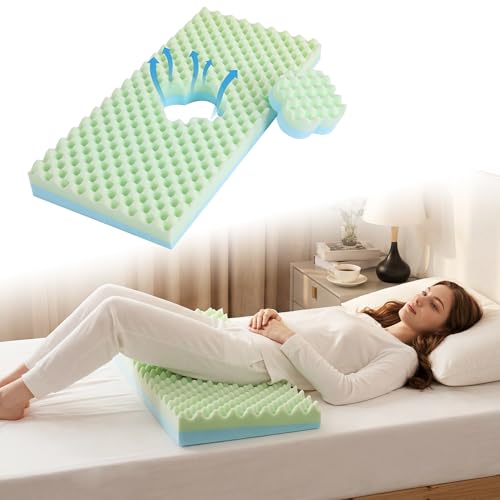
For bed use rather than a chair, this 35.4-by-16.1-inch foam pad has a removable center insert that can leave a cut-out area around the tailbone, hip or lower back. BALAPET says the open-cell foam promotes airflow and that the insert can also remain in place for fuller support. The long, narrow shape suits a targeted zone, not necessarily full-body coverage, so measure the intended area before choosing it. A cut-out changes where support lands; check the skin regularly and seek clinical advice for a sore or persistent redness.
Bottom line: Choose this for a targeted bed support zone when its narrow dimensions fit.
Large Gel Seat Cushion, 19 × 18 in.

For seated use across different settings, this gel cushion measures 19 by 18 inches and is 1.65 inches thick. Its honeycomb design is intended to promote airflow, and the maker says the gel distributes weight to reduce pressure. That broad seat footprint distinguishes it from the bed pad and the recliner-specific powered system. It is a simple cushion rather than an alternating-pressure device, so consider another support type if a clinician has recommended dynamic pressure redistribution. Measure the usable seat area and ensure the cushion stays stable when occupied.
Bottom line: Pick this for a general chair or car seat if its footprint fits.
T-Shaped Memory Foam Cushion

For a seated pressure-relief zone around the coccyx, this 18-by-16-inch cushion is 4.5 inches thick and has a T-shaped opening. Its two-part foldable construction joins with Velcro, and the cover is machine washable. The opening and detachable design make it distinct from a flat gel seat cushion, but the 4.5-inch height can change seated position and leg reach. Check chair height and stability before use, especially when transferring from a wheelchair. The maker’s claim of reducing pressure by a specific percentage is not a substitute for an individualized clinical assessment.
Bottom line: Choose this when a tailbone opening and detachable construction suit the seat.
Lunderg Alternating Air Recliner Pad

For a recliner, this powered pad uses 136 air cells and a pump with alternating and static modes. Lunderg says its slow inflation and deflation relieve pressure and its pump runs at 23 dBA; treat these as maker claims rather than a guarantee of sore prevention. The four-way stretch cover has anchors intended to limit slippage. Unlike a passive foam or gel cushion, this system needs power and pump placement, so confirm the recliner dimensions and that the setup can be managed safely. A stable surface is available in static mode, according to the maker.
Bottom line: Choose this for a compatible recliner when powered alternating support is desired.
How to choose padding for pressure sores
Choose by position first: chair cushions support seated contact points, bed pads target a lying area, and powered air systems cycle support. A chair cushion must fit the usable seat without rocking or obstructing safe transfers; compare its length and width with the seat, not just the person’s body. For prolonged sitting, consider whether the surface can be kept dry and whether the person can shift position independently. No cushion eliminates pressure injury risk: regular position changes, skin checks and appropriate clinical guidance remain important, particularly for people who cannot move themselves. A reddened area that persists after pressure is removed, broken skin, or a sore should prompt contact with a healthcare professional rather than relying on padding alone.
Bed pads, seat cushions and air systems
Foam and gel cushions are passive surfaces, while alternating-air pads change which cells bear weight over time. Passive designs require no pump, but their fit and shape determine where support lands. A cut-out may relieve direct contact at one point, yet it can shift load to surrounding tissue; do not assume that a hole is appropriate for every sore. Powered systems add a pump and connections, so check that the surface remains secure and the pump can be operated as intended. Use the table to narrow the type by location and mechanism, then verify dimensions against the actual seat or bed zone.
| Need | Type to consider | Fit check |
|---|---|---|
| Long sitting | Gel or memory foam seat cushion | Seat width, depth and stable transfers |
| Targeted bed support | Foam pad with removable insert | Supported area and pad footprint |
| Recliner support | Alternating-air pad | Recliner dimensions, pump and power setup |
Fit and placement for pressure-relief cushions
Measure the seat’s usable width and depth before selecting a chair cushion; an oversized pad can overhang, while a thick cushion can alter foot contact and transfer height. For bed pads, compare the product footprint with the area being supported and avoid folds or gaps that create pressure points. Place cushions on a clean, dry, flat surface and check that covers and anchors do not bunch under the body. The correct choice depends on posture and mobility as well as dimensions: someone who cannot reposition without help needs a care plan, not just a different foam shape. Ask a clinician to assess an existing wound and recommend a surface for that person’s needs.
Safety and care when using pressure padding
Pressure padding is supportive equipment, not treatment for an open wound; pressure injuries can worsen beneath a cushion without obvious discomfort, especially when sensation or mobility is reduced. Check skin routinely, keep it clean and dry, and change position based on the individual’s care plan. Avoid using a donut-style ring as a default remedy because its edge can concentrate pressure around the opening. For powered pads, route cords and tubing away from walking paths and verify that the pump and pad remain connected and stable. Follow the maker’s cleaning directions for covers and foam, and replace or reassess a cushion if it becomes damaged, compressed, or unable to stay in position.
Frequently Asked Questions
How often should someone change position to prevent pressure sores?
There is no single safe interval for everyone; mobility, skin condition and the support surface affect the schedule. People at risk need an individualized repositioning plan and regular skin checks, with clinical guidance if they cannot shift independently.
Can a cushion heal an existing pressure sore?
A cushion can reduce contact pressure, but it does not diagnose or treat a wound. Open skin, persistent redness or worsening discomfort warrants prompt assessment by a healthcare professional.
Are cut-out cushions safe for every pressure sore?
No, a cut-out may shift pressure to its edges or surrounding tissue. Use one only when it suits the location and a clinician agrees it is appropriate.
How do I measure a chair for a pressure cushion?
Measure the flat, usable seat width and depth, then compare those dimensions with the cushion footprint. Also check that added cushion height does not compromise stable foot placement or transfers.
What is the difference between foam and alternating air pads?
Foam provides passive support, while an alternating-air pad uses inflation cycles to change support across its air cells. A powered system also requires a suitable pump setup and stable placement.