
A-Premium Power Steering Pumps Compared by Vehicle Fit

A-Premium CX-9 Pump with Pulley is the A-Premium pump to consider first if you have a 2007–2015 Mazda CX-9, with the year-specific 3.5L or 3.7L engine fit deciding whether it matches. The other options cover different Honda, Acura, Chevrolet, GMC, and Cadillac applications, so choose by exact vehicle and configuration rather than brand alone.
A power steering pump moves hydraulic fluid through the steering system; the right replacement must match the vehicle, engine, and hose connections, as well as the reservoir and pulley arrangement.
We earn a commission if you buy through links on this page. As an Amazon Associate I earn from qualifying purchases. Products are compared on manufacturer specifications, not hands-on testing.
- Best overall: A-Premium CX-9 Pump with Pulley – Covers Mazda CX-9 model years 2007–2015, with fitment divided by engine year.
- Best for GM trucks and SUVs: A-Premium GM Pump with Reservoir – Includes a reservoir and covers several Chevrolet, GMC, and Cadillac applications.
- Best for Honda Odyssey and Pilot: A-Premium Honda/Acura V6 Pump with Pulley – Fits specified 2005–2010 Odyssey and 2005–2008 Pilot V6 applications.
| Product | Best for | Vehicle fit | Pulley / reservoir | Inlet / outlet | Shop |
|---|---|---|---|---|---|
| A-Premium CX-9 Pump with Pulley | Mazda CX-9 | CX-9, 2007–2015 | Pulley / no reservoir | Hose barb / threaded | Check Price on Amazon |
| A-Premium GM Pump with Reservoir | GM SUVs and trucks | Select GM, Cadillac, Hummer | Reservoir included | — | Check Price on Amazon |
| A-Premium Honda/Acura V6 Pump with Pulley | Honda and Acura V6 | Odyssey, Pilot, MDX V6 | Pulley / no reservoir | Hose barb / bolt-on | Check Price on Amazon |
| A-Premium Honda/Acura 4-Cylinder Pump | Honda and Acura four-cylinder | Select CR-V, Accord, Element, RDX, TSX, RSX | Pulley / no reservoir | Hose barb / — | Check Price on Amazon |
| A-Premium Accord 2.4L Pump with Pulley | Honda Accord 2.4L | Accord, 2008–2012 2.4L | 7-groove pulley / — | — / — | Check Price on Amazon |
A-Premium Power Steering Pumps
Match the pump to the vehicle and engine first, then compare its pulley, reservoir, and port configuration.
A-Premium CX-9 Pump with Pulley

For the Mazda CX-9, this pump covers the 2007 3.5L V6 and 2008–2015 3.7L V6, making the model year and engine the key fit checks. It is brand new, includes a pulley, and does not include a reservoir. The inlet is a hose barb and the outlet is threaded, so compare those connections with the existing pump before installation. The maker identifies several replacement reference numbers, including LF2432650C. The main limitation is that a reservoir is not included; this choice suits owners whose existing reservoir is serviceable and reusable.
Bottom line: Choose this for a matching CX-9 year and engine when you can reuse the reservoir.
A-Premium GM Pump with Reservoir

This option stands apart by including a reservoir, unlike the pulley-equipped pumps here that are specified without one. Its broad application list spans select Chevrolet and GMC trucks and SUVs, Cadillac Escalade variants, and Hummer H2 model years 2008–2009. The fitment is not universal across those makes: the years and models range from a 1996 C/K application to 2007–2014 Suburban 1500 and Yukon 1500 variants. Reference numbers include 20-8740 and 15076612.
Bottom line: Choose this when your listed GM-family vehicle requires a pump supplied with a reservoir.
A-Premium Honda/Acura V6 Pump with Pulley

Unlike the CX-9 pump, this application spans three V6 vehicle lines: Honda Odyssey 2005–2010, Pilot 2005–2008, and Acura MDX 2007–2013. It includes a pulley but no reservoir, with a hose-barb inlet and bolt-on outlet. The maker specifically calls out replacing the intake-hose O-ring to help avoid noise issues; that makes the hose connection a worthwhile part of the installation plan. The engine sizes are 3.5L for Odyssey and Pilot and 3.7L for MDX. The limitation is its V6-specific fitment, so it is not the match for the four-cylinder Honda/Acura applications covered by other pumps here.
Bottom line: Choose this for an Odyssey, Pilot, or MDX V6 after confirming its year and engine.
A-Premium Honda/Acura 4-Cylinder Pump
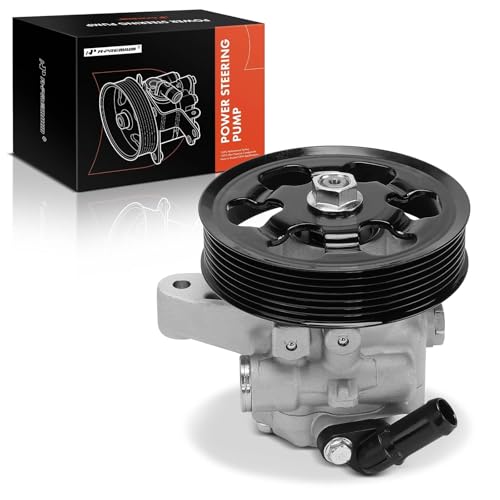
This pump covers selected four-cylinder applications, including Acura RDX, RSX, and TSX as well as Honda Accord, CR-V, and Element; it is distinct from the V6-focused Honda/Acura pump. Its engine sizes run from 2.0L to 2.4L, with RDX specified at 2.3L. The pump includes a pulley, no reservoir, and a seal kit, and the inlet is a hose barb. The maker also advises replacing the intake-hose O-ring to help prevent noise. Because the fit list includes specific model-year gaps, check the precise year and engine rather than assuming every vehicle in a nameplate range fits.
Bottom line: Choose this for a four-cylinder Honda or Acura application that matches the year range.
A-Premium Accord 2.4L Pump with Pulley

For Honda Accord 2.4L models from 2008–2012, this pump is the narrowest year-and-engine match among the options. Its pulley has seven grooves, a specific detail to compare with the belt setup on the vehicle. The maker says Honda power steering fluid is critical and recommends flushing the system and installing a filter before fitting the pump. Those fluid and cleanup requirements distinguish this choice from the other Honda options.
Bottom line: Choose this for a 2008–2012 Accord 2.4L after checking pulley and connection configuration.
How to Choose an A-Premium Power Steering Pump
Start with the vehicle’s exact year, engine, and trim because the same nameplate can use different pumps. Then compare whether the replacement includes a pulley or reservoir and whether its inlet and outlet match the hoses and pressure line on the vehicle. A pump with a pulley is not automatically a match: pulley groove count and alignment must suit the belt drive. A reservoir-included pump also differs from a pump intended to reuse the vehicle’s reservoir. Before ordering, compare the original pump’s reference number and connections with the replacement’s fitment details; verify the complete configuration when the original part number or connection setup is uncertain.
Hydraulic steering pumps operate as part of a system, so noise or heavy steering can also involve fluid condition, hoses, or air in the circuit. A replacement pump alone does not establish that every steering problem will be resolved.
Pulley, Reservoir, and Port Fit
Choose a pump by the components it supplies and the connections it uses, not just by vehicle make. A pulley-equipped pump can still require matching groove count, offset, and diameter to the existing belt system. Reservoir arrangements also matter: an included reservoir is a different configuration from a pump sold without one. For ports, compare both connection style and orientation, since a threaded pressure outlet does not interchange automatically with a bolt-on connection.
The table summarizes the configurations explicitly given for these options; a dash means the specifications do not give that attribute. Use the vehicle’s original part number and physical connections to resolve any uncertain match.
| Configuration | Choose when |
|---|---|
| Pulley, no reservoir | The vehicle application matches and the existing reservoir is reusable |
| Reservoir included | The specified vehicle application calls for that pump arrangement |
| Hose-barb inlet | The existing inlet hose connection matches |
| Threaded or bolt-on outlet | The pressure-line connection type matches the original pump |
Power Steering Pump Installation Mistakes to Avoid
Do not run a hydraulic pump dry: lack of fluid can damage internal components. Use only the fluid specification required for the vehicle, since the Accord pump’s maker specifically calls for Honda power steering fluid. Before installation, inspect hoses and connections for leaks and replace damaged seals; the maker flags the intake-hose O-ring on the Honda/Acura pumps as important for avoiding noise. Flushing the system and fitting a filter are also recommended for the Accord application.
After installation, the system needs proper bleeding to remove trapped air, which can cause foamy fluid, noise, or uneven assist. Avoid holding the steering wheel against full lock; that raises hydraulic pressure and can heat the fluid. If the vehicle’s steering remains noisy or heavy after service, inspect the full hydraulic system rather than assuming the pump is the only cause.
Frequently Asked Questions
How do I know which power steering pump fits my vehicle?
Match the vehicle year, engine, and model to the pump’s application, then confirm its part number and connection layout. A mismatch in outlet style or pulley grooves can prevent proper installation even when the vehicle name matches.
Can I reuse the old power steering reservoir?
A pump specified without a reservoir is intended for a separate reservoir arrangement, while the GM-family option here includes one. Reuse the old reservoir only when the replacement configuration and vehicle setup are compatible and the reservoir is sound.
What fluid should I use in a Honda power steering pump?
Use the fluid specification required for the exact Honda model; the Accord pump’s maker specifically warns that Honda power steering fluid is critical. Substituting another fluid can contribute to noise or pump problems.
Why can a new power steering pump still make noise?
Air in the hydraulic circuit, a leaking hose connection, or a faulty intake-hose O-ring can cause noise after replacement. The maker specifically calls out the O-ring on its Honda/Acura V6 and four-cylinder pumps.
Should I flush the power steering system when replacing a pump?
A system flush removes old fluid and possible contamination before the new pump goes in. The Accord pump’s maker recommends flushing and installing a filter before installation; inspect the hoses and reservoir for debris as part of the job.