
Adhesive Hooks for Concrete Walls: Surface Fit Compared

For rough concrete walls, MintifyCo Concrete Wall Hooks, 4 Pack is the only option here that explicitly names concrete and other uneven surfaces, with a 15-pound capacity. The other options are described for smooth surfaces, so choose one of those only if your mounting spot is smooth rather than porous or textured.
We earn a commission if you buy through links on this page. As an Amazon Associate I earn from qualifying purchases. Products are compared on manufacturer specifications, not hands-on testing.
- Best overall: MintifyCo Concrete Wall Hooks, 4 Pack – Explicitly names rough concrete, stucco, brick, and textured ceilings, with a 15-pound capacity.
- Best for smooth-surface loads: DDMY Clear Adhesive Hooks, 10 Pack – States a maximum 50-pound capacity on smooth surfaces and comes in a 10-pack.
- Best for larger packs: DDMY Clear Adhesive Hooks, 24 Pack – Provides 24 hooks and a 50-pound maximum.
| Product | Best for | Pack size | Maximum capacity | Hook material | Shop |
|---|---|---|---|---|---|
| MintifyCo Concrete Wall Hooks, 4 Pack | Rough surfaces | 4 hooks | 15 lb per hook | Stainless steel | Check Price on Amazon |
| DDMY Clear Adhesive Hooks, 10 Pack | Smooth surfaces | 10 hooks | 50 lb max | Stainless steel and PVC | Check Price on Amazon |
| DDMY Clear Adhesive Hooks, 24 Pack | More hook locations | 24 hooks | 50 lb max | Stainless steel and PVC | Check Price on Amazon |
| DKHDBD Clear Adhesive Hooks, 16 Pack | Mid-size pack | 16 hooks | 33 lb max | Stainless steel and PVC | Check Price on Amazon |
Adhesive Hooks for Concrete Walls Compared
Surface texture is the deciding factor: only one option specifically names rough concrete and similarly uneven surfaces.
MintifyCo Concrete Wall Hooks, 4 Pack
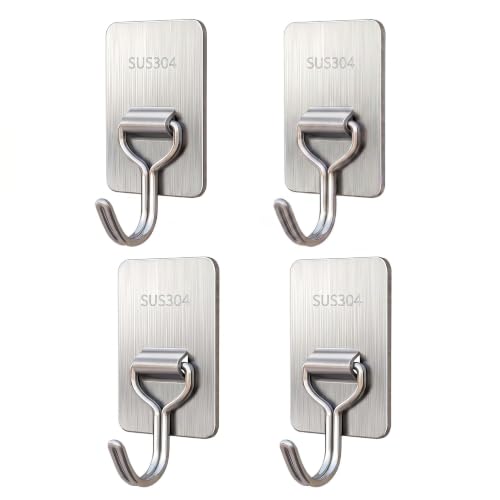
MintifyCo Concrete Wall Hooks, 4 Pack is the only set here whose maker specifically says the adhesive is intended for rough concrete, stucco, brick, and textured ceilings. Each of the four stainless steel hooks has a capacity of 15 pounds, making the set a fit for modest hanging needs where drilling is not wanted. The maker also describes the adhesive as industrial-grade, but porous and uneven walls can make adhesive performance sensitive to surface condition. The 15-pound rating is the limit to consider, so it is not the right choice for a heavier object.
Bottom line: Choose this set when the wall is rough or textured and the load stays within 15 pounds.
DDMY Clear Adhesive Hooks, 10 Pack

DDMY Clear Adhesive Hooks, 10 Pack offers the largest capacity among these options, but its maker limits the 50-pound maximum to smooth surfaces. The ten clear stainless steel and PVC hooks are described for uses such as towels, robes, keys, and clothing, with a rotating hook design. That surface restriction matters on concrete: a smooth, sealed area is different from porous or visibly rough concrete, and the product is not presented specifically for rough masonry. Painted walls also carry a restriction, so check the intended mounting spot before choosing it.
Bottom line: Pick it for a smooth mounting surface and a load within the maximum.
DDMY Clear Adhesive Hooks, 24 Pack

DDMY Clear Adhesive Hooks, 24 Pack supplies 24 hooks, making it the set for distributing smaller hanging tasks across more locations. Its maker describes the hooks as transparent, waterproof, and suitable for tile backsplashes and bath or kitchen accessories; it also gives a 50-pound maximum. Those claims do not establish suitability for rough or porous concrete, unlike a product explicitly described for that surface. The pack is a better match when the wall area is smooth and the number of hook positions matters more than a four-hook set.
Bottom line: Choose it when you need 24 positions on smooth surfaces, not rough concrete.
DKHDBD Clear Adhesive Hooks, 16 Pack
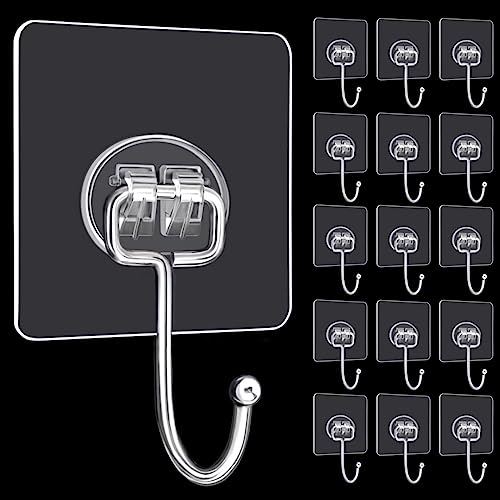
DKHDBD Clear Adhesive Hooks, 16 Pack sits between the 10- and 24-hook sets in pack count and gives a maximum of 33 pounds. Its maker identifies nano acrylic gel pads, stainless steel hooks, and a 2.75-inch adhesive sheet, and describes the hooks for keys, robes, and towels. The product is not specifically presented for concrete, and clear adhesive hooks intended for ordinary wall use should not be assumed to grip rough masonry. The pack is most relevant for smooth mounting areas when 16 hooks are useful and the lower rating is sufficient.
Bottom line: Select it for a smooth wall when a 16-hook pack and 33-pound maximum suit the job.
How to choose adhesive hooks for concrete walls
Match the adhesive to the wall texture before comparing load numbers. Concrete is porous, and an unsealed or rough surface gives an adhesive pad less continuous contact than smooth tile or glass; a hook explicitly described for rough concrete is a better match than one rated only for smooth surfaces. Adhesive hooks are pressure-sensitive: the pad needs full contact and time to bond before it carries weight. For an uncertain wall finish, use a mechanical masonry anchor instead of relying on a smooth-surface hook rating.
Keep a safety margin below the maker’s maximum, especially for objects that swing or get pulled. The 15-pound, 33-pound, and 50-pound figures are not interchangeable guarantees across surfaces; each depends on its own hook and mounting conditions.
Concrete wall texture and adhesive fit
Unpainted concrete, sealed concrete, and stucco are different mounting surfaces. Rough or dusty concrete can shed particles under an adhesive pad, while sealed concrete may have a smoother face; a rough-surface claim is still not a promise for every wall condition. Clean off dust and grease, then let the area dry completely before attaching a hook. Do not place an adhesive pad over loose paint, crumbling mortar, or a damp patch.
Use this decision rule: if the mounting spot is visibly textured or porous, choose a hook whose maker specifically names that surface; if it is smooth and sealed, a smooth-surface product may be considered. If the wall is painted, confirm compatibility first, because adhesive removal can lift weak paint.
Adhesive hook capacity and safe loading
Adhesive capacity is a maximum under the maker’s conditions, not a target for routine use. Loads that bounce, swing, or get tugged create more force than an object hanging still, so keep a generous margin below the printed limit for items such as tools or planters. Do not hang anything breakable or hazardous over a bed, seating area, or walkway where a failed bond could injure someone.
Spread multiple light items across separate hooks rather than concentrating weight on one pad. Avoid using adhesive hooks to suspend people, support climbing, or hold a load whose fall could cause injury. When the item is valuable, heavy, or safety-critical, use a properly sized masonry fastener instead.
Installing and removing adhesive hooks
A clean, dry mounting area is the starting point for an adhesive bond. Remove dust and residue, allow the wall to dry, press the whole pad firmly against the surface, and wait the cure time specified by the maker before loading it; adhesive systems commonly require hours or longer to reach full strength. Temperature and humidity can also affect bonding, so avoid installation on a cold, damp, or freshly painted surface.
Removal can damage paint or a weak surface even when a hook is marketed as damage-free. Ease adhesive away slowly rather than pulling the hook outward, and stop if the paint or wall finish begins to lift. For textured concrete, removal may leave residue in surface pits even when there is no painted layer.
Frequently Asked Questions
Can adhesive hooks stick to rough concrete walls?
Some products are specifically intended for rough concrete, but smooth-surface hooks should not be assumed to bond to porous masonry. Dust, texture, and loose surface material can reduce adhesive contact, so use a hook that explicitly names rough concrete or choose a masonry fastener.
How long should adhesive hooks cure before loading?
Many pressure-sensitive adhesive products need at least several hours and sometimes 24 hours to build their intended bond. Follow the cure interval for the adhesive itself, and do not test it early with a heavy or valuable object.
Can I use adhesive hooks on painted concrete?
Only if the hook maker allows the specific painted surface. Weak or fresh paint can detach with the adhesive, so wait until paint is fully cured and test an inconspicuous spot before hanging anything.
How much weight should an adhesive wall hook hold?
Use the maker’s capacity as an upper limit, not a routine working load. Swinging, tugging, roughness, dust, and moisture can weaken the bond, so leave a margin and use a masonry fastener for heavy or safety-critical items.
Are adhesive hooks safe for hanging planters?
A small, lightweight planter may fit within a hook’s capacity only when the mounting surface is approved and the bond is sound. Water adds weight, and a swinging planter adds force, so avoid overhead placement and use a rated mechanical anchor for heavier pots.