
Adjustable Glasses Seen on TV: 4 Models Compared

PUDOEN Flex Focal Adjustable Glasses is the closest match for adjustable glasses seen on TV, with a dial-adjustable range from 0D to +3.5D. Choose a different option if you need independent eye adjustments or a range that includes minus power.
Adjustable-focus glasses let the wearer change lens power rather than switch between fixed readers. They are not a substitute for a prescription, and changing focus can affect depth perception, so do not use them for driving.
We earn a commission if you buy through links on this page. As an Amazon Associate I earn from qualifying purchases. Products are compared on manufacturer specifications, not hands-on testing.
- Best overall: PUDOEN Flex Focal Adjustable Glasses – Its dial-adjustable range reaches +3.5D for changing near focus.
- Best for minus power: Vi Shift Adjustable Glasses – Each lens adjusts independently from -6.00D to +3.00D.
- Best for compact lenses: SHUNXI Dial Adjustable Readers – The lens height is 38 mm, with a 55 mm width.
- Best for multiple pairs: My Best Buy Power Glasses – The pack is identified as a three-count option.
| Product | Best for | Lens power range | Lens adjustment | Shop |
|---|---|---|---|---|
| PUDOEN Flex Focal Adjustable Glasses | Plus-power readers | 0D to +3.5D | Side dials | Check Price on Amazon |
| Vi Shift Adjustable Glasses | Separate eye controls | -6.00D to +3.00D per lens | Independent side dials | Check Price on Amazon |
| SHUNXI Dial Adjustable Readers | Smaller lens height | +0.50D to 2.5x strength | Adjustable | Check Price on Amazon |
| My Best Buy Power Glasses | Three-count pack | +0.5D to +2.50D | Adjustable | Check Price on Amazon |
Adjustable Glasses Seen on TV
Compare the focus ranges and frame information to find the style that fits your viewing needs.
PUDOEN Flex Focal Adjustable Glasses
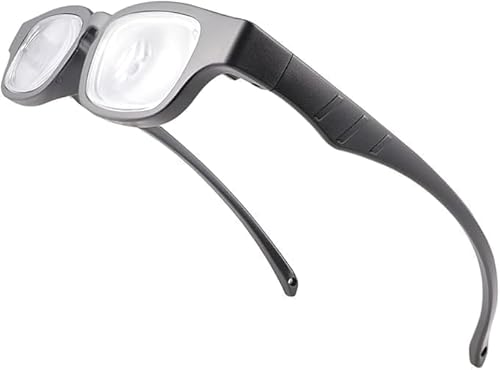
PUDOEN Flex Focal Adjustable Glasses has the largest positive-power range among these single-eye-adjustment designs, reaching +3.5D. Each side has a dial for changing focus, and the black frame is intended for men and women. This option suits someone seeking adjustable near-reading power without a fixed reader strength. The brand says the lenses were updated for improved clarity and durability; that performance claim does not establish whether the glasses match a particular prescription. The range is positive only, so a buyer who needs minus power should choose an option with a range that includes it.
Bottom line: Pick this for adjustable positive reading power up to +3.5D.
Vi Shift Adjustable Glasses

Vi Shift Adjustable Glasses is distinguished by a wide range that includes both minus and plus power, with each lens adjusted independently. The black frame has PC lenses, weighs 91.3 g and comes with a pouch and vision chart. Separate controls can help when the two eyes need different settings, unlike glasses adjusted as a single pair. The product is described for near and distance viewing, but its broad adjustment range does not make it a custom prescription or prove suitability for every vision need. Its weight may matter to buyers who prefer especially lightweight frames.
Bottom line: Choose this when each eye needs its own dial setting.
SHUNXI Dial Adjustable Readers

SHUNXI Dial Adjustable Readers stands out for giving lens measurements: 38 mm high by 55 mm wide, with 140 mm temples. The black frame is polycarbonate, and the product name gives a 0.5–2.5x strength range. Its compact lens height may suit buyers who want measurements to compare with a current pair. The dimensions are useful for frame comparison, but do not guarantee a comfortable fit.
Bottom line: Pick this if lens dimensions are a priority for frame fit.
My Best Buy Power Glasses

My Best Buy Power Glasses is the pack option, identified as a three-count, with a stated +0.5D to +2.50D range. The clear frame and adjustable power are intended for reading small print and computer screens. This choice may suit a household or workspace that wants multiple pairs available. The range is narrower than the +3.5D option, and the product claims that the glasses shift from distance to near; do not rely on adjustable readers for driving or other tasks where clear distance vision and depth judgment are essential. Check the frame dimensions before choosing if fit is important.
Bottom line: Choose this if having multiple adjustable pairs matters most.
How to choose adjustable glasses
Start with the lens-power range and whether each eye adjusts separately. Diopters measure lens power: plus power is commonly used for near reading, while minus power corrects nearsightedness. A range that spans both signs differs from a readers-only range, but range alone cannot match a complete prescription. Adjustable lenses change focus mechanically; they do not automatically measure your vision or set an individualized prescription.
Use the intended task to narrow choices. A person who needs different focus in each eye should favor independent controls; a reader who only needs plus power can compare the maximum positive setting. Do not judge fit by power alone: frame width, lens height, bridge shape and temple length affect whether glasses sit comfortably and align with the eyes. Adjustable glasses can distort distance judgment, so reserve them for stationary close tasks, not driving.
What diopter range means for reading
Diopter range describes how much lens power can be adjusted, not a guaranteed reading distance. For a rough optical guide, 1 diopter corresponds to a focal distance of 1 meter, while 2 diopters corresponds to about 20 inches; actual comfortable reading distance depends on the wearer’s eyes and task. The adjustable ranges are not interchangeable with an eye exam or prescription.
Use this table to compare the styles by the need that changes the choice. The range in the specifications is the relevant starting point, but a professional prescription may call for values or corrections that these glasses do not provide.
| Need | Compare | Decision point |
|---|---|---|
| Plus reading power | Positive-only range | Check the maximum plus value |
| Different settings by eye | Independent controls | Each lens must adjust separately |
| Near and distance needs | Range spanning minus and plus | Confirm that the needed power falls within range |
Frame fit and safe use
Frame measurements help screen for fit, but lens width alone is not the same as total frame width. Compare lens width, lens height, bridge width and temple length with glasses that already fit; even a few millimeters can change how a frame rests. A 38 mm lens height is a vertical measurement, not a measure of the whole frame.
Adjustable glasses are not suitable for every vision task. Variable focus may make objects appear to shift in size or distance, so do not wear them while driving, cycling in traffic or operating machinery. If vision is suddenly blurry, one eye differs substantially from the other, or headaches persist, arrange an eye examination rather than trying to solve the issue by turning the dials.
Frequently Asked Questions
Can adjustable glasses replace prescription glasses?
No, adjustable glasses should not be treated as a full prescription. They change focus power, but do not necessarily correct astigmatism or other prescription needs; use an eye exam to determine what correction is appropriate.
What does a diopter range tell me?
A diopter measures lens power, with focal distance roughly equal to 1 divided by the diopter value in meters. For example, 2D corresponds to about 20 inches, though comfortable working distance varies by person.
Can adjustable glasses be worn while driving?
No, do not drive in adjustable reading glasses. A focus change can alter distance judgment, and near-reading power is not designed to provide reliable road vision.
Why would each eye need separate adjustment?
Independent adjustment lets each lens use a different setting. That can matter when the two eyes need different powers, but it does not make the glasses a custom prescription.
How should I compare adjustable glasses frame sizes?
Compare lens width, lens height, bridge width and temple length with a pair that fits you. A 38 mm lens height is only the lens’s vertical measurement, not the complete frame height.