
Adult Floaties for Non-Swimmers: 5 Options Compared

For adult floaties for non-swimmers, Jellyarch Inflatable Arm Bands is the closest match because it is a pair of inflatable arm bands sized about 7 by 6.5 inches. Choose a waist belt instead for supported water exercise; none of these aids should be treated as a life jacket or used without appropriate supervision.
We earn a commission if you buy through links on this page. As an Amazon Associate I earn from qualifying purchases. Products are compared on manufacturer specifications, not hands-on testing.
- Best overall: Jellyarch Inflatable Arm Bands – A pair of inflatable arm bands is the most direct match for adult floaties.
- Best for water exercise: Three-Section Adult Swim Belt – Its three-section waist design is intended for deep-water exercise and aqua jogging.
- Best for adjustable inflation: Inflatable Swim Aid, Medium – The inflatable aid has a quick nozzle so users can set its air saturation.
| Product | Best for | Aid type | Material | Size | Shop |
|---|---|---|---|---|---|
| Jellyarch Inflatable Arm Bands | Arm support | Inflatable arm bands | PVC | 7 x 6.5 in. | Check Price on Amazon |
| Three-Section Adult Swim Belt | Deep-water exercise | Waist flotation belt | EPE, nylon webbing, diving fabric | Large | Check Price on Amazon |
| Fstcrt Three-Section Swim Belt, Black and Red | Pool workouts | Waist flotation belt | Diving fabric, EPE lining | Large | Check Price on Amazon |
| Fstcrt Swim Belt, Large | Water aerobics | Waist flotation belt | Diving fabric, EPE lining | Large | Check Price on Amazon |
| Inflatable Swim Aid, Medium | Adjustable inflation | Inflatable swim aid | — | Medium; ages 12+ | Check Price on Amazon |
Adult Floaties and Swim Belts
Choose by where you want support: around the arms for swim practice or at the waist for water exercise.
Jellyarch Inflatable Arm Bands

Unlike the waist belts here, these are a pair of inflatable arm bands for support during swim practice. Each band measures about 7 by 6.5 inches and is made of PVC; the blue-and-white striped design is intended to be visible in the water. The maker describes the fit as suitable for teens and adults as well as children, but sizing is not adjustable in the dimensions. These are swim-training aids, not life jackets, so they are not a substitute for close supervision or properly fitted safety equipment.
Bottom line: Choose these if you want arm-worn flotation for supervised swim practice.
Three-Section Adult Swim Belt

For deep-water exercise rather than arm flotation, this large waist belt has a three-section design with EPE, nylon webbing, and diving fabric. The maker says it is intended for aqua jogging, water aerobics, and physical-therapy exercises, with a hidden pocket for small items. Its waist placement leaves the arms free, but that makes it a different choice from arm bands for someone seeking support while learning basic swimming. It is a buoyancy aid, not certified safety gear; confirm the waist fit before ordering.
Bottom line: Pick this for supervised water workouts where waist support is preferable.
Fstcrt Three-Section Swim Belt, Black and Red

This large black-and-red belt is another waist-worn option, with a three-section shape and removable EPE lining. The maker says its diving fabric is designed for water aerobics, walking, jogging, and swim training. Compared with the blue-and-black belt, the fields identify its color but do not provide a distinct fit or use advantage, so choose it based on the waist-belt format and color preference. It is not a replacement for a life jacket, and the fit should be checked before use.
Bottom line: Choose this if a three-section waist belt suits your pool exercise.
Fstcrt Swim Belt, Large
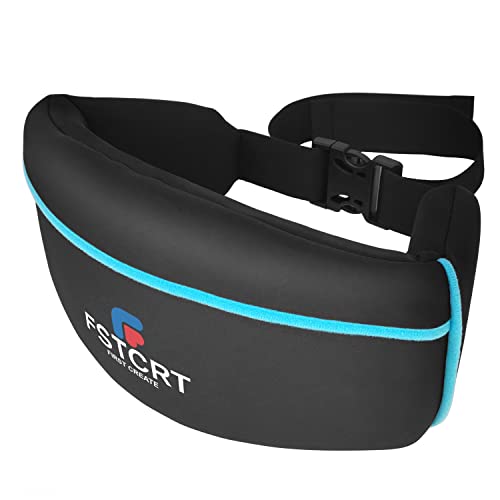
This black large belt is the only option here with a 27.8-inch length and 0.55-pound weight. The maker describes a soft diving-fabric outer layer, removable EPE lining, three-section construction, and a hidden zipper pocket. It is aimed at water aerobics, rehabilitation exercises, walking, and jogging rather than arm-supported swim practice. The width is 25 inches, so do not assume those dimensions correspond to waist circumference; confirm the belt’s fit and adjustment range before ordering.
Bottom line: Pick this if you want a waist belt and its dimensions fit your needs.
Inflatable Swim Aid, Medium
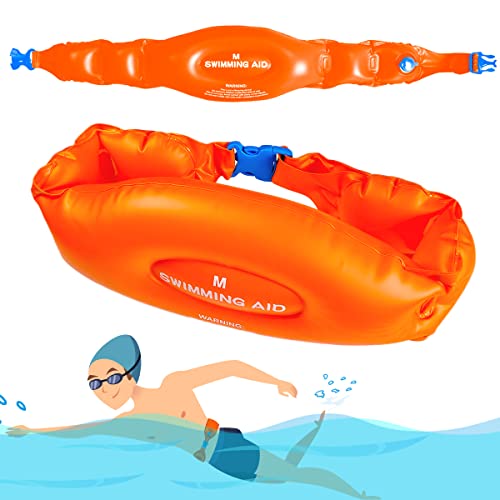
Unlike the fixed-size arm bands and structured waist belts, this orange inflatable aid uses a quick inflation nozzle so the user can adjust how full it is. The maker recommends two aids, one at the waist and one at the chest, for adults and children learning to swim; swimmers may use one at the waist or chest. Inflation is not a substitute for supervision, and this aid is not a life jacket.
Bottom line: Consider this if you want an inflatable aid with adjustable air saturation.
How to Choose Adult Floaties
Choose the placement that matches the activity: arm bands provide arm-worn support, while a swim belt sits at the waist and is commonly used for water exercise. Adult arm bands here are about 7 by 6.5 inches; waist belts are sold by size, so confirm that a large belt fits your waist rather than relying on the word “adult.” For someone learning to swim, prioritize a certified life jacket when flotation is needed for safety; inflatable toys and exercise belts are not equivalent. For pool exercise with arms free, start with a waist belt; for supervised practice that specifically calls for arm support, choose arm bands.
Arm Bands Versus Waist Belts
Arm bands and waist belts place buoyancy in different areas and serve different purposes. Inflatable arm bands are worn on the upper arms and can be used as a swim-training aid; waist belts are designed to support water aerobics, aqua jogging, or walking while leaving the arms free. Neither type is a US Coast Guard-approved personal flotation device unless the product carries the required approval marking. Check the label and intended use rather than assuming that “float” or “buoyancy” means safety-rated. If a user cannot swim, use direct adult supervision and choose appropriate certified safety equipment for the setting.
| Need | Format to consider | Key check |
|---|---|---|
| Arm-worn swim practice | Inflatable arm bands | Band dimensions and snug fit |
| Water aerobics or aqua jogging | Waist flotation belt | Waist fit and adjustment |
| Safety flotation | Approved life jacket | Approval marking and fit |
Fit and Safety for Non-Swimmers
Fit matters because a loose aid can shift, while one that is too tight can be uncomfortable or difficult to wear. The arm bands in this group are about 7 by 6.5 inches, while belt sizes are given as large or medium rather than as a waist measurement; check the manufacturer’s fit guidance before choosing. A personal flotation device should be selected for the wearer’s weight range and fastened as its label requires. Non-swimmers need active supervision within arm’s reach in and around water; flotation toys and exercise belts do not remove drowning risk.
Inflation and Care Basics
Inflatable aids need a secure valve and an intact chamber before each use; do not use an aid that leaks or will not stay inflated. Inflate only as directed by its maker, since overinflation can strain seams and valves, especially as air warms. After pool or beach use, rinse gear with fresh water and let it dry fully before storage to limit residue and mildew. Fabric-covered belts also need their lining and pocket checked for trapped water or debris. Keep all flotation equipment away from sharp edges and store it out of direct heat.
Frequently Asked Questions
Are inflatable arm bands safe for adults who cannot swim?
Inflatable arm bands are swim aids, not life jackets, and do not make a non-swimmer safe without supervision. Use active adult supervision within arm’s reach and choose a properly fitted, approved life jacket when safety flotation is needed.
Should a non-swimmer use arm bands or a swim belt?
Choose by the activity: arm bands are worn on the upper arms, while a waist belt is intended for supported water exercise such as aqua jogging. Neither type replaces a certified life jacket or close supervision.
How should adult arm floaties fit?
Bands should fit snugly without slipping off or restricting circulation. These arm bands measure about 7 by 6.5 inches, so compare those dimensions with the wearer’s arm and follow the maker’s sizing guidance.
Can adults use a waist belt to learn swimming?
A waist belt can provide buoyancy during supervised water exercise or training, but it is not a substitute for a swim instructor or approved life jacket. Confirm the belt fits securely and keep a non-swimmer under close supervision.
How often should inflatable swim aids be checked?
Check the chambers, seams, and valves before every use for leaks or damage. Replace an aid that will not remain inflated, and rinse and dry it after pool or beach use before storage.