
Air Conditioner Coil Brush: 5 Tools Compared by Design

For a versatile HVAC coil brush, XCEL Dual-Sided Coil Brush combines stainless-steel pins for packed debris with plastic bristles for loose dust. Choose another tool if you need a multi-tool kit or want a brush specifically described for narrow coil channels.
Coil brushes remove dust and debris from the thin metal fins that transfer heat; those fins bend easily, so use light pressure and work in the direction of the fins.
We earn a commission if you buy through links on this page. As an Amazon Associate I earn from qualifying purchases. Products are compared on manufacturer specifications, not hands-on testing.
- Best overall: XCEL Dual-Sided Coil Brush – Its double-sided design pairs stainless-steel pins with plastic bristles for two types of coil debris.
- Best for tight coil spaces: FINXCEL Angled HVAC Coil Brush – Angled stainless-steel pins and a slim profile are intended for narrow coil channels.
- Best for a multi-tool kit: Six-Piece AC Fin Cleaning Kit – The six-piece kit includes several brushes and a fin straightener.
| Product | Best for | Pieces | Working material | Size | Shop |
|---|---|---|---|---|---|
| XCEL Dual-Sided Coil Brush | Mixed coil debris | 1 brush | Stainless steel pins, plastic bristles | Medium | Check Price on Amazon |
| FINXCEL Angled HVAC Coil Brush | Narrow coil channels | 1 brush | Stainless-steel pins | Large | Check Price on Amazon |
| Boao Two-Piece Metal Fin Brushes | Two-tool cleaning | 2 brushes | Metal | 7.1 in long | Check Price on Amazon |
| Four-Piece AC Coil Brush Set | Flexible brush shapes | 4 brushes | Brushes | 7.3 in long | Check Price on Amazon |
| Six-Piece AC Fin Cleaning Kit | Multiple cleaning tasks | 6 tools | Stainless steel, plastic | — | Check Price on Amazon |
Air Conditioner Coil Brushes
Compare the brush design and included tools against the coil shape and the debris you need to remove.
XCEL Dual-Sided Coil Brush

The dual-sided design sets this brush apart: stainless-steel pins loosen compacted debris between fins, while plastic bristles sweep away loose dust. It is described for both evaporator and condenser coils, making it a practical pick when you want one tool for two cleaning stages. The medium size suits routine access better than a dedicated tight-channel brush. Its limitation is that the specifications do not establish a long reach or compatibility with a pole, so buyers facing deep, narrow coils should choose a tool with those features explicitly described.
Bottom line: Choose this if you want pin and bristle surfaces in one coil brush.
FINXCEL Angled HVAC Coil Brush

The angled pin head and slim profile distinguish this brush from flat and double-sided options. FINXCEL says its 135-degree angled stainless-steel pins reach between fins and are intended for packed dust, lint, and debris in A- and N-shaped evaporator coils, as well as condensers and mini splits. Extension-pole compatibility may help with reach. The specifications do not give a pole length or confirm fit for a particular coil, so buyers should match the brush profile to the access opening before choosing it.
Bottom line: Choose this for narrow coil channels where an angled pin head helps access.
Boao Two-Piece Metal Fin Brushes
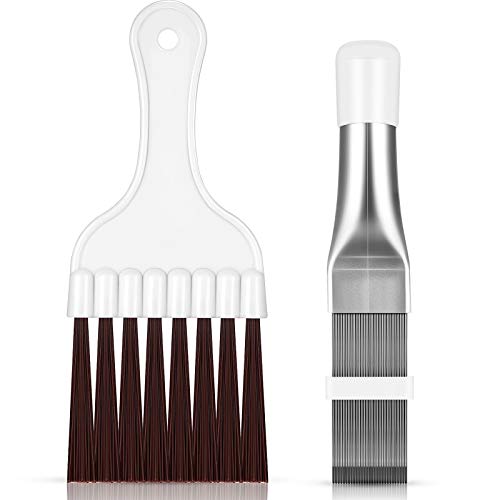
The two-piece metal set is the distinctive choice for buyers who want a pair of brushes rather than a broad assortment. The maker describes the bristles as suited to caked-on debris on condenser and evaporator radiators, and the set also has a movable buckle to adjust tightness when straightening fins. That fin-straightening use is limited to fins that are not severely damaged; the brush head is not detachable. Choose another design if soft bristles or a named angled head is a priority.
Bottom line: Choose this when you want two metal brushes and an adjustable fin-straightening tool.
Four-Piece AC Coil Brush Set

The four-piece set differs by offering flexible brushes for hard-to-reach spaces behind air conditioners and under refrigerators. Its product features describe use on condenser and evaporator coils and say the brushes can be rinsed after use. This shape variety may suit routine coil and refrigerator cleaning where access is awkward.
Bottom line: Choose this set if flexible brushes for awkward access matter most.
Six-Piece AC Fin Cleaning Kit

The six-piece kit covers more than coil brushing: it includes a window-blind duster, stainless-steel fin cleaner, condenser brush, double-sided brush, foldable brush, and straightener comb. That assortment is useful if one purchase needs to handle vents, narrow gaps, and coil fins. The dual-sided brush pairs a soft plastic side for larger debris with a coil-cleaning side.
Bottom line: Choose this kit for several household and coil-cleaning tasks in one set.
How to choose an air conditioner coil brush
Match the brush surface to the debris: bristles sweep loose dust, while narrow pins can work between fins to loosen packed lint. Aluminum fins are thin and bendable, so use a light touch; a bent fin can restrict airflow. For routine maintenance, a soft brush or vacuum with a soft-bristle attachment is generally gentler than scraping. If debris is oily or stuck, brushing alone may not clear it; HVAC coil cleaners are made for that job, but use only products compatible with the coil and equipment. Pick a slim or angled head when the coil is recessed, and a double-sided tool when you need both a pin and bristle surface.
Brush access and fin safety
Coil shape and clearance determine whether a brush can reach the dirty surface without forcing its head through the fins. A- and N-shaped evaporator coils have angled faces; narrow slots can favor slim or angled heads, while an open condenser face permits a broader sweep. A useful decision rule is to choose an angled or flexible head when a straight brush cannot enter the available opening without bending fins. Turn off power to the air conditioner at its disconnect or breaker before cleaning, and never reach near a running fan. Brush in the direction of fin rows with minimal pressure; fin combs should match fin spacing rather than be pushed across rows.
Coil brush types compared
Brush construction tells you what kind of cleaning each tool is intended to do. Use this table to narrow the tool type to the task before considering set size.
| Tool type | Useful for | Care point |
|---|---|---|
| Soft bristles | Loose dust and lint | Keep pressure light |
| Metal pins | Debris between fins | Work with fin rows, not across them |
| Fin comb | Straightening bent fins | Match the comb to fin spacing |
| Flexible or angled head | Recessed or tight channels | Do not force it through a narrow gap |
Fin combs straighten fins; they are not substitutes for a brush when the aim is to sweep away dust. Avoid using a stiff metal tool on a coil face if you cannot keep it aligned with the fins.
When to clean air conditioner coils
Outdoor condenser coils commonly need seasonal inspection, especially after pollen, leaves, or grass clippings accumulate; indoor evaporator coils are generally checked during annual HVAC maintenance. More frequent cleaning may be needed where cottonwood, construction dust, or heavy landscaping debris collects. Before brushing an outdoor unit, shut off power and clear loose leaves around the cabinet; do not bend fins with a hose nozzle. Indoor evaporator coils can be difficult to access and may involve electrical components or condensate drainage, so stop if reaching the coil requires dismantling the air handler. A brush is for surface debris, not a fix for restricted airflow caused by a dirty filter, blocked return, or mechanical fault.
Frequently Asked Questions
Can I brush air conditioner fins without bending them?
Yes, use a soft touch and move along the fin rows rather than across them. Thin aluminum fins bend easily, so stop if the brush catches or pushes fins sideways.
Should I clean the coil with the unit running?
No, turn off power at the disconnect or breaker before working near an air conditioner coil. A running fan and nearby electrical components make brushing unsafe.
Do metal pins or bristles work better on coils?
Bristles suit loose dust, while narrow pins can loosen debris lodged between fins. Use the least stiff surface that can do the job, since hard pressure can damage fins.
Can a fin comb clean dust from a coil?
A fin comb is intended to straighten bent fins, not replace a brush for dust removal. Match comb spacing to the coil’s fin spacing and draw it parallel to the rows.
How often should air conditioner coils be cleaned?
Inspect outdoor condenser coils at least once each cooling season and clean when debris visibly collects. Pollen, leaves, and nearby construction dust can make more frequent checks useful.