
Amino Acids for Women: 5 Options Compared by Use

For women seeking amino acids around workouts, Optimum Nutrition Amino Energy Plus Focus combines 5 g of amino acids with 100 mg of caffeine per serving; choose 21st Century Daily Amino Acid Tablets instead for a daily tablet blend without a caffeine amount.
Amino acids are protein building blocks, and these options range from daily tablets to caffeinated workout powders. Check the serving directions and caffeine amount before choosing a product for regular use.
We earn a commission if you buy through links on this page. As an Amazon Associate I earn from qualifying purchases. Products are compared on manufacturer specifications, not hands-on testing.
- Best overall: Optimum Nutrition Amino Energy Plus Focus – Provides 5 g of amino acids and 100 mg caffeine per serving, plus electrolytes.
- Best for tea-sourced caffeine: AminoLean Pre Workout Powder – Combines 5 g of vegan BCAAs and EAAs with 125 mg caffeine from green tea and matcha.
- Best for daily tablets: 21st Century Daily Amino Acid Tablets – A tablet blend includes several named amino acids and calcium.
| Product | Best for | Format and count | Amino acids per serving | Caffeine per serving | Shop |
|---|---|---|---|---|---|
| Optimum Nutrition Amino Energy Plus Focus | Workout energy | Powder, 9.5 oz | 5 g | 100 mg | Check Price on Amazon |
| AminoLean Pre Workout Powder | Tea-sourced caffeine | Powder, 8.25 oz | 5 g | 125 mg | Check Price on Amazon |
| BodyHealth PerfectAmino, 150 Tablets | Vegan tablets | Tablets, 150 count | — | — | Check Price on Amazon |
| Double Wood EAA Capsules, 225 Count | EAA capsules | Capsules, 225 count | 1 g | — | Check Price on Amazon |
| 21st Century Daily Amino Acid Tablets | Daily tablet blend | Tablets, 120 count | — | — | Check Price on Amazon |
Amino acids for women by format and use
Compare the serving format and stated amino acid and caffeine amounts to find an option that fits your routine.
Optimum Nutrition Amino Energy Plus Focus

For a workout powder that pairs amino acids with caffeine and electrolytes, Optimum Nutrition Amino Energy Plus Focus supplies 5 g of amino acids, 100 mg caffeine, and a 440 mg electrolyte blend per serving. Its amino blend includes taurine, glutamine, arginine, and beta-alanine; the formula has 0 g sugar and 5 calories per serving. The watermelon flavor and powder format suit people who prefer a drink over tablets or capsules. Brand says the caffeine comes from green tea and coffee bean sources, and the product is banned-substance tested. Its caffeine makes it a less suitable pick for someone avoiding stimulants.
Bottom line: Choose this if you want a caffeinated workout powder with amino acids and electrolytes.
AminoLean Pre Workout Powder

For a powder with a higher stated caffeine amount than Optimum Nutrition Amino Energy Plus Focus, AminoLean Pre Workout Powder combines 125 mg caffeine from green tea and matcha with 5 g of vegan BCAAs and EAAs. The product is positioned for women and men and described as sugar-free. Its blend of essential amino acids goes beyond BCAAs alone, which are only three of the nine essential amino acids. This suits someone who wants a tea-sourced caffeinated drink and a broader amino acid blend. The 125 mg caffeine per serving may not fit a caffeine-free routine or late-day use.
Bottom line: Pick this if you want a tea-sourced caffeinated powder with BCAAs and EAAs.
BodyHealth PerfectAmino, 150 Tablets

For a tablet option with a vegan coating, BodyHealth PerfectAmino, 150 Tablets provides 150 tablets and names amino acids including lysine, tryptophan, leucine, and methionine. Brand says five tablets equal roughly 30 g of whey protein, while the product has almost no calories; that comparison is a maker claim, not a serving amount of amino acids. The tablets are described as free from gluten, soy, wheat, and several other ingredients, and the brand says they will not break a fast. This suits buyers who prefer tablets to a caffeinated powder, but the five-tablet serving may be inconvenient.
Bottom line: Choose this if you prefer vegan-coated tablets and do not want a caffeinated powder.
Double Wood EAA Capsules, 225 Count

For capsules with an amount per serving, Double Wood EAA Capsules, 225 Count provides 1 g of free-form essential amino acids, including all nine essential amino acids and all three BCAAs. The maker positions the capsules for use before, during, or after training, and also describes pairing EAAs with collagen for a recovery-focused routine. A capsule format avoids mixing a powder, while the serving’s 1 g amount is useful for comparing it with the 5 g amounts in Optimum Nutrition Amino Energy Plus Focus and AminoLean Pre Workout Powder. This option may not suit someone seeking a larger stated amino acid amount per serving.
Bottom line: Pick this if you want capsules and a 1 g serving of all nine EAAs.
21st Century Daily Amino Acid Tablets
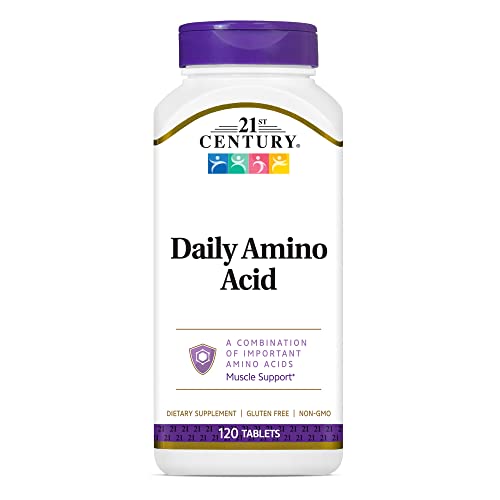
For a daily tablet blend rather than a workout drink, 21st Century Daily Amino Acid Tablets provides 120 tablets and names histidine, isoleucine, leucine, lysine, methionine, cysteine, phenylalanine, threonine, tyrosine, and valine, along with calcium. The maker describes the tablets as non-GMO and free from gluten, added sugar, yeast, preservatives, artificial flavors, and colors. This variety suits someone looking for a broad named-ingredient blend in tablet form. The specifications do not give an amino acid amount per serving, so it is harder to compare its quantity directly with powders or the capsule option.
Bottom line: Choose this if you want a daily tablet blend with several named amino acids.
How to choose amino acids for women
Start with your goal and the serving amount, then decide whether caffeine belongs in the routine. Amino acids are protein building blocks; nine are essential because the body cannot make them, so they must come from food or supplements. BCAAs—leucine, isoleucine, and valine—are three of those nine, not a complete set by themselves. A measurable comparison rule is to choose a product with an amino acid amount if comparing quantities matters: the powders here state 5 g per serving, while the capsule option states 1 g. A product’s named ingredients alone do not tell you the amount. People who avoid stimulants should choose a caffeine-free option rather than either powder listing a caffeine amount.
Powders, capsules, and tablets compared
Powders combine a drink format with the caffeine amounts in these examples, while capsules and tablets offer a solid serving format. Powder can be mixed into a drink; capsules and tablets require swallowing the serving as directed on the container. The table compares what the specifications state, not a ranking of quality. Use it to narrow the format and stimulant profile before checking each serving direction.
| Need | Format to consider | Decision point |
|---|---|---|
| Amino acids with caffeine | Powder | Compare 100 mg and 125 mg caffeine per serving |
| Stated EAA amount without listed caffeine | Capsules | 1 g per serving |
| Daily tablet blend | Tablets | Compare count and named ingredients |
How to account for caffeine
Caffeine adds a stimulant consideration that amino acids alone do not. The two powders here provide 100 mg and 125 mg per serving, so count other caffeine sources in the same day before using either. For most healthy adults, the FDA cites 400 mg per day as an amount not generally associated with negative effects, but sensitivity and health circumstances vary; that figure is not a target or a guarantee of safety. Pregnant adults should ask a healthcare professional about caffeine limits, and anyone advised to limit caffeine should choose accordingly. Avoid taking a caffeinated serving close to bedtime if it interferes with sleep.
How amino acid supplements fit with food
Protein foods supply amino acids, including the essential amino acids the body cannot make. The adult Recommended Dietary Allowance for protein is 0.8 g per kilogram of body weight per day; individual needs can differ with age, activity, and health status. That standard is for total protein, not a target for supplement servings. A practical decision rule is to check your usual food intake first and compare a supplement’s amount with your specific goal, rather than assuming a larger capsule count means more amino acids. People with a medical condition, who take medication, or who are pregnant or breastfeeding should discuss supplement use with a healthcare professional.
Frequently Asked Questions
What are essential amino acids in supplements?
Essential amino acids are the nine amino acids the body cannot make, so they must come from food or supplements. BCAAs—leucine, isoleucine, and valine—are three of the nine.
How much protein do adults generally need daily?
The adult Recommended Dietary Allowance is 0.8 g of protein per kilogram of body weight per day. That amount refers to total protein from food and supplements, not to a standalone amino acid dose.
How much caffeine is in these workout powders?
The two workout powders state 100 mg and 125 mg of caffeine per serving. Include coffee, tea, and other caffeine sources when considering total daily intake.
Can amino acid tablets replace protein foods?
Amino acid tablets are not interchangeable with a balanced diet. Protein foods provide protein along with other nutrients, and the adult protein RDA is 0.8 g per kilogram of body weight per day.
When should I take an amino acid supplement?
The capsule maker positions its product for use before, during, or after training, but the specifications do not establish a universally best timing. Follow the serving directions and account for caffeine if choosing a caffeinated powder.