
Anchor Mates for Boats: 5 Anchor Systems Compared

For boaters seeking an anchor-handling system, the Attwood Anchor Lift System suits manual line handling, while Trac Outdoors Deckboat 40 AutoDeploy-G3 is the named electric option with a 40-pound maximum anchor capacity. Choose an electric winch instead if you want powered raising and lowering; check that its mounting arrangement and anchor capacity suit your boat and anchor.
We earn a commission if you buy through links on this page. As an Amazon Associate I earn from qualifying purchases. Products are compared on manufacturer specifications, not hands-on testing.
- Best overall: Attwood Anchor Lift System – A manual bow- or stern-corner hoist handles up to 100 feet of 3/16-inch anchor line.
- Best for a 40-pound anchor: Trac Outdoors Deckboat 40 AutoDeploy-G3 – The electric winch supports anchors up to 40 pounds and includes 100 feet of rope.
- Best for a lighter anchor: 25-Pound 12V Electric Anchor Winch – The electric system supports anchors up to 25 pounds and includes a wireless remote.
| Product | Best for | Operation | Anchor capacity | Rope or line | Shop |
|---|---|---|---|---|---|
| Attwood Anchor Lift System | Manual line handling | Manual hoist | — | 100 ft; 3/16 in | Check Price on Amazon |
| Trac Outdoors Deckboat 40 AutoDeploy-G3 | Powered 40-pound anchors | Electric; wired switch and remote | 40 lb | 100 ft; 3/16 in | Check Price on Amazon |
| Minn Kota Deckhand DH-40 | Controlled drifting | Electric; base switch | 40 lb | 100 ft; 800-lb-test nylon | Check Price on Amazon |
| 35-Pound 12V Electric Anchor Winch | Fast rope movement | Electric; remote | 35 lb | 100 ft; braided | Check Price on Amazon |
| 25-Pound 12V Electric Anchor Winch | Lighter anchors | Electric; wired switch and wireless remote | 25 lb | — | Check Price on Amazon |
Anchor Mates for Boats Compared
Compare the manual hoist and electric winches by anchor load, operation and included line.
Attwood Anchor Lift System
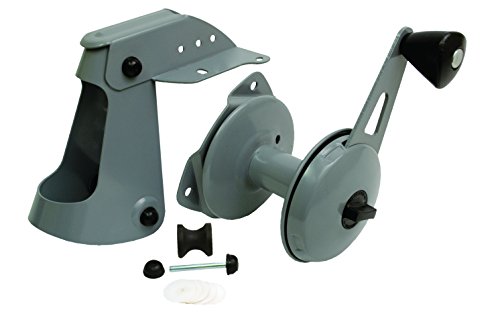
Unlike the powered winches here, this system uses a steel hoist and nylon rollers to help guide anchor line by hand. Its powder-coated steel components mount at a bow or stern corner on many fishing, pontoon and recreational boats, and it accommodates up to 100 feet of 3/16-inch line. Choose it if you want a straightforward line-handling setup without an electric motor. The limitation is that it does not raise or lower the anchor automatically, so boaters seeking push-button operation should choose an electric system instead.
Bottom line: Pick this for manually handling anchor line at a bow or stern corner.
Trac Outdoors Deckboat 40 AutoDeploy-G3

Unlike the manual hoist, this electric winch raises and lowers an anchor using a 12-volt DC motor, with a sealed UP/DOWN switch and wireless remote. It includes 100 feet of 3/16-inch braided rope, a roller, circuit breaker, battery wire and mounting hardware; the anchor itself is not included. The maker says its all-steel gear motor uses less battery power than other brands. Its 40-pound maximum capacity suits buyers seeking powered operation, but the 13-pound unit and separate installation components may not suit boats where mounting space or wiring is constrained.
Bottom line: Choose this for powered operation with an anchor up to 40 pounds.
Minn Kota Deckhand DH-40

The Minn Kota stands apart from the other powered choices with an anti-drag system designed to sense the bottom and allow controlled drifting at a desired depth. A button raises or lowers an anchor up to 40 pounds, and the winch comes pre-spooled with 100 feet of 800-pound-test nylon rope. Its universal davit can mount at the base or remotely, and the anchor stows horizontally. The control is integrated into the base, rather than supplied as a wireless remote, so choose another option if remote operation is important.
Bottom line: Pick this for its anti-drag feature and flexible davit mounting.
35-Pound 12V Electric Anchor Winch

This electric winch is the only option here with rope movement speeds: up to 70 feet per minute lowering and 65 feet per minute retrieving. It has a 12-volt DC motor, a 35-pound maximum anchor capacity and 100 feet of braided rope. The maker describes its materials as ABS, steel, polypropylene and 316 stainless steel, with a protective coating. The capacity is lower than the 40-pound systems, so it is a poorer fit if the selected anchor exceeds 35 pounds; verify your anchor weight before choosing.
Bottom line: Choose this when a 35-pound capacity and stated line speeds fit your needs.
25-Pound 12V Electric Anchor Winch

This is the lightest-capacity powered choice in the group, supporting anchors up to 25 pounds. Its 12-volt DC motor, separate roller davit and wireless remote provide powered raising and lowering; a sealed switch and anti-reverse clutch are also included. The maker says the system lowers anchors smoothly and quietly. Its automatic-reset circuit breaker continues protection until an overcurrent issue is corrected. The lower capacity limits its use compared with the 35- and 40-pound models, so it only suits buyers whose anchor weighs no more than 25 pounds.
Bottom line: Pick this for powered handling when your anchor is 25 pounds or lighter.
How to choose an anchor mate for your boat
Choose first between manual line handling and powered raising and lowering; a hoist guides rope, while an electric winch does the lifting. Next, match the device’s anchor capacity to the anchor’s actual weight: a 40-pound rating is a limit, not a recommendation to use a 40-pound anchor on every boat. Leave room for the anchor and rode to be compatible with your boat and conditions. For electric systems, compare included controls, roller or davit arrangements, rope length, and electrical components. The 12-volt models here have capacities from 25 to 40 pounds. A system’s capacity alone does not establish that an anchor is suitable for a boat; anchor selection also depends on boat size, bottom type and expected conditions.
Anchor capacity, rode and scope
Anchor weight and rode length answer different questions: capacity is the load limit for the winch, while rode is the line connecting the boat to the anchor. A common starting point for anchor rode is a scope of 5:1, meaning 5 feet of rode for each foot of vertical distance from the bow roller to the bottom; rough conditions may call for more. For example, 10 feet of vertical distance suggests at least 50 feet of rode at 5:1. Count chain and rope together when calculating scope, and account for tide and water depth. Do not assume a winch’s included 100 feet is automatically enough for every anchoring depth or condition.
Mounting and electrical fit
Mounting style determines whether an anchor system can work with the boat’s layout. A corner-mounted hoist may suit a bow or stern corner, while electric winches may use a roller, davit or base mount; confirm the intended location has a clear path for the anchor and line. Powered units also need compatible 12-volt supply wiring and appropriate circuit protection. Keep electrical connections protected from water and corrosion, and route wiring away from moving parts. Before installing, check the boat’s mounting surface, available space, anchor stowage path and battery arrangement. A remote control is useful only if the installation preserves a reliable way to operate the unit at its controls as well.
Safe anchoring and common mistakes
Use an anchor winch to handle the anchor, not to hold the boat against wind or current; the rode and anchor system should take the load. Keep hands, clothing and loose rope clear of rollers and moving machinery while deploying or retrieving. Lower the anchor under control rather than dropping it, and make sure the rode pays out without tangles. A common mistake is selecting a winch by motor capacity while ignoring anchor weight, rope compatibility or the mounting route. Another is assuming that a line length guarantees adequate scope: calculate the required rode for the anchoring depth and conditions. Inspect rope, wiring and hardware regularly for wear or corrosion before relying on the system.
Frequently Asked Questions
How much anchor rode should a boat carry?
A common starting point is 5 feet of rode per foot of vertical distance from the bow roller to the bottom. Ten feet of vertical distance therefore calls for at least 50 feet, with more scope often useful in rough conditions.
Can an electric anchor winch hold a boat in place?
An anchor winch is for deploying and retrieving the anchor, not for carrying the boat’s holding load. Secure the rode to an appropriate cleat or holding point after setting the anchor.
What does 800-pound-test anchor rope mean?
The test figure describes the rope’s breaking-strength rating, not a recommended anchor weight or safe working load. Rope condition, knots and shock loading affect practical strength, so do not treat the test rating as the load the system can safely carry.
How often should anchor rope be inspected?
Inspect rope before each outing for fraying, cuts, stiffness or damaged splices, and replace it if compromised. Salt, sun exposure and abrasion can shorten rope life, so rinse and dry it when practical.
Should an anchor be dropped or lowered slowly?
Lower the anchor under control so the rode can pay out without tangling or snags. Keep hands clear of the roller and moving line, and avoid letting the winch carry the boat’s holding load.