
Anti-Static Wrist Bands: 4 Straps Compared by Fit

For most electronics repair, iFixit Adjustable Anti-Static Wrist Strap is the strongest starting point because its adjustable band fits up to an 8.25-inch unstretched circumference and its cord is 6 feet long. Anti-static wrist bands connect the wearer to ground to help limit static charge; choose another option if you need a multi-pack or a band sized to a smaller wrist.
We earn a commission if you buy through links on this page. As an Amazon Associate I earn from qualifying purchases. Products are compared on manufacturer specifications, not hands-on testing.
- Best overall: iFixit Adjustable Anti-Static Wrist Strap – Its size range and 6-foot cord are both specified, making fit and reach easier to assess.
- Best for multipacks: Adjustable Anti-Static Wrist Strap, 6-Pack – The six-pack suits teams or keeping spare straps on hand, and fits wrists up to 9.25 inches.
- Best for smaller wrists: Adjustable 11-Inch Wrist Strap with Clip – Its adjustable band is specified for 6- to 8.5-inch wrist circumferences.
- Best for cord reach: FRXIE Adjustable ESD Wrist Strap – The product is described as having an extra-long cord for electronics work.
| Product | Best for | Wrist circumference | Cord length | Pack count | Shop |
|---|---|---|---|---|---|
| iFixit Adjustable Anti-Static Wrist Strap | Longer cord reach | Up to 8.25 in. | 6 ft | 1 | Check Price on Amazon |
| Adjustable 11-Inch Wrist Strap with Clip | Smaller wrist fit | 6–8.5 in. | — | 1 | Check Price on Amazon |
| Adjustable Anti-Static Wrist Strap, 6-Pack | Shared workstations | Up to 9.25 in. | — | 6 | Check Price on Amazon |
| FRXIE Adjustable ESD Wrist Strap | Resistance checking | — | Extra long | 1 | Check Price on Amazon |
Anti-Static Wrist Bands Compared
Compare fit, cord setup and pack size before choosing a wrist strap for electronics work.
iFixit Adjustable Anti-Static Wrist Strap
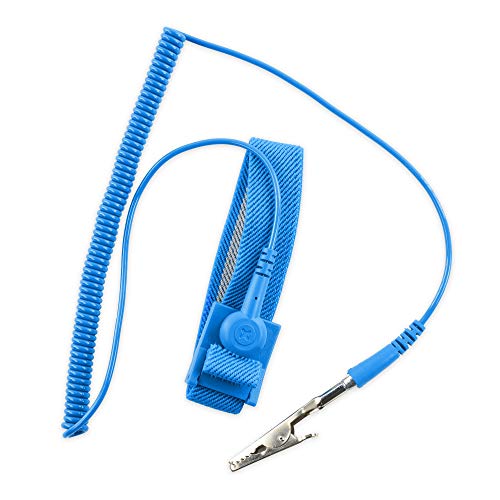
The iFixit strap stands out for its specified 6-foot coiled cord and adjustable fit up to an 8.25-inch unstretched circumference. Its elastic band uses a polyester and stainless-steel weave with an adjustable buckle, and the cord resistance is 1 MΩ. iFixit says the reusable band is intended to help protect electronics from accidental ESD damage during repairs.
This is a practical fit when you want a longer cord and a clearly stated upper wrist size. The circumference is unstretched, so measure your wrist and check that the band can sit snugly against your skin; a loose fit can compromise contact.
Bottom line: Choose this if you need a specified 6-foot cord and an adjustable band for a larger wrist.
Adjustable 11-Inch Wrist Strap with Clip

The defining point of this strap is its 6- to 8.5-inch wrist fit, paired with an 11-inch adjustable band and an alligator clip. Conductive yarn is attached inside the hook-and-loop strap, and the maker describes seven copper foils as part of its durability upgrade. The maker says the strap helps reduce static buildup while working on electronics.
Its size range makes it a useful option for people whose wrists fall below the 9-inch-plus range of some alternatives. The 11-inch figure is the band length, not the cord length, so confirm the lead will reach your intended ground point before relying on the setup.
Bottom line: Pick this for a wrist between 6 and 8.5 inches when you want an adjustable hook-and-loop band.
Adjustable Anti-Static Wrist Strap, 6-Pack

The six-pack is the main distinction here: it provides multiple adjustable straps for a shared bench or several work areas. Each strap is described as fitting wrist circumferences up to 9.25 inches, and the molded ends are intended to support repeated use. The maker says the straps are for grounding yourself while working on sensitive electronic devices.
This set suits a team or a workshop that needs several wristbands rather than a single strap. It does not provide a cord length or resistance value, so confirm those match your grounding setup before use. Never connect the wearer or repair hardware to mains electricity or another powered supply.
Bottom line: Choose this when you need several wrist straps and the 9.25-inch maximum fit works for the users.
FRXIE Adjustable ESD Wrist Strap
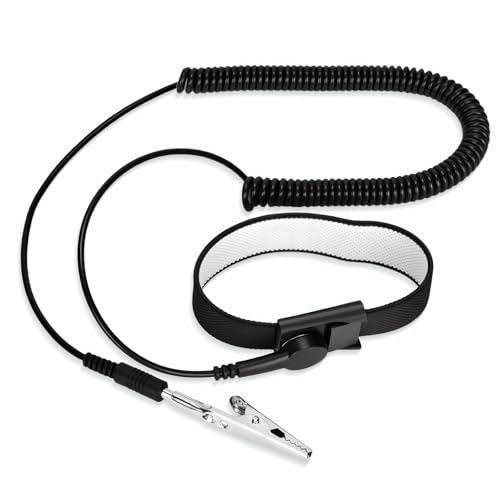
The FRXIE strap distinguishes itself with a specified resistance-checking method: its maker says to measure with a digital multimeter on the ohms setting, with a normal range of 0.8–1.2 MΩ. The maker also says the strap has a built-in resistance of about 1 MΩ and is factory-tested. Its alligator clip and extra-long cord target PC building and electronics repair.
This is a fit for buyers who want a way to check the resistor rather than relying only on the strap’s appearance. The wrist circumference and cord length are not quantified beyond “extra long,” so verify that the band fits and the lead reaches your grounded point before starting work.
Bottom line: Pick this if a resistance-check procedure matters more than quantified wrist sizing.
How to choose an anti-static wrist band
Choose by wrist contact, cord reach and the grounding point you can safely use. A common ESD wrist strap uses a 1 MΩ resistor in series with its grounding lead; that resistance limits current while allowing charge to dissipate. The band should make firm contact with bare skin, not sit over a sleeve, and the clip should connect to a designated grounded point in the work area.
For a useful fit rule, measure your wrist circumference where the band will sit: if it exceeds 8.25 inches, avoid relying on the fit of iFixit Adjustable Anti-Static Wrist Strap, and check the larger 9.25-inch maximum on Adjustable Anti-Static Wrist Strap, 6-Pack. A longer cord helps only when it reaches a proper ground point without stretching or snagging. Never clip a wrist strap to mains electricity or a powered supply.
Wrist fit and grounding setup
A wrist strap works only when the band maintains skin contact and the lead connects to an appropriate ground. Adjustable hook-and-loop or buckle bands can accommodate different wrist sizes, but a loose strap may lose electrical contact as you move. Measure the actual wrist rather than estimating from glove or watch size, and account for the band’s circumference limit.
Grounding is not the same as attaching a clip to any nearby metal: use a verified ESD ground point or a properly grounded work surface. Keep the cord routed so it cannot pull the band off or catch on tools. Do not work on energized equipment while wearing an ESD strap; disconnect power and observe the device maker’s repair precautions before opening electronics.
Wrist straps and other ESD protection
A wrist strap grounds a person, while an ESD mat provides a controlled surface for components and tools. Neither replaces safe handling: hold circuit boards by their edges, avoid touching contacts, and place removed parts on an appropriate ESD surface. A strap alone does not protect a part set down on an unsuitable surface.
The product set here includes standalone wrist straps, plus a mat product that is not a wrist-band-only choice. For an individual working at a grounded bench, start with a wrist strap whose size and lead suit the setup. For a permanent repair station, a mat can add a useful work surface, but its wristband does not make every other mat feature necessary.
| Need | What to compare | Useful condition |
|---|---|---|
| Individual repair work | Band fit and lead reach | Band sits snugly on bare skin |
| Shared bench | Quantity and maximum fit | Each user can wear it with firm contact |
| Full repair surface | Wrist strap plus ESD mat | Parts need a dedicated work surface |
Using and checking an ESD wrist strap
Use the strap only with a sound grounding path and unpowered electronics. Before work, check the band for damage, confirm it fits against bare skin, and route the cord so movement will not pull the clip loose. A 1 MΩ resistor is common in wrist strap leads; a multimeter resistance check can help identify an open or out-of-range lead when the strap maker provides a method.
Do not use a continuity buzzer as a substitute for resistance measurement on a high-resistance strap; a buzzer may not sound through a megohm resistor. For FRXIE Adjustable ESD Wrist Strap, the maker specifies the ohms setting and a 0.8–1.2 MΩ normal range. Stop if the band, cord, or clip is visibly damaged, and never connect the strap to a powered circuit or mains outlet.
Frequently Asked Questions
Should an anti-static wrist band touch bare skin?
Yes, the conductive part of the band needs firm contact with bare skin to provide a dependable path for charge. Put the band under a sleeve rather than over clothing, and snug it so it does not slide during work.
What resistance should an ESD wrist strap have?
A common wrist strap lead uses a 1 MΩ series resistor to limit current while dissipating static charge. Use an ohms measurement rather than assuming that a continuity buzzer should sound; the FRXIE maker gives 0.8–1.2 MΩ as its normal measurement range.
Can I wear a wrist strap while a computer is powered?
No; disconnect power before opening or repairing computer hardware, and never connect a person or device to mains electricity. A wrist strap is for static control, not protection from electric shock.
Where should I clip an anti-static wrist strap?
Clip it to a verified ESD ground point or properly grounded work surface, not to a random powered conductor. A reachable ground point matters: a cord that is stretched or repeatedly pulled can disconnect during repair.
How tight should an ESD wrist strap fit?
It should stay snug against bare skin without slipping, because a loose band may lose conductive contact. Measure wrist circumference before choosing; for example, Adjustable 11-Inch Wrist Strap with Clip gives a 6- to 8.5-inch fit range.