
Arm & Hammer HVAC Coil Cleaner: 4 Options Compared

For an Arm & Hammer HVAC coil cleaner, choose Arm & Hammer AHCC-19, 3-Pack if you want the 19 fl oz aerosol in a three-can pack; its formula is presented for evaporator and condenser coils. Arm & Hammer AHCC-19, 19 fl oz is the same named cleaner in a single 19 fl oz can, while Simple Green Foaming Coil Cleaner, 1 gal and RectorSeal Coil-Rite, 1 gal are alternative gallon-format coil cleaners.
Coil cleaners are applied to remove dirt and buildup from heat-transfer surfaces, but rinse needs depend on the product and coil. Confirm the coil type and required rinsing before use.
We earn a commission if you buy through links on this page. As an Amazon Associate I earn from qualifying purchases. Products are compared on manufacturer specifications, not hands-on testing.
- Best overall: Arm & Hammer AHCC-19, 3-Pack – Three 19 fl oz aerosol cans provide more packaged cleaner than the matching single-can option.
- Best for a single can: Arm & Hammer AHCC-19, 19 fl oz – One 19 fl oz can avoids the three-can pack.
- Best for gallon format: RectorSeal Coil-Rite, 1 gal – The 128 fl oz non-acid cleaner is made for evaporator coils, equipment and filters.
| Product | Best for | Package size | Format | Rinse approach | Shop |
|---|---|---|---|---|---|
| Arm & Hammer AHCC-19, 3-Pack | Multi-can supply | 3 × 19 fl oz | Aerosol foam | Evaporator: no rinse; condenser: light rinse | Check Price on Amazon |
| Arm & Hammer AHCC-19, 19 fl oz | Single-can use | 19 fl oz | Aerosol foam | Evaporator: no rinse; condenser: light rinse | Check Price on Amazon |
| RectorSeal Coil-Rite, 1 gal | Gallon-size cleaning | 128 fl oz | Liquid cleaner | Self-rinsing; no rinse required | Check Price on Amazon |
| Simple Green Foaming Coil Cleaner, 1 gal | Foaming gallon cleaner | 128 fl oz | Foam cleaner | Self-rinses on condenser coils | Check Price on Amazon |
Arm & Hammer HVAC coil cleaner options
Compare the Arm & Hammer aerosol formats with two gallon-size alternatives by package and use details.
Arm & Hammer AHCC-19, 3-Pack

The three-can format is the main distinction of this Arm & Hammer AHCC-19 option. Each can holds 19 fl oz, and the product is a self-expanding foam aerosol intended for AC coils. The maker says it removes dirt and buildup and helps eliminate odors. The rinse approach differs by coil: evaporators need no rinse, while condensers need a light rinse. This pack suits someone who wants multiple cans on hand; it is less suitable when a single can is the priority.
Bottom line: Choose this pack if you want three aerosol cans and can follow the different rinse approach for each coil type.
Arm & Hammer AHCC-19, 19 fl oz
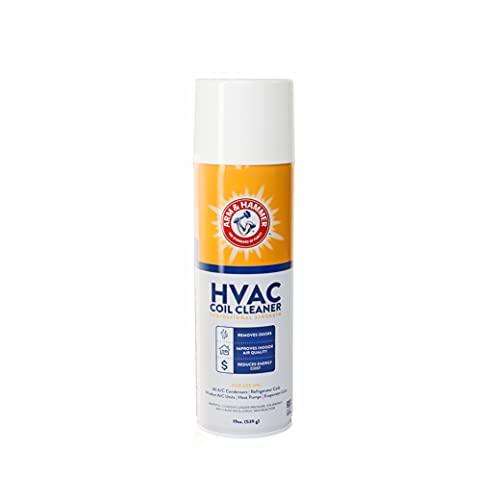
The single-can version offers the same 19 fl oz AHCC-19 aerosol formula as the three-can pack, but without multiples. The maker describes the foam as biodegradable and self-expanding, and says it removes dirt and buildup from AC coils. Its use is tied to the coil: the maker specifies no rinse for evaporators and a light rinse for condensers. This is the closer fit for an isolated cleaning job or when storage space matters; buyers preparing for repeated jobs may prefer the three-can format.
Bottom line: Pick this can when one 19 fl oz aerosol is the amount you want to keep on hand.
RectorSeal Coil-Rite, 1 gal

RectorSeal Coil-Rite differs from the Arm & Hammer options in both format and formulation: it is a gallon-size, low-foaming liquid cleaner rather than an aerosol foam. It is intended for evaporator coils, mechanical equipment and air filters, and the maker describes it as non-acid and non-fuming. The product also says no rinsing is required and that it will not harm copper or aluminum. Its broader listed use may suit maintenance work beyond AC coils, but it is not the named Arm & Hammer product.
Bottom line: Choose this only if you want a gallon-size alternative for evaporator coils, equipment or filters.
Simple Green Foaming Coil Cleaner, 1 gal

Simple Green stands apart from the aerosols by offering 128 fl oz in a gallon container, with a low-VOC, non-caustic and non-flammable foam formula. It is intended for HVAC, AC and refrigeration coils; the maker says the foam clings to coils and self-rinses on condensing coils. The larger container may suit someone treating more than one coil, while the product is not the Arm & Hammer brand sought by this query. Its self-rinsing claim specifically concerns condensing coils, so verify the application instructions for other coil types.
Bottom line: Consider this alternative if you prefer a gallon of foaming cleaner and need condenser-coil use.
How to choose an HVAC coil cleaner
Match the cleaner to the coil and the required rinse method before comparing package size. Evaporator coils sit in the indoor air handler, while condenser coils are in the outdoor unit; products may call for different rinsing on each. A no-rinse label for an evaporator does not mean the same method applies to a condenser. Aerosol foam is convenient for targeted application, while a gallon container provides more volume for broader use. With a one-coil job and a preference for aerosol, choose a 19 fl oz can; for multiple applications, a 128 fl oz container supplies more volume. Shut off HVAC power at the service disconnect before opening equipment, and avoid spraying energized electrical parts.
Evaporator and condenser rinse needs
Rinse instructions are coil-specific, so identify the coil before applying cleaner. Indoor evaporator coils generally cannot be rinsed as freely as outdoor condensers because water can enter the air handler, drain pan or nearby electrical components. Condenser coils can typically be rinsed outdoors with a gentle water flow after cleaner application, but bent fins can restrict airflow. The Arm & Hammer aerosol specifies no rinse on evaporators and a light rinse on condensers; other products give different rinse claims. Never substitute a pressure washer for a gentle rinse: high-pressure water can flatten aluminum fins. Keep cleaner away from wiring, motors and controls, and restore power only after the work area is dry.
Coil cleaner formats compared
Format and stated application separate these cleaners more clearly than brand alone. Aerosol foam comes in a 19 fl oz can and is suited to targeted application, while the two gallon options hold 128 fl oz each. The Arm & Hammer aerosol calls for different rinse approaches on evaporators and condensers; Simple Green says it self-rinses on condensing coils, and Coil-Rite says rinsing is not required. Those claims are not interchangeable: follow the product’s coil-specific directions and confirm compatibility with the equipment materials before use.
| Format or use | Package volume | Rinse approach |
|---|---|---|
| Arm & Hammer aerosol | 19 fl oz per can | No rinse on evaporator; light rinse on condenser |
| Simple Green foaming gallon | 128 fl oz | Self-rinses on condensing coils |
| RectorSeal low-foaming gallon | 128 fl oz | No rinse required |
Safe application and common mistakes
Switch off HVAC power before removing access panels or applying coil cleaner, because the air handler and condenser contain electrical components near the coils. Use only a gentle rinse where the cleaner’s directions call for one; high-pressure spray can bend fins, and aggressive brushing can damage the thin aluminum. Coil fins are delicate, so keep tools parallel to the fin direction rather than dragging across them. Avoid mixing coil cleaners with other chemicals, especially bleach or acidic products. If the coil material, access procedure or rinse path is uncertain, confirm it before application rather than relying on the cleaner’s general-purpose wording.
Frequently Asked Questions
Can Arm & Hammer coil cleaner be used on evaporator coils?
The Arm & Hammer AHCC-19 aerosol is described for evaporator coils, with no rinse required for that application. The same product specifies a light rinse for condenser coils, so identify the coil before use.
Should condenser coils be rinsed after cleaner?
The Arm & Hammer aerosol calls for a light rinse on condenser coils, while the Simple Green product says it self-rinses on condensing coils. Use a gentle water flow, since high pressure can bend fins.
How much cleaner is in each Arm & Hammer can?
Each AHCC-19 aerosol can contains 19 fl oz. The multi-can pack has three cans, while the single-can option contains one.
Can coil cleaner damage aluminum fins?
High-pressure water and rough scrubbing can bend or damage thin aluminum fins. Use a gentle rinse when required and keep any brush aligned with the fin direction.
Should HVAC power be off before cleaning coils?
Yes, switch off power at the service disconnect before opening the equipment or spraying cleaner. Keep liquid away from wiring and controls, and allow the work area to dry before restoring power.