
Arm Bands for Volleyball: 5 Sleeves Compared by Fit

Mizuno Arm Sleeves, OSFM suits most players who want a pair of sleeves that cover the biceps to forearm and help manage warmth and sweat. Choose a padded style instead if reducing the sting of ball contact or guarding against floor burns is your priority.
Volleyball arm sleeves are stretch-knit covers for the arm; some add padding, while others focus on coverage and moisture management.
We earn a commission if you buy through links on this page. As an Amazon Associate I earn from qualifying purchases. Products are compared on manufacturer specifications, not hands-on testing.
- Best overall: Mizuno Arm Sleeves, OSFM – A pair extends from biceps to forearm and is intended for warmth and sweat management.
- Best for padded youth fit: L LK SPORTS Padded Sleeves, Medium – Neoprene wrist and forearm pads combine with a thumbhole in a medium youth style.
- Best for extra padding: Newcotte Padded Sleeves, 2 Pairs – Two pairs include forearm pads about 4 mm thick and thumbholes.
| Product | Best for | Padding | Material | Pack | Shop |
|---|---|---|---|---|---|
| Mizuno Arm Sleeves, OSFM | Warmth and sweat | No pads | 91% polyester, 5% polyurethane, 4% nylon | Pair | Check Price on Amazon |
| Peabownn Volleyball Sleeves, Small | Pad-free youth fit | No pads | 88% polyester, 12% spandex | Pair | Check Price on Amazon |
| L LK SPORTS Padded Sleeves, Medium | Padded youth fit | Neoprene padding | Nylon and spandex | Pair | Check Price on Amazon |
| Newcotte Padded Sleeves, 2 Pairs | Extra padded sets | About 4 mm pads | Polyamide and spandex | Two pairs | Check Price on Amazon |
| Nike Ace Arm Sleeve Pair, Medium | Smooth grippy fit | No pads | Lightweight knit jersey | Pair | Check Price on Amazon |
Volleyball Arm Bands and Sleeves
Compare coverage, padding and pack contents to find the sleeve style that suits your play.
Mizuno Arm Sleeves, OSFM
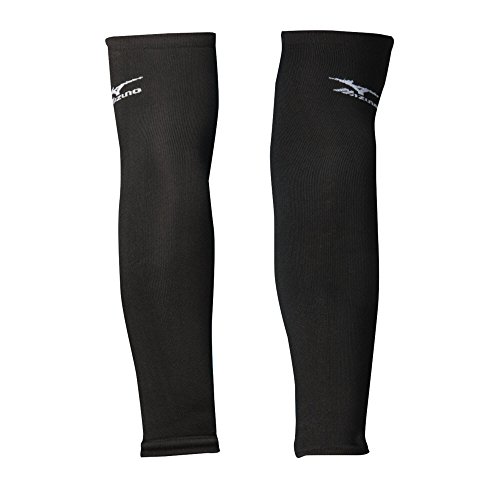
Mizuno Arm Sleeves, OSFM stands out for its biceps-to-forearm coverage without added pads. The pair is made from 91% polyester, 5% polyurethane and 4% nylon, and the maker says the sleeves help with warmth, sweat and the sting of ball impact. The OSFM sizing makes this a straightforward pick for players who want coverage rather than a padded passing aid. The limitation is the lack of cushioning: players specifically seeking a padded wrist or forearm panel should choose a padded option instead.
Bottom line: Pick this pair for full-arm coverage and warmth without pads.
Peabownn Volleyball Sleeves, Small

Peabownn Volleyball Sleeves, Small offers a pad-free volleyball sleeve in a Small size, with the maker describing the fabric as breathable, quick-drying and sweat-wicking. The 88% polyester and 12% spandex blend is intended to stretch across youth and adult players, and the range spans seven sizes from 3XS through XL. That breadth makes measuring the arm and matching the maker’s size guidance especially important rather than choosing by age alone. The main tradeoff is no cushioning, so this is not the choice for players who want padded forearms or wrist coverage.
Bottom line: Choose this for a pad-free sleeve in a broad size range.
L LK SPORTS Padded Sleeves, Medium

L LK SPORTS Padded Sleeves, Medium differs from the pad-free choices with neoprene padding, a thumbhole and a Medium size. Its nylon-and-spandex material is described by the maker as breathable and stretchy, while reinforced stitching is intended to hold up to repeated ball contact. The thumbhole can help keep the sleeve positioned over the hand and wrist during passing drills. This option suits players looking for cushioning and finger freedom; the limitation is that one Medium size may not work for every arm, so confirm the fit before ordering.
Bottom line: Pick this if you want padding, a thumbhole and a medium youth fit.
Newcotte Padded Sleeves, 2 Pairs

Newcotte Padded Sleeves, 2 Pairs is the only option here that includes two pairs, each with forearm pads about 4 mm thick and thumbholes. The maker says the polyamide-and-spandex sleeves are breathable, elastic and lightweight, and the product is designed for drills, practices and games. The set suits players who want a spare pair or need multiple sleeves for training. Its sizing is shown as a picture-based option rather than a named size, so arm circumference and length deserve a careful fit check; the pad thickness also makes it bulkier than a pad-free sleeve.
Bottom line: Choose this set if two padded pairs matter more than a named size.
Nike Ace Arm Sleeve Pair, Medium

Nike Ace Arm Sleeve Pair, Medium separates itself with a grippy top panel intended to keep the sleeve in place, plus a smooth, lightweight knit jersey feel. The pair is sold in Medium and uses sweat-wicking fabric, according to the maker. It suits players who want a close-fitting sleeve without pads and value a top edge designed to resist slipping during play. The tradeoff is that the size choice is Medium, so players outside that fit should verify sizing before choosing it; this sleeve does not provide the cushioning found in padded volleyball styles.
Bottom line: Pick this for a smooth, pad-free sleeve with a grippy top panel.
How to Choose Volleyball Arm Sleeves
Choose first between a pad-free sleeve and a padded sleeve: the former prioritizes coverage, while the latter adds a cushion between the ball and forearm. For warmth and sweat management without added bulk, choose a pad-free pair; if forearm sting or floor contact is your concern, look for padding and check where it sits. A thumbhole can help anchor a sleeve near the wrist, while a grippy top panel is designed to limit slipping. Fit matters more than age labels: measure the arm circumference where the sleeve will sit and compare it with the maker’s size guide. A sleeve should stay in place without numbness, tingling or restricted movement; remove it if those symptoms occur.
Padded and Pad-Free Volleyball Sleeves Compared
Pad-free sleeves cover the arm but do not add a cushion; padded designs add material over contact areas and can feel bulkier. Use this comparison to choose by purpose rather than assuming every volleyball sleeve offers impact padding.
| Style | What it offers | Choose when |
|---|---|---|
| Pad-free | Coverage, stretch and moisture management | You want warmth or a smooth sleeve |
| Padded | Cushion over wrist or forearm | You want added padding during passing drills |
| Thumbhole or grippy edge | Positioning features | You want help keeping the sleeve in place |
Padding thickness alone does not describe total protection: coverage, placement and fit also affect how the sleeve feels. Treat a padded sleeve as an added comfort feature, not a substitute for safe technique or proper court movement.
How Volleyball Sleeve Fit and Sizing Work
Measure the circumference of the upper arm and forearm with a flexible tape, then use the size chart for the specific sleeve; labeled sizes are not interchangeable across makers. Compression-style sleeves should feel close to the skin, but they should not cause tingling, numbness, color change or limit a full range of motion. Check whether the product is sold as a pair or multiple pairs, since the pack affects whether both arms are covered and whether there is a spare. Youth and adult sizing can overlap, so use measurements rather than age or gender labels when choosing. If the sleeve rolls, slips or bunches during arm movement, reassess the size or cut before practice.
How to Wear and Care for Volleyball Arm Sleeves
Pull a sleeve on smoothly and position any pad over the area it is meant to cover; a thumbhole should sit comfortably without pulling on the thumb. During practice, check that the sleeve has not twisted or restricted wrist movement, especially after repeated dives or washes. Sweat-wicking fabric can move moisture, but it still needs to dry fully between sessions to avoid staying damp in a gym bag. Follow the garment’s care label, because blends such as polyester, spandex, nylon and polyamide can have different wash limits. Skip a sleeve with a damaged seam or pad that shifts out of place, since fit and stable coverage matter during repeated ball contact.
Frequently Asked Questions
Do volleyball arm sleeves need padding?
No; pad-free sleeves provide coverage, while padded styles add a cushion over the wrist or forearm. Choose padding if you want that extra layer for passing drills, but it does not replace sound technique.
How tight should volleyball arm sleeves feel?
A sleeve should feel snug enough to stay put without restricting movement. Remove it if you notice numbness, tingling, color change or reduced wrist motion.
How do I measure for volleyball arm sleeves?
Use a flexible tape to measure the arm circumference where the sleeve will sit, then match that measurement to the specific maker’s size chart. Do not assume a youth Small or adult Medium fits the same across brands.
Can volleyball sleeves help with sweat?
Some sleeves use moisture-wicking fabric or are intended to absorb sweat, but fabric blends differ. Wash and fully dry them between sessions so a damp sleeve is not left stored in a gym bag.
Are thumbhole sleeves better for volleyball?
A thumbhole can help anchor a sleeve near the wrist and keep coverage from riding upward. It should sit comfortably without pulling the thumb or limiting hand movement.