
Bar’s Leaks Radiator Stop Leak: Forms Compared

Bar’s Leaks Radiator Stop Leak, 11 oz, is the closest match for most buyers because its maker says the dissolved pelletized formula works with all coolant types and colors or water. Choose the liquid aluminum formula for a liquid option described for radiator, freeze plug, gasket and heater-core leaks, or tablets if you prefer a solid treatment with a repeat interval.
We earn a commission if you buy through links on this page. As an Amazon Associate I earn from qualifying purchases. Products are compared on manufacturer specifications, not hands-on testing.
- Best overall: Bar’s Leaks Radiator Stop Leak 11 oz – An 11 oz dissolved pelletized formula with compatibility across coolant types and water.
- Best for liquid aluminum formula: Bar’s Leaks Liquid Aluminum 16.9 oz – A 16.9 oz liquid aluminum formula described for radiator, freeze plug, gasket and heater-core leaks.
- Best for tablets: Bar’s Leaks 1177 Stop Leak Tablets – A 1.76 oz tablet formula with guidance to repeat every 15,000 miles or once per year.
| Product | Best for | Form | Amount | Coolant compatibility | Shop |
|---|---|---|---|---|---|
| Bar’s Leaks Radiator Stop Leak 11 oz | Broad coolant compatibility | Dissolved pelletized | 11 oz | All types/colors; water | Check Price on Amazon |
| Bar’s Leaks Liquid Aluminum 16.9 oz | Liquid aluminum formula | Liquid aluminum | 16.9 oz | — | Check Price on Amazon |
| Bar’s Leaks 1177 Stop Leak Tablets | Tablet treatment | Tablets | 1.76 oz | All types/colors; water | Check Price on Amazon |
Bar’s Leaks Radiator Stop Leak Products
Compare the three formulas by format, amount and stated compatibility before choosing one for a cooling system.
Bar’s Leaks Radiator Stop Leak 11 oz

The 11 oz dissolved pelletized formula is the only option here whose maker explicitly describes compatibility with all coolant types and colors as well as straight water. The maker says it seals internal, external and coolant-to-oil leaks, and works with plastic, aluminum and metal radiators, heater cores, blocks, heads, gaskets and freeze plugs. Water-pump lubrication and rust and scale inhibition are also part of the formula. This suits buyers who want broad stated system compatibility; the maker’s performance claims are not a substitute for diagnosing a failing component or a major leak.
Bottom line: Choose this if broad stated coolant compatibility and a dissolved pelletized formula are priorities.
Bar’s Leaks Liquid Aluminum 16.9 oz
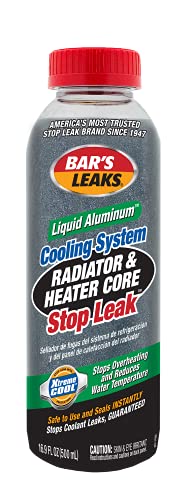
The 16.9 oz liquid aluminum formula is the largest amount among these three products and is distinguished by its liquid form. The maker says it seals radiator and freeze-plug leaks and repairs gasket and heater-core leaks; it also claims to lower water temperature. This option may suit a buyer who specifically wants a liquid aluminum treatment and recognizes those stated repair uses. Its claims do not specify coolant compatibility or a repeat interval, so confirm compatibility and application steps for the vehicle before use.
Bottom line: Pick this for the liquid aluminum format and its radiator, gasket and heater-core uses.
Bar’s Leaks 1177 Stop Leak Tablets

The 1.76 oz tablet format separates this product from the two liquid treatments. Its maker says the tablets seal internal, external and coolant-to-oil leaks, inhibit rust and scale, neutralize pH imbalance, control electrolysis and lubricate. The maker also says they work with all types and colors of antifreeze, including conventional, extended-life and waterless coolant, or straight water, and advises repeating the application every 15,000 miles or once per year. This suits buyers who prefer tablets and ongoing maintenance guidance; the small package amount is not directly comparable to liquid ounces.
Bottom line: Choose the tablets if you prefer a solid formula and want a repeat interval.
How to Choose a Radiator Stop Leak
Choose a radiator stop leak by matching its form and stated coolant compatibility to the vehicle, then identify the leak source. A sealer is intended for small leaks or seepage, not a cracked hose, broken radiator tank, failed water pump or overheating engine; those parts need diagnosis and repair. The three options here differ in form: two are liquids and one is tablets, while the 11 oz formula and tablets have stated broad coolant compatibility. If a vehicle has an unusual coolant or a recent cooling-system service, verify compatibility and the product’s application steps before adding anything. Do not combine multiple sealers; excess additive can interfere with narrow coolant passages.
| Buyer priority | Compare | Decision point |
|---|---|---|
| Broad stated compatibility | 11 oz liquid or tablets | Both name coolant types/colors and water |
| Liquid aluminum formula | 16.9 oz liquid | Its maker names radiator, gasket and heater-core uses |
| Solid format | Tablets | Reapplication guidance is every 15,000 miles or yearly |
When Stop Leak Is the Wrong Fix
Stop leak is the wrong first step when coolant loss is rapid, the temperature gauge rises, or steam appears, because continued driving while overheating can damage an engine. A cooling system is pressurized when hot, so never remove a radiator or pressure cap until the engine has cooled completely; hot coolant can spray and burn skin. Check for visible leaks around hoses, the radiator, water pump and reservoir only after cooling, and seek a proper diagnosis for recurring coolant loss. A sealer cannot restore a worn hose or broken component, and plugging leaks without finding their cause can delay necessary repairs.
Liquid Versus Tablet Coolant Sealers
Liquid and tablet sealers differ mainly in handling and the compatibility claims made for each formula. Liquid products are poured into the cooling system, while tablets must be introduced in the manner specified for that product; neither format should be assumed compatible with every vehicle based on format alone. In this group, the 11 oz liquid and the tablets have explicit broad compatibility statements, while the liquid aluminum option’s claims focus on the types of leaks it addresses. Treat package amount carefully: ounces of liquid and ounces of tablets are not equivalent measures of treatment strength. Use only the application amount directed for the vehicle and product.
How to Avoid Cooling-System Sealer Mistakes
Use a sealer only after the engine is cool and the leak appears small enough for a temporary chemical treatment. Avoid pouring it into a hot, pressurized system, mixing different sealers, or adding more than the product calls for. Correct coolant matters: many vehicles specify a particular chemistry, and mixing incompatible coolant types can reduce corrosion protection or create deposits. Record the product and service date, then watch the coolant level and temperature after use; renewed loss or overheating calls for repair rather than another dose. If leak location or coolant type is uncertain, verify those points before choosing a formula.
Frequently Asked Questions
Can radiator stop leak fix a cracked radiator?
A sealer may be intended for small leaks, but a cracked radiator generally needs diagnosis and repair rather than reliance on an additive. If coolant is escaping rapidly or the engine overheats, stop driving and address the fault.
Should I add radiator stop leak to a hot engine?
No; wait until the engine has cooled completely before opening any radiator or pressure cap. Hot cooling systems are pressurized and can release scalding coolant.
Can I use stop leak with any antifreeze?
Compatibility depends on the formula and vehicle coolant. The 11 oz formula and tablets here state compatibility with all coolant types and colors or water; check the vehicle’s specified coolant chemistry before use.
How often should radiator stop leak tablets be repeated?
The maker of the Bar’s Leaks tablets advises repeating the application every 15,000 miles or once per year. That interval applies to the tablet product, not automatically to other formulas.
What should I do if coolant keeps disappearing?
Recurring coolant loss needs diagnosis even if a sealer was used. Check for visible leaks only after the engine cools, and do not keep driving if the temperature rises or steam appears.