
Bee Venom Treatment Cream: 5 Options Compared

For a general-purpose bee venom treatment cream, Turonu Bee Venom Cream, 1.6 fl oz is the clearest fit because its product name specifies body use and its package states 1.6 fl oz. The products here are creams marketed for skin care; their claimed results are not established by the specifications.
Choose a face-focused moisturizer such as Bee Venom Moisturizer, 0.33 oz if that is your intended use, and avoid bee venom products entirely if you have a known bee venom allergy.
We earn a commission if you buy through links on this page. As an Amazon Associate I earn from qualifying purchases. Products are compared on manufacturer specifications, not hands-on testing.
- Best overall: Turonu Bee Venom Cream, 1.6 fl oz – Names use on all body parts and gives a 1.6 fl oz size.
- Best for face care: Bee Venom Moisturizer, 0.33 oz – Its name specifically identifies face moisturizing and firming use.
- Best for larger stated size: COPFASTOK Bee Venom Cream, 2.12 oz – Its package states 2.12 oz, larger than the other amounts.
| Product | Best for | Stated size | Package count | Named use | Shop |
|---|---|---|---|---|---|
| Turonu Bee Venom Cream, 1.6 fl oz | General body care | 1.6 fl oz | Unclear | All body parts | Check Price on Amazon |
| Bee Venom Treatment Cream, 2 bottles | Portable pair | 0.01 oz | 2 | All body parts | Check Price on Amazon |
| COPFASTOK Bee Venom Cream, 2.12 oz | Larger stated amount | 2.12 oz | 1 | All body parts | Check Price on Amazon |
| Bee Venom Moisturizer, 0.33 oz | Face moisturizer | 0.33 oz | 3 | Face moisturizing | Check Price on Amazon |
| Bee Venom Skin Treatment Cream, 2.12 fl oz | Day and night care | 2.12 fl oz | 1 | Face and dry-skin care | Check Price on Amazon |
Bee venom treatment creams compared
Compare the sizes and intended uses, then check the package label before applying any bee-derived ingredient to skin.
Turonu Bee Venom Cream, 1.6 fl oz

Among these options, this cream gives the clearest general body-use cue and a 1.6 fl oz size. The maker describes it as a bee venom cream with natural oils and extracts, intended for moisturizing and skin repair; those are product claims, not proven outcomes. That ambiguity matters if you are comparing how much product you will receive. The use directions say to apply to clean, dry skin and massage until absorbed.
Bottom line: Choose this if you want a general body-care cream and can confirm the package count.
Bee Venom Treatment Cream, 2 bottles
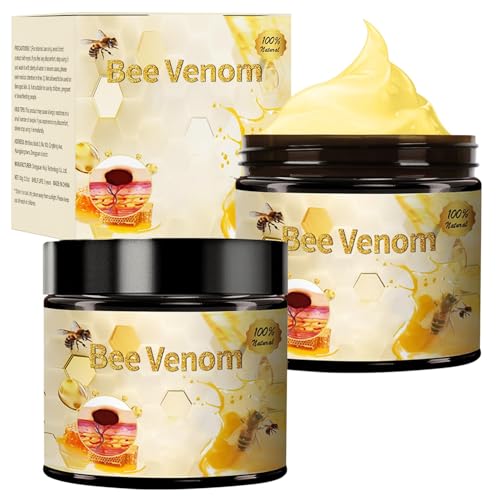
This option is the only one whose package field explicitly says two bottles, while its size is just 0.01 oz. The maker describes a moisturizing cream made with plant extracts and gives directions for use three to four times daily. The body-use list includes areas such as the knees, neck, back, face, waist and wrists. The very small stated amount is the practical limitation: it may not suit someone expecting a full-size moisturizer or frequent use over large areas. Check the package amount and label before deciding whether the pair meets your needs.
Bottom line: Pick this only if a two-bottle format and very small stated amount suit your use.
COPFASTOK Bee Venom Cream, 2.12 oz

The 2.12 oz size makes this the largest single-container amount among the creams with unambiguous size and count fields. The maker describes a plant-extract-based moisturizing cream for all skin types and body areas, with directions to apply to clean, dry skin three to four times daily. Those frequency and suitability statements are maker claims, not evidence that the cream will achieve a particular result. Its broad body-use framing may be less tailored than a face-specific moisturizer.
Bottom line: Choose this when the 2.12 oz amount and broad body-use framing are your priorities.
Bee Venom Moisturizer, 0.33 oz
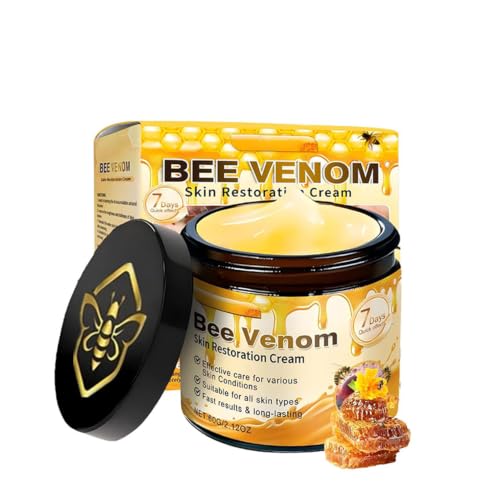
This is the face-focused choice: its name identifies a moisturizer for firming and face use, unlike the broader body creams. The maker claims hydration, quick absorption and skin-firming effects, but those outcomes are not established by the product specifications. The small stated amount may suit someone seeking a face-care format, but it is less suitable for covering large body areas.
Bottom line: Choose this for a face-moisturizer format rather than a general body cream.
Bee Venom Skin Treatment Cream, 2.12 fl oz
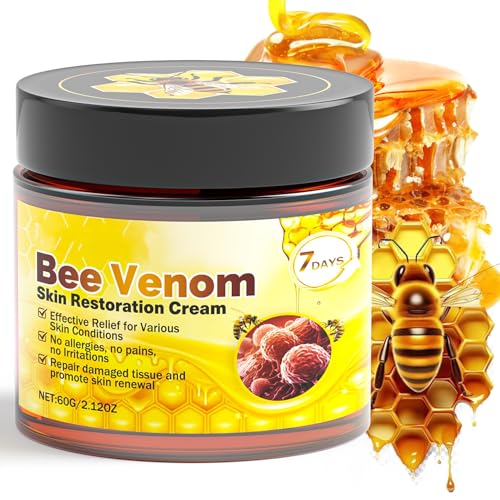
This cream is positioned as a day-and-night face moisturizer, setting it apart from products framed mainly for all-body use. The package states 2.12 fl oz, and the maker describes a formula with Manuka honey and plant essence. Claims about collagen, wrinkles, acne or visible changes are not established by the specifications and should not be treated as guaranteed results. The product may suit someone seeking a face-care product with a larger volume, but the maker’s broad claims do not replace checking ingredients for sensitivities. Avoid using it if bee-derived ingredients have caused you an allergic reaction.
Bottom line: Pick this for a face-care routine if its ingredient label is suitable for you.
How to choose bee venom treatment cream
Choose by intended application, ingredient label and amount rather than promised skin changes. A facial moisturizer and an all-body cream serve different coverage needs; a small 0.33 oz package is not equivalent to a 2.12 oz container. Read the full ingredient panel because “bee venom” products may also include honey, plant extracts or oils. Cosmetic claims about firming, collagen or repair do not establish a medical treatment effect. If you need a product for a diagnosed skin condition, ask a clinician or pharmacist instead of relying on a cosmetic cream.
Use this comparison rule: if you need broad body coverage, prioritize a clearly stated size of at least 1 oz; if you need face care, select a product explicitly named for facial use and check its ingredients for your known sensitivities.
Bee venom cream safety and patch testing
Bee venom can trigger a serious allergic reaction, including anaphylaxis, in people who are allergic to stings or bee venom. Avoid these creams if you have a known bee venom allergy, and seek emergency care for trouble breathing, throat or tongue swelling, faintness, or rapidly spreading hives after exposure. A small-area patch test can help reveal local irritation but cannot rule out a severe allergy. Do not apply a test dab if you already know you react to bee venom.
Keep creams away from eyes, lips, nostrils and broken or irritated skin unless a qualified clinician says otherwise. Stop use if burning, swelling or rash develops. Ingredient lists matter: honey and botanical extracts can also cause individual reactions.
How much cream do you need
Package size is a useful starting point, but coverage depends on the body area and how often you apply it. For a rough quantity check, a thin layer on the face typically uses far less cream than repeated applications across knees, back or other large areas. A 0.01 oz amount is notably small compared with 2.12 oz, so confirm that a tiny package is intentional before choosing it for regular body use.
Read the net contents and package count together. Some names and size fields give conflicting counts, so verify the actual number of containers when the count affects your decision. Do not assume a multi-piece name means each piece contains the full stated amount.
Bee venom cream versus medical treatment
Bee venom creams sold as moisturizers are not a substitute for treatment of warts, moles, infections or persistent skin changes. A new or changing mole, bleeding spot, or sore that does not heal needs assessment by a licensed clinician; cosmetic products cannot establish what a skin growth is. Avoid trying to remove a mole or wart with an unverified cream, especially on the face, genitals or near the eyes.
For ordinary dryness, a fragrance-free moisturizer with familiar ingredients is often a simpler choice for sensitive skin. If a cream causes persistent irritation or swelling, stop using it and get medical advice. Bee-derived ingredients carry additional allergy considerations compared with standard moisturizers.
Frequently Asked Questions
Can bee venom cream cause an allergic reaction?
Yes. Bee venom can cause a severe allergic reaction, including anaphylaxis, in people with venom allergy; avoid use if you have a known bee-sting or venom allergy. Trouble breathing, facial or throat swelling, or faintness requires emergency care.
Should I patch test bee venom cream first?
A small patch test may reveal local irritation, but it cannot predict or rule out anaphylaxis. Do not patch test if you already know you are allergic to bee venom, and stop use if a rash or swelling appears.
Can bee venom cream remove a wart or mole?
Do not rely on a cosmetic cream to diagnose or remove a wart or mole. Have a changing, bleeding or non-healing spot assessed by a clinician, especially before applying products to the face or near the eyes.
Can I apply bee venom cream to broken skin?
Avoid applying bee venom cream to broken, irritated or inflamed skin unless a clinician specifically advises it. Keep it away from eyes and mucous membranes, and stop if burning or swelling develops.
How do I compare package amounts fairly?
Compare net contents and container count together, using ounces for each package. A 0.01 oz amount is much smaller than 2.12 oz, and a multi-piece product name may not match the package count.