
Behringer Ultravoice XM8500 Microphone Alternatives Compared

The Behringer XM8500 is the direct match for this search, with a cardioid pickup pattern, two-stage pop filter and shock mount system. Choose it for a single wired microphone; choose a different option if you need a three-mic pack, included cable or a supercardioid pattern.
We earn a commission if you buy through links on this page. As an Amazon Associate I earn from qualifying purchases. Products are compared on manufacturer specifications, not hands-on testing.
- Best overall: Behringer XM8500 – The XM8500 is the requested model and includes a two-stage pop filter and shock mount system.
- Best for three mics: Behringer ULTRAVOICE XM1800S Set of 3 – The XM1800S set contains three dynamic cardioid microphones, each with an on/off switch.
- Best for cables included: Behringer XM1800S 3-Mic Cable Bundle – This bundle includes three microphones and three 25-foot XLR cables.
| Product | Best for | Pickup pattern | Pack size | Notable feature | Shop |
|---|---|---|---|---|---|
| Behringer XM8500 | Single mic | Cardioid | 1 microphone | Two-stage pop filter | Check Price on Amazon |
| Behringer ULTRAVOICE XM1800S Set of 3 | Three-mic set | Cardioid | 3 microphones | On/off switches | Check Price on Amazon |
| Behringer XM1800S 3-Mic Cable Bundle | Cables included | Supercardioid | 3 microphones | Three 25-ft XLR cables | Check Price on Amazon |
| Pyle PDMIC59 | Cable included | Cardioid | 1 microphone | 15-ft cable | Check Price on Amazon |
| Behringer BA 85A | Supercardioid mic | Supercardioid | 1 microphone | Dynamic | Check Price on Amazon |
Behringer Ultravoice XM8500 microphone and alternatives
Compare the requested XM8500 with related handheld microphones by pickup pattern, pack size and included features.
Behringer XM8500

The XM8500 is the only exact model match here, and its handling-noise control sets it apart from the other single-mic options. It is a wired dynamic microphone with a cardioid pattern, a two-stage pop filter and a shock mount system. Those features suit a vocalist who wants to reduce breath noise and handling sounds during live use. The title includes an assortment of unexplained numeric labels, so they are not useful for comparing audio performance. Choose another option if you need a bundled cable or multiple microphones.
Bottom line: Pick this if you want the named XM8500 model and its built-in noise-control features.
Behringer ULTRAVOICE XM1800S Set of 3
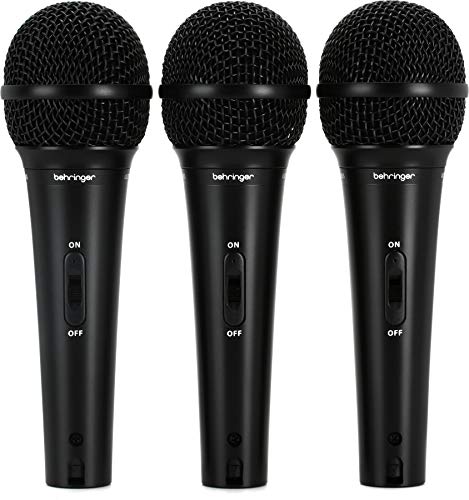
The XM1800S set differs from the XM8500 by supplying three microphones, each with an on/off switch. The set is described as dynamic and cardioid, with a wide frequency response and a design intended to minimize background noise and feedback. It can suit a small group that needs matching vocal or instrument microphones and wants to mute them between uses.
Bottom line: Choose this for three switched microphones rather than a single XM8500.
Behringer XM1800S 3-Mic Cable Bundle

This XM1800S bundle stands apart by including three 25-foot XLR cables alongside three handheld microphones. Its maker identifies the microphones as dynamic and supercardioid, unlike the cardioid XM8500. That pattern may suit a setup where rejecting sound away from the front is a priority, but microphone placement matters: aim the rear null toward the loudest monitor to help limit feedback. The bundle names XM1800S microphones rather than the searched XM8500, so it is not a substitute for someone who specifically needs that model.
Bottom line: Pick this when a three-mic supercardioid bundle with cables fits the setup.
Pyle PDMIC59

The Pyle PDMIC59 differs from the XM8500 by including a 15-foot cable that ends in a 1/4-inch audio connection. It is a single moving-coil dynamic handheld microphone with a cardioid pattern, an on/off switch, and an integrated pop filter and windscreen. This can fit a live vocal or amplified-instrument setup that accepts that connector. The included cable is not described as XLR-to-XLR, so check that the 1/4-inch connection matches the input you plan to use.
Bottom line: Choose this when an included 15-foot cable and 1/4-inch connection suit your gear.
Behringer BA 85A

The BA 85A is the other Behringer option here, but it is a dynamic supercardioid microphone rather than the XM8500’s cardioid model. The tighter pickup pattern can be useful when a setup needs greater rejection from the sides; placement still matters, especially around stage monitors. The specifications identify one microphone and its supercardioid pattern, without a named pop filter, switch or cable feature to compare. Choose it for the different pickup pattern, not as a second listing for the XM8500.
Bottom line: Pick this if the supercardioid pattern is more important than matching the XM8500.
How to choose a vocal microphone pattern
A cardioid microphone is a practical starting point for one vocalist because it is most sensitive at the front and rejects more sound from behind. Supercardioid microphones have a narrower front pickup and a rear lobe, so the monitor should sit near the sides rather than directly behind the mic. With a stage monitor directly behind the singer, a cardioid pattern is usually the simpler placement choice; when side noise is the concern, consider supercardioid and position monitors carefully. Dynamic handheld mics do not need phantom power to operate, unlike many condenser microphones. Use a balanced XLR connection for long stage runs when the microphone and mixer support it.
What pop filters and shock mounts do
A pop filter reduces bursts of air from consonants such as P and B, while a shock mount helps isolate capsule vibration from handling. Neither feature replaces good microphone technique: keep the grille roughly 2 to 6 inches from the mouth for a close vocal sound, then adjust distance to control plosives and room pickup. A foam windscreen can help outdoors, but it does not eliminate wind noise in gusts. For handheld performance, grip the handle rather than the grille and avoid tapping the mic body. These distinctions matter when comparing a mic with named pop and handling-noise features against one whose fields do not identify them.
How to match cables and microphone inputs
Match the microphone cable end to the mixer or interface input before choosing a bundle. A standard XLR microphone cable has a three-pin connector at each end; a cable terminating in 1/4 inch may connect to an instrument-style input, but it is not interchangeable with every balanced XLR input. For long runs, balanced XLR helps reject electrical interference better than an unbalanced connection. A 25-foot cable is useful when the performer needs room to move, while a shorter run can reduce clutter. Never force a connector that does not fit, and keep audio cables away from power cables where practical.
How to position a handheld mic on stage
Point the microphone’s front toward the voice and keep loudspeakers out of its most sensitive direction to reduce feedback risk. A cardioid mic is least sensitive near the rear; a supercardioid mic has a rear pickup lobe, so a monitor directly behind it can cause trouble. Start with the monitor at least a few feet from the mic and raise the level gradually rather than boosting the mixer suddenly. Keep the grille unobstructed, since covering it can change the pickup pattern and increase feedback. For multiple performers, leave space between microphones and mute channels that are not in use.
Frequently Asked Questions
Does the XM8500 need phantom power?
A dynamic XM8500 does not require phantom power to produce audio. If a mixer offers phantom power, check its manual before connecting other equipment on the same input bank.
How close should a singer hold a handheld mic?
A close starting distance is about 2 to 6 inches from the mouth. Increase the gap if plosives or breath noise are strong, and keep the grille pointed toward the voice.
Where should stage monitors sit with a supercardioid mic?
Place monitors toward the sides of a supercardioid microphone rather than directly behind it, because the pattern has a rear lobe. Move the monitor and reduce its level if feedback begins.
Can an XLR microphone use a 1/4-inch input?
Only when the cable and input are compatible; a 1/4-inch plug may feed an instrument-style input rather than a balanced microphone preamp. Check the mixer input type and the cable’s connector ends before connecting.
How can I reduce handling noise while singing?
Hold the microphone by its handle and avoid tapping or rubbing the body. A built-in shock mount can reduce transmitted vibration, but careful handling still matters.