
Bergner Stainless Steel Pots: 4 Options Compared

For most cooks seeking Bergner stainless steel pots, the Argent 4.5-quart tri-ply Dutch oven is the more versatile pick because its aluminum core spans the cooking surface; choose the 16-quart stock pot instead when you regularly make large batches. A Dutch oven is a deep, lidded pot for stovetop cooking and oven finishing.
The named Bergner fry-pan set is not a pot, so it is left out; the other options here are non-Bergner alternatives if you want a broader size or set.
We earn a commission if you buy through links on this page. As an Amazon Associate I earn from qualifying purchases. Products are compared on manufacturer specifications, not hands-on testing.
- Best overall: Bergner Argent 4.5-Quart Tri-Ply Dutch Oven – Its 4.5-quart capacity and edge-to-edge tri-ply construction suit everyday simmering and oven finishing.
- Best for large batches: Bergner 16-Quart Stainless Steel Stock Pot – The 16-quart capacity suits stock, pasta water, and other large-volume cooking.
- Best for 8-quart batches: Kirecoo 8-Quart Stainless Steel Stock Pot – Its 8-quart size and five-layer base offer a middle capacity between the Bergner options.
| Product | Best for | Capacity | Construction | Oven-safe temperature | Shop |
|---|---|---|---|---|---|
| Bergner Argent 4.5-Quart Tri-Ply Dutch Oven | Everyday simmering | 4.5 qt. | Tri-ply clad | 600°F | Check Price on Amazon |
| Bergner 16-Quart Stainless Steel Stock Pot | Large batch cooking | 16 qt. | Capsule base | 400°F | Check Price on Amazon |
| Kirecoo 8-Quart Stainless Steel Stock Pot | Mid-size batches | 8 qt. | Five-layer base | — | Check Price on Amazon |
| Cuisinart Chef’s Classic 11-Piece Set | Full cookware set | — | Encapsulated aluminum base | 500°F pans | Check Price on Amazon |
Bergner Stainless Steel Pots Compared
Compare capacity and construction first, then match the pot to your usual batch size and stovetop.
Bergner Argent 4.5-Quart Tri-Ply Dutch Oven

The Argent Dutch oven is the smaller, more evenly clad Bergner option, with a 4.5-quart capacity and an aluminum core between 18/10 stainless steel layers. Bergner says its magnetic exterior works on induction and that the pot is oven-safe up to 600°F. Its glass lid makes it easy to monitor a simmer without lifting the lid. This size suits soups, sauces, and braises for a few people; cooks who routinely make stock or boil pasta for a crowd will want the 16-quart pot instead.
Bottom line: Choose this for everyday meals and tri-ply heat distribution in a manageable capacity.
Bergner 16-Quart Stainless Steel Stock Pot
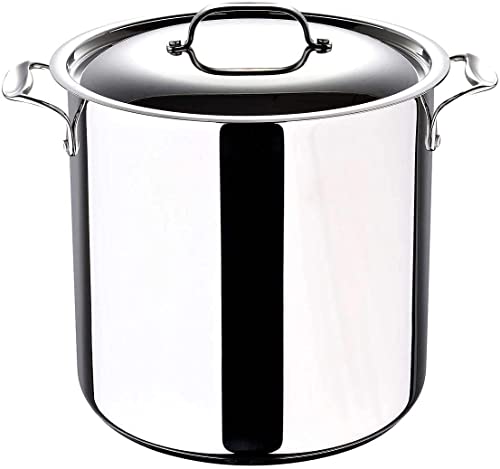
The 16-quart stock pot gives Bergner shoppers far more capacity than the 4.5-quart Dutch oven, making it the sensible choice for large batches of broth, soup, or pasta. Its capsule base, stainless steel lid, and double-riveted handles provide a straightforward stock-pot setup. Bergner says the pot is dishwasher-safe and oven-safe to 400°F. At roughly 12.6 inches high and 11.8 inches wide, it needs substantial cabinet space and a burner that can heat a large base; cooks making small portions may find its capacity cumbersome.
Bottom line: Pick this when large-volume cooking matters more than compact storage.
Kirecoo 8-Quart Stainless Steel Stock Pot
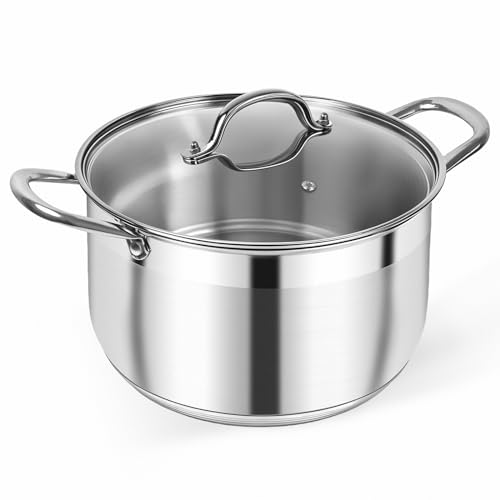
The Kirecoo stock pot offers an 8-quart middle ground, but it is not a Bergner product. Its five-layer base combines aluminum and magnetic material, and its glass lid lets cooks watch food while boiling or simmering. The 8-quart size can handle more than the 4.5-quart Dutch oven without the footprint of a 16-quart stock pot. The maker says the base heats quickly and distributes heat evenly. Choose it only if you are open to another brand; buyers specifically seeking Bergner should stay with the two Bergner pots.
Bottom line: Consider this if an 8-quart stock pot matters more than matching the Bergner brand.
Cuisinart Chef’s Classic 11-Piece Set

The Cuisinart set differs from the Bergner choices by bundling several pots and pans rather than one pot. It includes a steamer insert, and its saucepans have measurement markings and tapered rims. The maker says the pans are oven-safe to 500°F and broiler-capable; the tempered-glass lids are oven-safe to 450°F. Handles become hot in the oven, so use oven mitts. This set suits someone equipping a kitchen with multiple vessel types, but it is not the direct choice for a single Bergner stock pot or Dutch oven.
Bottom line: Choose this for a mixed cookware collection rather than a single Bergner pot.
How to choose a stainless steel pot
Match capacity to the batch you cook most often, then consider how heat travels through the base. A 4- to 6-quart pot is a practical range for everyday soups and sides, while 8 quarts suits larger family batches and 12 quarts or more is useful for stock or large pasta boils. Clad cookware bonds conductive metal through the body; a disk or capsule base concentrates that layered construction at the bottom. For frequent simmering across the full cooking surface, prioritize clad sides; for occasional boiling, a base-focused design may be enough.
Stainless steel does not have a nonstick coating, so preheating and adding cooking fat help reduce sticking. If your routine includes acidic ingredients such as tomatoes or wine, stainless interiors are generally nonreactive. Leave headroom: liquid expands and bubbles, and a pot filled to the rim is harder to stir safely.
Pot capacity and kitchen fit
Choose by both serving volume and storage footprint: a 16-quart stock pot is for large batches, while a smaller Dutch oven is easier to handle for daily meals. A rough planning rule is about 1 quart of pot capacity per serving for soups and stews, with extra space needed for stirring and boil-up. A 4.5-quart vessel therefore suits a few portions, not a full pasta boil for a large group. Height and width matter as much as the quart figure because a tall pot can exceed cabinet clearance or fit poorly on a compact burner.
Before buying a large pot, measure cabinet height, shelf depth, and the cooking surface. A wide base may bridge multiple burner rings unevenly, while an oversized vessel can crowd neighboring pans. For boiling pasta, allow several inches between the waterline and rim.
| Typical job | Useful capacity range | What to prioritize |
|---|---|---|
| Small soups and sauces | 2–4 qt. | Easy handling and lid fit |
| Everyday soups and braises | 4–6 qt. | Even heating and manageable weight |
| Family batches | 8–10 qt. | Base size and storage clearance |
| Stock and large pasta boils | 12 qt. or more | Burner fit and safe lifting |
Tri-ply and capsule-base pots compared
Tri-ply cookware bonds layers across the pot body, while a capsule base uses a layered disk at the bottom. Aluminum conducts heat well, so an aluminum core helps spread heat more evenly than stainless steel alone; the exact result still depends on burner size, pan thickness, and how high the heat is set. A capsule base can be a sensible choice for boiling water or making stock, where most heating happens from below. Full cladding is useful when sauces or braises benefit from heat traveling up the sides.
Induction requires a magnetic cookware exterior. A magnet that sticks firmly to the base is a simple compatibility check, although cookware labeling is more reliable for the complete vessel. Glass lids are convenient for visibility but can be more vulnerable to impact and thermal shock; avoid sudden temperature changes and check the lid’s own oven limit separately from the pot.
Stainless steel pot care and safe handling
Wash stainless steel after cooking and avoid leaving salty water sitting in the pot for long periods, since concentrated salt can pit stainless surfaces. For stuck-on food, soak the cooled pot in warm soapy water and use a nonabrasive scrubber; abrasive pads can scratch the finish. Dishwasher-safe cookware can still take on dullness or water spots, so hand drying helps preserve a polished appearance.
Use burners no wider than the pot base when possible, and heat gradually to limit hot spots. Metal handles conduct heat, and pot handles can become hot from burner flame or oven exposure; use dry oven mitts and keep handles turned inward to reduce bumping. Large stock pots are especially hazardous when full: move them before filling when practical, and never carry boiling liquid beyond a short, clear route.
Frequently Asked Questions
What size stainless steel pot works for soup?
A 4- to 6-quart pot works for many everyday soup batches, while 8 quarts or more suits larger groups or planned leftovers. Leave room below the rim for stirring and bubbling.
Can stainless steel pots be used on induction?
Induction requires a magnetic base, and a magnet that sticks to the bottom is a quick check. Confirm that the complete pot is marked induction-compatible, since a magnetic spot alone may not guarantee even performance.
Why does food stick to stainless steel pots?
Food often sticks when the pan is too cool or the cooking surface is dry. Preheat gradually, add oil or another cooking fat, and wait for proteins to release before turning them.
How do you remove stains from stainless steel cookware?
Soak the cooled pot in warm soapy water and scrub with a nonabrasive pad. Avoid prolonged contact with salty residue, which can pit stainless steel.
Can stainless steel pots go in the oven?
Many stainless pots can, but safe temperature limits differ among the pot, lid, and handles. Check the rated limit for each component, and use oven mitts because handles become hot.