
Best 20×4 Fat Bike Tires for Different Riding Needs

For most riders, HEB ALLSCAPE 20×4 Fat Tire stands out because its 2.5 mm sidewall adds rubber for protection on mixed pavement, gravel and dirt. Choose another set if you need tubes and tire levers included or want a single replacement tire rather than a pair.
A 20×4 fat bike tire is a wide tire for compatible 20-inch wheels; confirm the size printed on your current tire and your rim fit before ordering.
We earn a commission if you buy through links on this page. As an Amazon Associate I earn from qualifying purchases. Products are compared on manufacturer specifications, not hands-on testing.
- Best overall: HEB ALLSCAPE 20×4 Fat Tire – Its 2.5 mm sidewall is a specific advantage for riders concerned about sharp debris.
- Best for wet trails: BALINGE 20 x 4.0 Fat Tire Set – The aggressive tread and deep drainage grooves are aimed at grip on wet and loose ground.
- Best for a complete kit: RUHUO 20×4.0 Tire and Tube Set – The set includes two tires, tubes and tire levers.
| Product | Best for | Pack contents | Pressure range | Shop |
|---|---|---|---|---|
| HEB ALLSCAPE 20×4 Fat Tire | Debris-prone rides | 2 tires | — | Check Price on Amazon |
| BALINGE 20 x 4.0 Fat Tire Set | Wet, loose terrain | 2 tires, 2 tubes, 2 levers | — | Check Price on Amazon |
| RUHUO 20×4.0 Tire and Tube Set | Pressure flexibility | 2 tires, tubes, levers | 20–40 psi | Check Price on Amazon |
| Heavy Duty 20×4 Tire and Tube Set | Directional tread | 2 tires, 2 tubes | 20 psi | Check Price on Amazon |
| Ultraverse 20×4.0 E-Bike Tire | Single replacement | 1 tire | — | Check Price on Amazon |
20×4 Fat Bike Tires
Compare the tire size, included parts and stated pressure information to narrow the choices for your setup.
HEB ALLSCAPE 20×4 Fat Tire

HEB ALLSCAPE 20×4 Fat Tire distinguishes itself with a 2.5 mm sidewall, which the maker says helps resist punctures from glass, thorns and sharp gravel. The two-tire pack is a 20 x 4.0 in replacement for bikes whose existing tire shows the same size, and the tread is intended for dirt, gravel, sand and pavement. It suits mixed-surface e-bike use where sidewall thickness is a priority. The main limitation is that this is a tire pair, not a complete kit with tubes or tire levers, so it is less convenient if those parts also need replacing.
Bottom line: Choose this pair if a thicker sidewall matters more than included tubes or tools.
BALINGE 20 x 4.0 Fat Tire Set
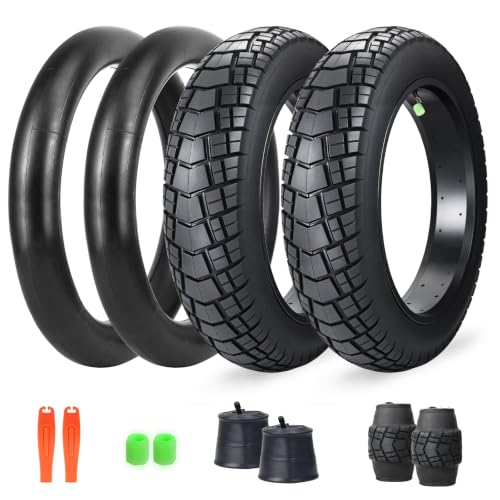
For wet or loose routes, BALINGE 20 x 4.0 Fat Tire Set brings an aggressive lug pattern and deep drainage grooves; the maker says these features channel water away and support traction on mud, rocks and wet surfaces. The package includes two tires, two tubes and two levers, making it the most complete repair set among these options. Its use spans snow, gravel, sand and paved roads. The specifications do not give a pressure range, so riders who need a precise inflation target should confirm the appropriate pressure for their tire and rim before fitting.
Bottom line: Pick this set for the included installation pieces and deep-tread design.
RUHUO 20×4.0 Tire and Tube Set

RUHUO 20×4.0 Tire and Tube Set is the only option here with a pressure range of 20–40 psi, giving riders a defined inflation window to work within. The folding replacement tires use a steel bead, and the kit includes tubes and tire levers for two-wheel replacement. The maker describes it for mountain, electric and snow bikes, with use on rugged terrain and pavement. The size is 20 x 4.0 in (102-406 mm), so check that your existing tire and rim use a compatible size. The broad pressure span does not by itself determine the right setting for a particular bike or load.
Bottom line: Choose this set if you want a 20–40 psi range and two-tire kit.
Heavy Duty 20×4 Tire and Tube Set
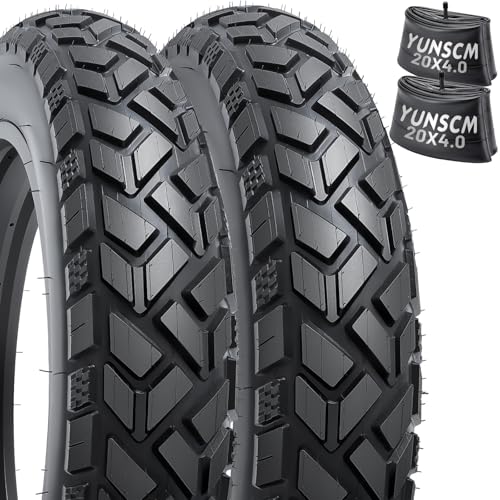
Heavy Duty 20×4 Tire and Tube Set pairs two 20 x 4.0 in tires with two AV32 mm Schrader-valve tubes, a useful distinction for bikes that take that valve type. Its directional tread is intended for regular all-terrain riding, and the maker gives an inflation figure of 20 psi (1.4 bar). The kit suits buyers who need both tires and matching tubes. That pressure figure is a single target rather than a range, and the maker excludes damage from extreme off-road use, overloading, racing, modifications or incorrect installation; riders planning those uses should consider another choice.
Bottom line: Pick it when AV32 mm Schrader tubes and a 20 psi target suit your setup.
Ultraverse 20×4.0 E-Bike Tire

Ultraverse 20×4.0 E-Bike Tire is the only single tire in this group, so it suits a rider replacing one worn tire rather than refreshing a pair. Its directional all-terrain tread and robust sidewall are intended for street and trail use on e-bikes. The maker says its rubber and anti-puncture construction are designed to reduce punctures, but no pressure figure is available in the specifications. That makes this a less complete option for someone needing tubes or levers as well; confirm your bike’s recommended pressure and whether one tire is enough for your repair.
Bottom line: Choose this single tire when only one 20×4.0 replacement is needed.
How to choose a 20×4 fat bike tire
Start with the size printed on the existing tire: 20 x 4.0 is a nominal size, and these products also reference the 102-406 designation. Check both tire and rim compatibility before buying, because the same wheel diameter can come in different widths. Next, decide whether you need one tire or a pair, and whether tubes or levers belong in the kit. For mixed pavement and dirt, compare tread design and sidewall construction rather than treating every wide tire as equivalent. If riding on sharp gravel is common, a thicker sidewall is a measurable feature to prioritize; for wet mud, tread spacing and channels affect how the tire sheds material and water.
Pressure and fit for 20×4 tires
Use the pressure guidance for the exact tire and bike rather than assuming one PSI setting works for every rider. In this group, one maker gives 20–40 psi and another gives a 20 psi figure; those values are product-specific, not universal targets. Load, riding surface and rim compatibility affect how much pressure is appropriate, so do not exceed the tire or rim limit. A tire marked 20 x 4.0 should not be assumed to fit a narrower rim just because its wheel diameter matches. Before installing a replacement, compare the printed size, valve type and bead seating; a Schrader tube will not substitute for a different valve opening without checking the rim.
Match tread and construction to the route
Choose tread according to where the bike spends most of its time: deep, spaced knobs and drainage channels suit loose or wet terrain better than a smoother commuter pattern, while mixed-use tread can serve pavement and dirt. Sidewall thickness is another practical distinction, but it is not a guarantee against flats; punctures can enter through the tread as well. A 2.5 mm sidewall is a concrete construction figure to compare when debris resistance matters. For regular road riding, expect a knobbier tread to make more rolling noise and resistance than a smoother tire. For snow, sand or mud, lower pressure may increase the contact patch, but remain within the tire maker’s allowed range and account for rim protection.
| Riding need | Feature to prioritize | Practical check |
|---|---|---|
| Mixed pavement and gravel | All-terrain tread | Confirm 20 x 4.0 size and rim fit |
| Wet or muddy routes | Open lugs and drainage channels | Check tread clearance for packed mud |
| Sharp debris | Thicker sidewall | Inspect tread and sidewall after rides |
Installation and flat prevention
Install the tire with the directional arrow, if present, aligned to the wheel’s forward rotation; a directional tread mounted backward may not work as intended. Keep the tube untwisted and lightly inflated while fitting the second bead to reduce pinching. Use tire levers carefully and avoid forcing a bead over the rim, which can damage the tube. Check that the bead sits evenly around both sides before inflating, then recheck pressure before each ride. Heavy e-bikes place more load on tires than many unpowered bikes, so avoid overloading the bike and inspect for cuts, embedded glass and sidewall bulges regularly. Replace a damaged tire rather than relying on a patch for structural sidewall damage.
Frequently Asked Questions
What does 20×4 mean on a fat bike tire?
20×4 describes a nominal 20-inch wheel diameter and roughly 4-inch tire width. Check the existing tire marking and the rim’s approved width before fitting a replacement, because matching diameter alone is not enough.
Can I use a 20×4 tire on any 20-inch bike?
No; a 4-inch-wide tire needs a compatible frame, fork, rim and brake clearance. Check for at least the tire’s full width plus clearance on both sides, and verify the rim maker’s allowed tire-width range.
How much air should a 20×4 fat tire have?
Use the pressure range printed for the specific tire; the products here include one 20–40 psi range and one 20 psi figure. Keep pressure within the tire and rim limits, and adjust only within that range for rider load and surface.
Do 20×4 fat bike tires need special tubes?
The tube must match the tire width and rim valve opening. A 20 x 4.0 tire set may include a Schrader tube, but check whether your rim takes Schrader or Presta before replacing the tube.
When should I replace a fat bike tire?
Replace a tire when the tread is worn smooth, casing threads show, or a cut or bulge compromises the sidewall. Inspect more often after riding sharp gravel or carrying heavy loads, since damage can develop before the tread is fully worn.