
Best 3-Layer Golf Balls for Feel and Control

Legato LTX3085 3-Piece is the best fit for most golfers seeking 3-layer golf balls because its 3-piece construction pairs an 85-compression design with a urethane cover. Golfers who prioritize a softer feel or a different cover should compare Callaway Supersoft 2025 and Titleist TruFeel 2024, while Titleist Pro V1 RCT is a compact three-ball option.
A three-layer ball has a core, an intermediate layer and a cover; layer count alone does not determine feel or spin.
We earn a commission if you buy through links on this page. As an Amazon Associate I earn from qualifying purchases. Products are compared on manufacturer specifications, not hands-on testing.
- Best overall: Legato LTX3085 3-Piece – Its 3-piece construction and urethane cover match the requested ball type directly.
- Best for premium cover: Titleist Pro V1 RCT – Its polyurethane cover and three-ball pack suit golfers wanting a smaller quantity.
- Best for soft feel: Callaway Supersoft 2025 – Its soft-feel design and hybrid cover make it a related alternative.
| Product | Best for | Construction | Cover | Pack size | Shop |
|---|---|---|---|---|---|
| Legato LTX3085 3-Piece | Urethane cover | 3-piece | Urethane | 12 balls | Check Price on Amazon |
| Titleist Pro V1 RCT | Three-ball quantity | Multi-layer | Polyurethane | 3 balls | Check Price on Amazon |
| Callaway Supersoft 2025 | Soft-feel design | — | Hybrid | 12 balls | Check Price on Amazon |
| Titleist TruFeel 2024 | Softer cover | — | TruFlex | 3 balls | Check Price on Amazon |
3-Layer Golf Balls Compared
Compare construction and cover first, then choose the pack size that suits how you buy golf balls.
Legato LTX3085 3-Piece
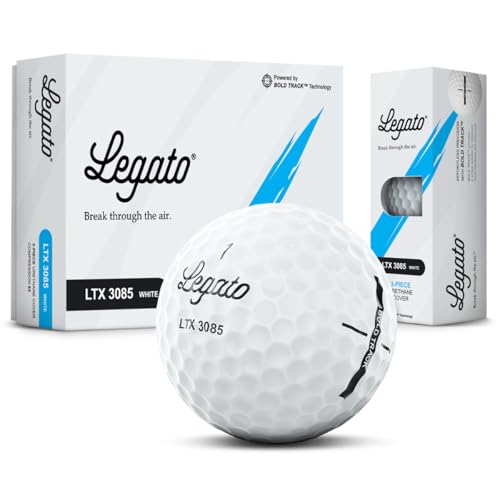
Legato LTX3085 3-Piece is the clearest match for a golfer specifically seeking a 3-layer ball: it has 3-piece construction, an 85-compression design and a urethane cover. The manufacturer says the construction is designed to limit spin on long shots while retaining responsive control around the greens; it also describes 350 aerodynamic dimples and a putting-alignment mark. The 12-ball pack is suited to golfers who want a full dozen in one model. Its 85 compression is a distinct design choice, so golfers selecting strictly by compression should compare that figure with their preference rather than assume all 3-piece balls feel alike.
Bottom line: Choose this if a 3-piece build and urethane cover are your priorities.
Titleist Pro V1 RCT

Titleist Pro V1 RCT stands apart in this group for its three-ball pack and polyurethane cover. The maker calls it multi-layer, but do not establish a three-piece construction, so it is a related option rather than a confirmed match for a strict 3-layer search. The manufacturer describes a mid-flight trajectory, low long-game spin and short-game spin, alongside a soft feel. The small pack can make sense for golfers who want only a few balls at a time. Golfers who require a confirmed 3-piece design should choose a ball whose construction is explicitly identified that way.
Bottom line: Choose this if a polyurethane cover and three-ball pack matter more than confirmed layer count.
Callaway Supersoft 2025

Callaway Supersoft 2025 is a related alternative for golfers drawn to a soft-feel design, rather than a confirmed three-layer match: its maker identifies a hybrid cover but do not give the layer count. The manufacturer says its HyperElastic SoftFast core is engineered for faster driver and iron speed, while the cover is designed to combine distance, feel and durability. Its dozen-ball pack suits golfers who want a full set of replacements in one model. Since the layer count is central to this search, verify the construction before choosing it over a ball expressly identified as 3-piece.
Bottom line: Choose this if soft feel is the priority and you can verify its layer count.
Titleist TruFeel 2024

Titleist TruFeel 2024 differs from the confirmed 3-piece option through its TruFlex cover and three-ball pack. The manufacturer says the design aims for a low, penetrating flight with greenside spin and control. This can suit golfers comparing a softer-cover feel in a small pack. Golfers who need a definite three-piece construction should confirm that specification before selecting it.
Bottom line: Choose this if a softer cover and three-ball pack suit your needs.
How to Choose a 3-Layer Golf Ball
Start with cover material and the shots where you want control, not layer count alone. A 3-piece ball has a core, an intermediate layer and a cover, but the materials and design of those parts affect feel and spin. Urethane covers are commonly used on premium multi-layer balls for greenside spin; ionomer covers generally emphasize durability and distance. Compression is a separate design measure, not a layer count, and the 85-compression figure on Legato LTX3085 3-Piece should not be read as proof of a particular swing-speed fit. If short-game spin is your priority, compare cover material; if you want a strict 3-layer match, choose only a ball whose construction is explicitly called 3-piece.
Golf Ball Size and Conformity
Regulation golf balls must measure at least 1.680 inches in diameter and weigh no more than 1.620 ounces. Those limits matter for balls used in conforming competition; a smaller ball can travel farther under the rules, so the minimum is not merely a packaging convention. Dimples influence aerodynamic lift and drag, but dimple count alone does not predict performance because pattern and depth also matter. Legato LTX3085 3-Piece is identified as USGA conforming in its product name; do not assume that claim applies to every ball in this comparison. For competition, confirm conformity for the exact model and version before play.
Urethane and Other Golf Ball Covers
Urethane and ionomer are the cover materials buyers most often compare, and they involve a tradeoff rather than a universal winner. Urethane is common on tour-oriented multi-layer balls and is selected for greenside control; ionomer often favors durability and distance. Titleist Pro V1 RCT identifies a polyurethane cover, while Callaway Supersoft 2025 identifies a hybrid cover, so these are not interchangeable material descriptions. Cover material does not determine how many layers sit beneath it. A useful decision rule is to select a urethane-covered model when approach-shot and short-game spin are central, and consider a more durability-oriented cover when scuffing is the bigger concern.
Matching Ball Construction to Your Game
Use the table to separate confirmed construction from alternatives where the layer count is not established. Three-piece balls add an intermediate layer between core and cover, creating more design variables for manufacturers; they do not guarantee a particular flight or feel for every golfer. A two-piece ball instead combines a core and cover, and is not a match when three layers are a firm requirement. Compare the ball you play now with a candidate using the same club and similar conditions, and change one model at a time so differences are easier to notice. Do not infer a ball’s construction from its pack count or model name.
| Need | What to choose | Why it matters |
|---|---|---|
| Confirmed three-layer construction | Explicit 3-piece specification | Establishes core, intermediate layer and cover |
| Greenside spin priority | Urethane cover | Commonly chosen for short-game control |
| Durability priority | Consider ionomer cover | Often selected for wear resistance |
Frequently Asked Questions
What does 3-piece mean in a golf ball?
A 3-piece golf ball has a core, an intermediate layer and an outer cover. The layer count identifies construction, not a guaranteed amount of distance, spin or softness.
Are all urethane golf balls three-piece?
No; a urethane cover alone does not establish the number of layers beneath it. Check for an explicit 3-piece or three-layer construction specification when that is required.
What is the regulation size of a golf ball?
A conforming golf ball must be at least 1.680 inches in diameter and weigh no more than 1.620 ounces. Check conformity for the exact model if you play in competition.
Does golf ball compression match swing speed?
Compression is a design characteristic, not a universal swing-speed label. For example, Legato LTX3085 3-Piece identifies 85 compression, but golfers should compare feel and performance rather than treat that figure as a guaranteed speed match.
Which golf ball cover gives more greenside spin?
Urethane covers are commonly chosen for greenside spin and control, while ionomer covers often prioritize durability and distance. Cover material is only one factor; construction and shot conditions also affect results.