
Best Adhesive for Plastic to Metal: 3 Types Compared

For a rigid plastic-to-metal repair, Vicpricme 2-Part Metal Epoxy is the best fit because its two-part epoxy is made for prepared metal and hard plastic, with up to 30 minutes of working time. Choose an instant adhesive instead when a small bond needs to set quickly; plastic type and joint flexibility can change which formula works.
We earn a commission if you buy through links on this page. As an Amazon Associate I earn from qualifying purchases. Products are compared on manufacturer specifications, not hands-on testing.
- Best overall: Vicpricme 2-Part Metal Epoxy – Two-part epoxy offers up to 30 minutes to align and fill a rigid repair.
- Best for quick household fixes: Super Glue All-Purpose Gel – The gel formula is advertised to dry rapidly and lists both metal and plastic.
- Best for vertical surfaces: VG416 Super Bonder 20 g 2-Pack – Its 1,500-cps viscosity is designed to resist running and dripping.
| Product | Best for | Adhesive type | Working or cure time | Package | Shop |
|---|---|---|---|---|---|
| Vicpricme 2-Part Metal Epoxy | Rigid repairs | Two-part epoxy | 30 min working; 24 hr cure | 1.76 oz | Check Price on Amazon |
| Super Glue All-Purpose Gel | Fast small bonds | Cyanoacrylate gel | Handling in seconds (claimed) | 1.76 oz | Check Price on Amazon |
| VG416 Super Bonder 20 g 2-Pack | Vertical bonding | Instant adhesive | Fast-bonding (claimed) | 0.71 oz, 2-pack | Check Price on Amazon |
Plastic-to-Metal Adhesives
Choose by the plastic resin, how much time you need to position the joint, and whether the repair must flex.
Vicpricme 2-Part Metal Epoxy

For a rigid repair that needs alignment or gap filling, this two-part epoxy gives more positioning time than the instant adhesives. The brand says it bonds prepared aluminum, steel, stainless steel and cast iron, as well as hard plastic, PVC and several other materials; its claimed strength is 4,680 PSI. The 1:1 mix allows up to 30 minutes of working time, with a full cure in 24 hours. It suits non-flexing brackets, housings and fixtures. Its limitation is the longer cure, so it is a poor choice when the joint must be ready immediately.
Bottom line: Choose this for a rigid joint you can leave undisturbed for 24 hours.
Super Glue All-Purpose Gel
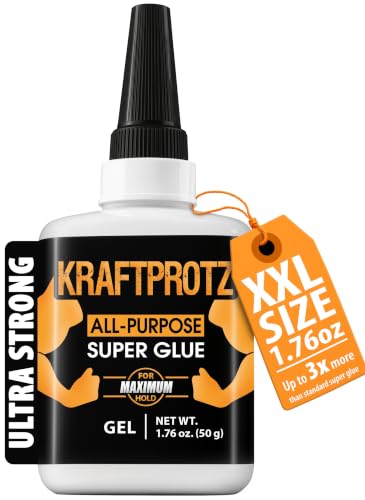
For a small bond where fast handling matters, this gel-style instant adhesive is a different option from the slower two-part epoxy. The brand claims a clear finish and handling durability in seconds, and names both metal and plastic among its compatible materials. Its gel consistency and precision tip are intended to give control on detailed repairs, while the 1.76 oz size offers more adhesive than a tiny tube. It may not suit joints that need substantial repositioning time or that flex under load; verify the specific plastic resin before relying on the bond.
Bottom line: Choose this for small, quick bonds where the plastic type is compatible.
VG416 Super Bonder 20 g 2-Pack

For a bond on a vertical or uneven surface, this thicker instant adhesive differs from thinner super glues: its 1,500-cps viscosity is intended to reduce running and dripping. The brand says it bonds metal, EPDM rubber and heavy-duty plastics including PLA, PETG and PVC, and describes the cured bond as resistant to heat and vibration. The two-pack contains 20 g per unit, or about 0.71 oz each. This is a better match for a fast, controlled application than a repair that needs extended alignment time; the product’s named plastics do not establish compatibility with every plastic resin.
Bottom line: Choose this for a quick application on a vertical surface using a compatible plastic.
How to choose plastic-to-metal adhesive
Choose first by plastic resin and joint movement, not by the word “universal.” Many common adhesives bond well to rigid ABS, PVC and polystyrene, while polyethylene (PE) and polypropylene (PP) are low-surface-energy plastics that ordinary adhesives often struggle to grip; specialized adhesive or surface treatment may be needed. For a rigid joint that needs gap filling or alignment, two-part epoxy gives working time but takes longer to cure. Instant cyanoacrylate is suited to small, close-fitting joints that can be held still. If the part bends or vibrates, use only a formula specifically suited to that substrate and movement. With PE or PP, confirm compatibility before choosing any of these options.
Prepare the plastic and metal surfaces
Surface preparation matters because oil, dust and oxidation can weaken the adhesive interface. Remove grease with a cleaner compatible with both materials, then let the parts dry completely; avoid touching the cleaned bonding areas. On suitable rigid surfaces, light abrasion with fine sandpaper can provide a mechanical key, but do not abrade thin plastic enough to deform it. Keep the bond area small and close-fitting for instant adhesive, which generally works best in a thin layer rather than a large gap. Epoxy is a better choice when the joint needs filling, but support the parts in alignment while it cures. Test a hidden area first if the cleaner or adhesive could mar a visible finish.
Match cure time to the repair
Adhesive cure schedules vary substantially: the epoxy option here allows up to 30 minutes of working time and specifies 24 hours for full cure, while the instant-glue products claim fast bonding or handling in seconds. Handling strength is not the same as full cure, so do not load a repaired part simply because the adhesive feels set. For a load-bearing item, use a mechanical fastener where practical rather than relying on glue alone. A useful rule is to choose an instant formula only when the parts fit closely and can stay clamped or held still; choose epoxy when alignment, filling or repositioning matters more than speed. Keep uncured adhesive off skin and out of eyes, and follow the product’s safety directions.
Adhesive types compared for plastic and metal
Two-part epoxy and instant cyanoacrylate solve different joint problems. Epoxy is mixed from resin and hardener, so it can fill a gap and allow more time to position parts; cyanoacrylate forms a fast bond in a thin, close-fitting joint. Gel viscosity can help limit dripping on a vertical surface, but it does not make every plastic resin bondable. The table compares these practical tradeoffs, not a guarantee for every material; PE and PP remain difficult substrates for ordinary adhesives. Verify compatibility when the plastic is unidentified or the repair carries a load.
| Need | Adhesive type | Reason |
|---|---|---|
| Rigid repair with alignment time | Two-part epoxy | Working time and gap filling |
| Small, close-fitting joint | Instant adhesive | Fast bonding |
| Vertical application | Thicker gel | Reduced running and dripping |
Frequently Asked Questions
Can super glue bond plastic to metal?
Yes, instant adhesives can bond some plastic-to-metal joints, especially small, close-fitting ones. Compatibility depends on the plastic resin; ordinary formulas often struggle with polyethylene and polypropylene.
Does epoxy work on plastic and metal?
Some epoxies bond rigid plastics and metals, and the epoxy option here names hard plastic and several metals. Allow its specified 24 hours for a full cure before loading the joint.
Why will glue not stick to polypropylene?
Polypropylene has a low-energy surface that many ordinary adhesives do not wet or grip well. Use a product specifically compatible with PP or an appropriate surface treatment, and test the joint before relying on it.
Should I sand plastic before gluing metal?
Lightly abrading a compatible rigid plastic can improve mechanical grip, but avoid sanding thin or flexible parts enough to deform them. Remove dust afterward and ensure both bonding surfaces are clean and dry.
How long should a plastic-to-metal bond cure?
Cure time depends on adhesive chemistry: the epoxy described here specifies 24 hours for full cure, while instant adhesives claim handling in seconds. Do not confuse quick handling with readiness for a load.